What does fact checked mean?
At Healthfully, we strive to deliver objective content that is accurate and up-to-date. Our team periodically reviews articles in order to ensure content quality. The sources cited below consist of evidence from peer-reviewed journals, prominent medical organizations, academic associations, and government data.
- Chest: Inhaled Corticosteroids and the Risk of Pneumonia in People with Asthma: A Case-Contorl Study
- Chest: Inhaled Corticosteroids and the Risk of Pneumonia in People with Asthma: A Case-Contorl Study
- National Heart, Lung, and Blood Institute: Guidelines for the Diagnosis and Management of Asthma (EPR-3)
- National Heart, Lung, and Blood Institute: Guidelines for the Diagnosis and Management of Asthma (EPR-3)
- National Heart, Lung, and Blood Institute: How Is Pneumonia Treated?
- National Heart, Lung, and Blood Institute: How Is Pneumonia Treated?
The information contained on this site is for informational purposes only, and should not be used as a substitute for the advice of a professional health care provider. Please check with the appropriate physician regarding health questions and concerns. Although we strive to deliver accurate and up-to-date information, no guarantee to that effect is made.
The Difference Between Asthma and Pneumonia
Asthma and pneumonia are both lung disorders that affect breathing, but they differ greatly in terms of cause, treatment and disease course. Asthma is a long-term condition caused by lung airway inflammation and narrowing.
If you are experiencing serious medical symptoms, seek emergency treatment immediately.
Pneumonia refers to a short-term lung infection that most people completely recover from after the illness runs its course. People with asthma are at increased risk of contracting pneumonia, especially those taking high-dose inhaled steroid medications 1. Lung infections can be severe in people with asthma, so it's important to be aware of pneumonia symptoms if you have asthma 1.
Causes
The development of asthma involves complex interactions between certain genetic and environmental factors. A family history of asthma, certain childhood respiratory infections, smoking during pregnancy and exposure to common allergy triggers -- such as dust mites, cockroaches and pet dander -- increase the likelihood of developing asthma. Occupational exposures may also contribute to adult-onset asthma.
Viruses and bacteria cause most pneumonia cases in the U.S., according to the Centers for Disease Control and Prevention.
Children are more commonly affected by viral pneumonia.
Among adults, Streptococcus pneumoniae is the most common cause of bacterial pneumonia. Many children and some adults carry this bacteria without getting sick, but may infect others.
- The development of asthma involves complex interactions between certain genetic and environmental factors.
Signs and Symptoms
Differences Between Asthma and Bronchitis
Learn More
Wheezing, chest tightness, shortness of breath and coughing -- especially at night or early in the morning -- are common symptoms of asthma 7. Pneumonia also causes coughing, often with phlegm produced.
Chest pain or tightness, shortness of breath, fever, chills and tiredness that develop over a day or two often signal pneumonia. Nausea, loss of appetite and body aches are also possible, depending on the underlying causes. Asthma symptoms can typically be controlled or prevented with appropriate medication, while the coughing and fatigue caused by pneumonia can last several weeks, even after treatment has started.
- Wheezing, chest tightness, shortness of breath and coughing -- especially at night or early in the morning -- are common symptoms of asthma 7.
- Asthma symptoms can typically be controlled or prevented with appropriate medication, while the coughing and fatigue caused by pneumonia can last several weeks, even after treatment has started.
Diagnosis
**Asthma is typically diagnosed based on medical and family history, physical exam and lung function tests.
** These tests measure how well you are breathing, and include spirometry and peak airflow. As the Allergy and Asthma Foundation of American (AAFA) explains: Spirometry measures the amount of air inhaled and exhaled, and its flow rate 37. The peak airflow test determines the rate at which you can push air out of your lungs, a key factor with asthma.
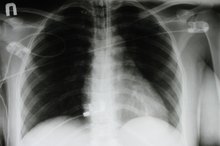
Pneumonia is diagnosed based on characteristic symptoms, the timing of their development and physical examination. The diagnosis is often confirmed with a chest X-ray. Blood and phlegm tests are often performed to help determine the underlying cause of the infection.
- Asthma is typically diagnosed based on medical and family history, physical exam and lung function tests.
- These tests measure how well you are breathing, and include spirometry and peak airflow.
Treatment
List of Nebulizer Medications and Ingredients
Learn More
There is no cure for asthma, so the goal is to control and reduce the occurrence of symptoms with the appropriate medication, as recommended by the "Guidelines on Asthma" commissioned by the National Heart, Lung and Blood Institute 45. Most asthma medications are inhaled, allow delivery straight to the airways. **Quick-relief medications control sudden asthma symptoms.
Controller medications decrease the number and severity of asthma attacks but do not alleviate sudden symptoms. The type and dose of medication is dependent on asthma severity, and monitoring and followup are essential. **
Pneumonia treatment depends on the cause and severity of the infection.
Bacterial pneumonia is treated with antibiotics, and antiviral medications may be prescribed for viral pneumonia. People with severe pneumonia often require inpatient hospital care, including oxygen therapy and possibly a breathing machine.
- There is no cure for asthma, so the goal is to control and reduce the occurrence of symptoms with the appropriate medication, as recommended by the "Guidelines on Asthma" commissioned by the National Heart, Lung and Blood Institute 4.
- The type and dose of medication is dependent on asthma severity, and monitoring and followup are essential.
Warnings and Precautions
AAFA warns that the following signs and symptoms of an asthma attack require emergency medical attention: - fast breathing with inward movement of the skin between the ribs when inhaling; - pale face or lips, or the fingernails appear bluish; - ribs or stomach are moving in and out quickly and deeply; - chest is not deflating on exhalation; - children and infants do not respond or recognize their parents 7.
Seek medical attention as soon as possible for symptoms of pneumonia, especially if you already have asthma. Go to the nearest emergency room if you have worsening shortness of breath, difficulty breathing, and dizziness or fainting.
Medical advisor: Shilpi Agarwal, M.D.
- AAFA warns that the following signs and symptoms of an asthma attack require emergency medical attention: - fast breathing with inward movement of the skin between the ribs when inhaling; - pale face or lips, or the fingernails appear bluish; - ribs or stomach are moving in and out quickly and deeply; - chest is not deflating on exhalation; - children and infants do not respond or recognize their parents 7.
- Go to the nearest emergency room if you have worsening shortness of breath, difficulty breathing, and dizziness or fainting.
Related Articles

Differences Between Asthma and Bronchitis
Learn More

List of Nebulizer Medications and Ingredients
Learn More

Difference Between Nebulizer and Humidifier
Learn More

How to Expand Your Lung Capacity
Learn More

Causes of Chest Tightness and Cough
Learn More

Bronchitis While Pregnant
Learn More

Obesity & Wheezing
Learn More
What is DOE in Medical Terms?
Learn More

Agonal Breathing Definition
Learn More
What Causes Wheezing in the Chest?
Learn More
References
- Chest: Inhaled Corticosteroids and the Risk of Pneumonia in People with Asthma: A Case-Contorl Study
- Canadian Medical Association Journal: Asthma: Epidemiology, Etiology and Risk Factors
- Asthma and Allergy Foundation of America: Asthma Diagnosis
- National Heart, Lung, and Blood Institute: Guidelines for the Diagnosis and Management of Asthma (EPR-3)
- National Heart, Lung, and Blood Institute: How Is Pneumonia Treated?
- New England Journal of Medicine: Community-Acquired Pneumonia Requiring Hospitalization among U.S. Children
- Asthma and Allergy Foundation of America: What Are the Symptoms of Asthma?
- New England Journal of Medicine: Community-Acquired Pneumonia Requiring Hospitalization among U.S. Adults
- American Lung Association. Pneumonia and Asthma: Why Should I Worry. Updated February 26, 2020.
- Qian, C., Coulombe, J., Suissa, S., and P. Ernst. Pneumonia Risk in Asthma Patients Using Inhaled Corticosteroids: A Quasi-Cohort Study. British Journal of Pharmacology. 2017. 83(9):2077-2086. doi:10.1111/bcp.13295
- Sibila O, Soto-Gomez N, Restrepo M. The Risk and Outcomes of Pneumonia in Patients on Inhaled Corticosteroids. Pharmacol Ther. 2016; 32:130–136. doi: 10.1016/j.pupt.2015.04.001
- Youssef J, Novosad SA, Winthrop KL. Infection Risk and Safety of Corticosteroid Use. Rheum Dis Clin North Am. 2016;42(1):157-76, ix-x. doi:10.1016%2Fj.rdc.2015.08.004
- Lommatzsch M, Virchow JC. Severe asthma: definition, diagnosis and treatment. Dtsch Arztebl Int. 2014;111(50):847-55. doi:10.3238/arztebl.2014.0847
- Hong SJ. The Role of Mycoplasma pneumoniae Infection in Asthma. Allergy Asthma Immunol Res. 2012;4(2):59-61. doi:10.4168/aair.2012.4.2.59
- American Lung Association. Asthma Risk Factors. May 28, 2020.
- Kudo M, Ishigatsubo Y, Aoki I. Pathology of asthma. Front Microbiol. 2013;4:263. doi:10.3389/fmicb.2013.00263
- American Lung Association. Pneumonia and Asthma... Why Should I Worry?. January 10, 2020.
- Center for Disease Control and Prevention. Flu Vaccines for People with Asthma. Updated August 31, 2020.
- Good JT, Rollins DR, Martin RJ. Macrolides in the treatment of asthma. Curr Opin Pulm Med. 2012;18(1):76-84. doi:10.1097/MCP.0b013e32834daff8
Writer Bio
Angela L. Davis is a postdoctoral research scientist at the Bio5 institute in Tucson, Ariz. Her research articles have been published in peer reviewed scientific journals, including the Journal of Biological Chemistry. She holds a Doctorate degree in pharmaceutical sciences from the University of Arizona.