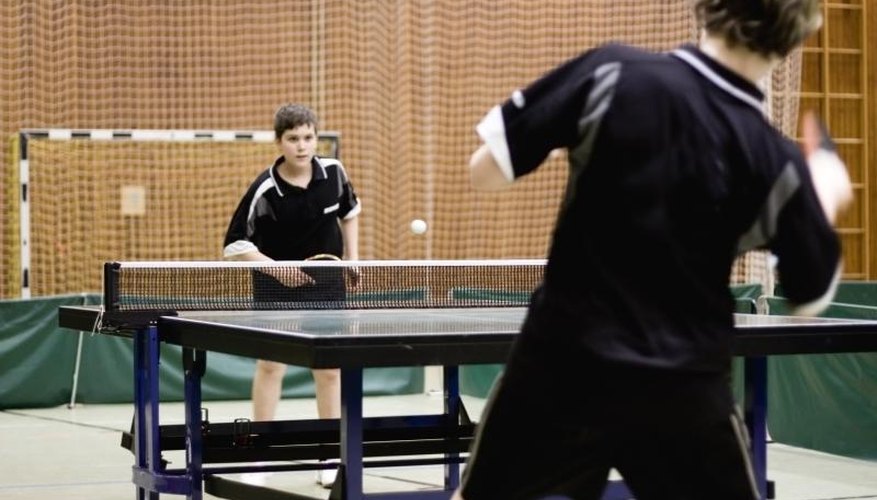



Depending on the type of table tennis – recreational or professional – you play, appropriate dress differs. However, one thing remains constant – wear comfortable clothing to better enjoy the game. And if you do decide to participate in an organized pingpong event, make sure to check the rules before choosing your outfit – not adhering to the dress code can be grounds for disqualification.
General Guidelines
Tight clothing restricts your movement while overly baggy clothing – especially long-sleeved shirts – can interfere with your paddle or the ball. Excessive jewelry can also inhibit play, in addition to distracting your opponent. If you want to wear clothing with explicit language, save it for table tennis in your basement – offensive outfits are not appropriate for pingpong games in public spaces. Finally, pick a comfortable pair of sneakers versus wearing sandals or going barefoot. You will feel more comfortable while protecting your toes from injury.
Tournament Rules
The official USA Table Tennis rule book covers clothing expectations extensively. The dress code for sanctioned matches goes above and beyond the general guidelines. You must wear a short-sleeved shirt and you cannot wear pants during game play without permission from the referee – men wear shorts while women can wear shorts or skirts. In addition, your clothing needs to be of a different color than the ball in use – otherwise, your opponent will not be able to see the ball. Finally, pick a uniform that differs from your opponent’s dress so spectators can easily distinguish their favorite players – and if you play doubles with a partner, make sure you match.
References
Writer Bio
Jennifer Boyden has been writing professionally since 2007. She holds a Bachelor of Fine Arts in creative writing from Emerson College and graduate degrees in mental health counseling and criminal justice from Suffolk University. Boyden also has experience playing and coaching collegiate softball and is a CrossFit Level 1 trainer.