
Rules for a Dropped Third Strike in Softball
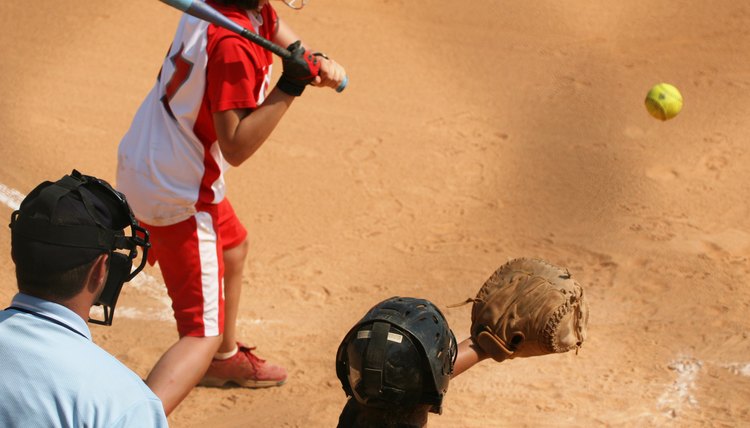
Fans in the stands and players in the dugout are familiar with the "three strikes and you're out" rule. However, when the third strike is dropped by the catcher, the batter is not automatically out. The Amateur Softball Association defines the rules for a dropped third strike. The home plate umpire’s ruling depends on the number of outs, the location of the base runners, and the batter's recognition of the situation and her ability to react to the play.
What is a dropped third strike?
Pete Muller/iStock/Getty Images
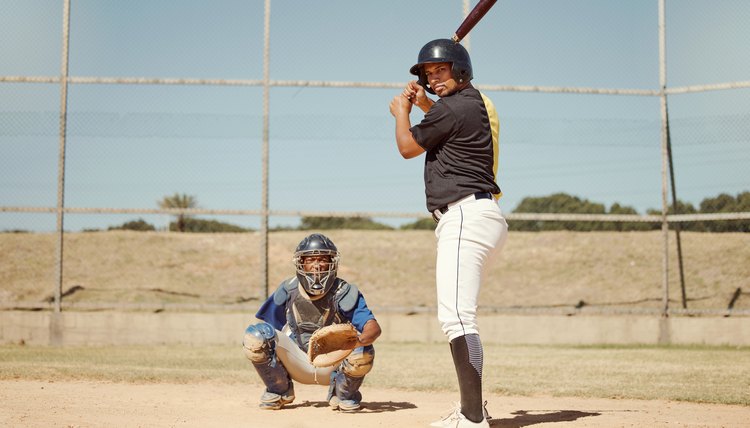
According to the Amateur Softball Association, or ASA, rule book the dropped third strike rule is: "When the catcher fails to catch the third strike before the ball touches the ground and there are fewer than two outs and first base is not occupied at the time of the pitch or any time there are two outs." This uncaught third strike occurs instead of a strikeout and is a mainstay in both fast pitch softball and baseball rules. If the batter does run, the catcher must throw to the first baseman before she gets there to complete the force out.
Fewer than Two Outs
The batter can try to run to first if there's no runner there and her team has less than two outs during her at bat. If a runner is on first, and the batting team has no outs, or only one out, a dropped third strike is automatically an out. This is because a catcher could intentionally drop the ball and throw to a fielder in order to cause a double play at second base or cause a triple play at third base if this rule was not in place.
Two Outs
Pete Muller/iStock/Getty Images
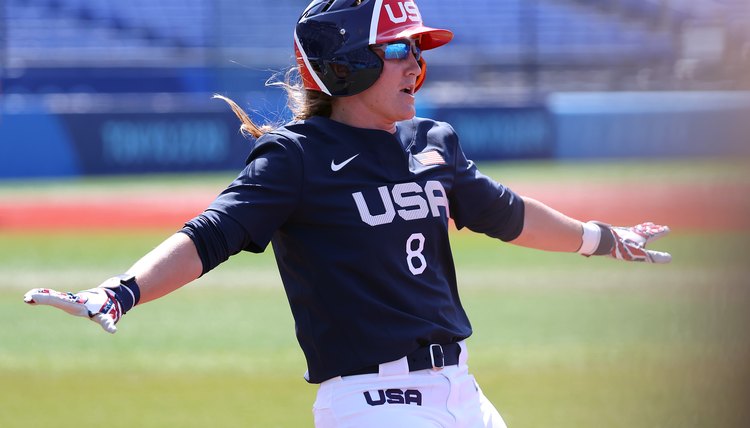
With two outs, the batter-runner can run to first on a dropped 3rd strike even if a teammate is already on first base. That's because the dropped ball is considered live as soon as it bounces, and the defensive team can try to cause a force play at any base.
Situational Awareness
It is not always easy to see that the pitched ball has not been caught, as it happens directly behind the batter. The batter must instantly recognize the drop and run to first and cannot wait for the umpire call. Just like a bunt, base runners also need to be aware of the number of outs, as well as the pitch count, as they will need to decide whether to advance or stay safely on their current base.
What happens if the runner is hit by a throw?
The dropped third strike can lead to some tight throws by catchers, whether it’s in little league softball or Major League Baseball. Unlike a batted ball, if a base runner is hit by a thrown ball then the hitter will be deemed safe and the ball is still a live ball. Softball rules state that as long as the base runner is deemed in the baseline and not too far into foul territory and makes an ordinary effort to get out of the way, she will be deemed safe. If the batter runs intentionally in a way that causes the ball to hit them, then a dead ball is called and they are called out, with the other runners disallowed from reaching the next base. With the potential of being hit with a fair ball, running on a dropped third strike is at your own risk.
Writer Bio
Melanie Clatfelter began writing in 2010 for various websites. She earned her Associate of Arts from Florida State University in 1996, concentrating in biological sciences. After working for five years in early childhood education, Clatfelter earned her diploma in practical nursing from Central Carolina Community College in 2009 and is now a licensed practical nurse in North Carolina.