
Sitting Positions for Children With Tight Hips
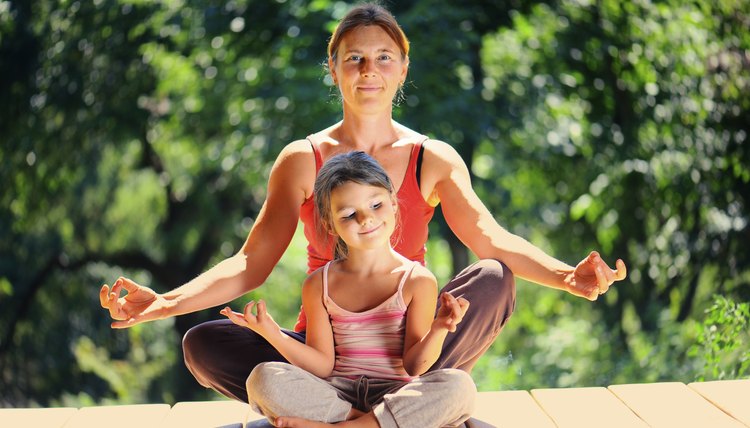
Muscle tightness in the hips can cause problems in other parts of the body, as tight muscles shorten, pulling on surrounding bones and eventually shifting the body out of alignment. Luckily, stretching increases range of motion which counteracts misalignment. What’s more, many stretches can be done simply by changing your child’s normal or most comfortable sitting position. While the following seated postures may be used as actual stretches, they’re also effective during daily activities like playing with toys or watching movies. Just be sure your child sits on the floor when employing these strategies and stays in the position for only one to two minutes initially. As their muscles become more accustomed to the postures they can remain for greater lengths of time.
Staff Pose
Loss of range of motion in the hips is often the result of tight hamstrings which restrict hip extension. To help your child lengthen their hamstrings have them sit on their bottom with their legs extended straight out in front of their body. They should try to keep their knees straight and toes pointed to the sky. If you notice their back rounding, rather than remaining upright, place a yoga block or folded blanket under their bottom.
Butterfly Pose
The Butterfly Pose, also called Bound Angle Pose, passively stretches the hip adductors which are found on the inner thigh. To get into the position, have your child sit on the floor with the soles of their feet touching, and knees falling apart. Ask them to sit up straight, wrap their hands around their feet and pull the heels toward the groin. Once comfortable in this position they can lean forward slightly to take the stretch further. If you observe your child’s back rounding, place a block or folded blanket under their bottom.
Hero Pose
The hip flexors attach the hip bones to the femur and are stretched, along with the quadriceps muscles of the thigh, in Hero Pose. Have your child kneel, with the tops of their feet flat on the floor, and drop their bottom to the floor between their feet. If they feel pressure in the knees or experience too deep of a stretch in the thighs, they can sit on a block or folded blanket. If this puts too much pressure on the tops of their feet, you can roll up a small towel and place it between the feet and the floor.
Half Cow Face Pose
Cow Face Pose lengthens the gluteus medius and minimus muscles which run along the buttocks and outer hip. In this position the ultimate goal is to have your child’s knees stacked directly on top of each other. Have your child sit on their bottom and bend their knees, placing the soles of the feet on the floor. Ask them to slide their right foot under their left knee and place it on the outside of the left hip. Their right knee will rest on the floor, still bent. Stack the left knee over the right knee and slide the left foot to the outside of the right hip. If their weight is not evenly distributed through the sitting bones, prop the bottom up with a folded blanket. After a couple of minutes in this position have your child release and switch sides.
References
- Yoga Anatomy; Leslie Kaminoff and Amy Matthews
- Yoga Journal: It’s all in the Hips
Writer Bio
Nicole Hopping is an American writer based in Hong Kong. As a registered yoga teacher and proponent of unprocessed food, she focuses on the convergence of lifestyle and wellness. Hopping began writing in 2011 and earned a Bachelor's degree in public health and public policy from the University of California Berkeley in 2007.