What does fact checked mean?
At Healthfully, we strive to deliver objective content that is accurate and up-to-date. Our team periodically reviews articles in order to ensure content quality. The sources cited below consist of evidence from peer-reviewed journals, prominent medical organizations, academic associations, and government data.
The information contained on this site is for informational purposes only, and should not be used as a substitute for the advice of a professional health care provider. Please check with the appropriate physician regarding health questions and concerns. Although we strive to deliver accurate and up-to-date information, no guarantee to that effect is made.
How to Treat Acne With Hydrocortisone
Acne can affect any area of the body and occur at any age, although it is most common in teenagers and pregnant women due to hormonal imbalances in the body. Acne occurs when the pores, or hair follicles, in the skin become clogged with a combination of bacteria, dirt, oil and dead skin cells, according to the Mayo Clinic 1. Severe acne can cause a significant amount of skin redness and inflammation, and may lead to scarring if left untreated. Application of hydrocortisone to acne lesions can minimize these symptoms and speed recovery.
Wash the affected area using a mild soap and warm water. Avoid scrubbing your skin, as this will increase irritation and inflammation and worsen your acne.
How to Get Rid of Track Marks on the Arms
Learn More
Exfoliate with a fine-grained product to remove excess skin cells and open up your pores. Exfoliate two to three times per week, or as necessary. Exfoliating too frequently can stimulate your skin to produce more oil.
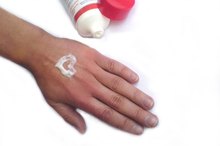
Apply a small amount of hydrocortisone cream directly to inflamed pimples and cysts. The cream will reduce redness and inflammation, ease any itching and may help dry out pimples. Hydrocortisone cream is available by prescription or as an over-the-counter reduced-strength ointment. Use the cream twice a day.
How to Remedy Inflamed Hair Follicles
Learn More
Reduce the amount of hydrocortisone you are using if you notice an increase in acne. MedlinePlus states that hydrocortisone cream can actually cause or worsen acne in some people 2. If you do not notice an improvement in your acne lesions or a reduction in skin redness after seven days, discontinue using the hydrocortisone cream and consult your doctor.
Ask your dermatologist about trying a benzoyl peroxide and hydrocortisone combination lotion 3. According to Drugs.com, this lotion treats acne by drying out acne lesions and reducing associated skin inflammation. Side effects may be severe and include allergic reactions, burning or cracking of the skin, hair growth, hair follicle inflammation, and skin discoloration.
Undergo steroid injections to treat severe or cystic acne. In many cases, injections of hydrocortisone directly into the affected lesions will speed recovery, reduce redness and swelling, and minimize scarring.
Related Articles

How to Get Rid of Track Marks on the Arms
Learn More
How to Remedy Inflamed Hair Follicles
Learn More
Home Remedy for an Infected Pimple
Learn More
How to Get Rid of Pimples Without Scarring
Learn More

Over the Counter Acne Medicines to Replace Duac or Differin
Learn More
How to Handle Peeling Skin While on Accutane
Learn More

Allergic Reaction to Salicylic Acid
Learn More
How to Get Rid of Folliculitis Scars
Learn More
How to Reduce Keratin Production
Learn More
How to Treat a Salicylic Acid Burn
Learn More
References
- Mayo Clinic: Acne
- MedlinePlus: Hydrocortisone Topical
- Drugs.com: Benzoyl Peroxide/Hydrocortisone Lotion
- Getridofacne.org: Acne Treatments
- Acne.com: Treatment Options, Benzoyl Peroxide
- Skroza N, Tolino E, Mambrin A. Adult acne versus adolescent acne: A retrospective study of 1,167 patients. J Clin Aesthet Dermatol. 2018;11(1):21–25.
Writer Bio
Sandra Ketcham has nearly two decades of experience writing and editing for major websites and magazines. Her work appears in numerous web and print publications, including "The Atlanta Journal-Constitution," "The Tampa Bay Times," Visit Florida, "USA Today," AOL's Gadling and "Kraze Magazine."