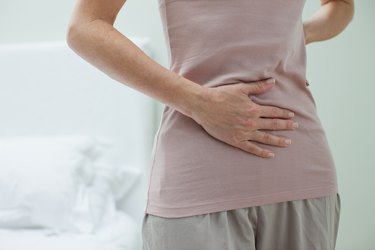
Pain of the abdomen and mid-back are most likely caused by ailments of the upper digestive tract. Gastritis (inflammation of the stomach), gallstones, cholecystitis (inflammation of the gall bladder) and pancreatitis all bring about abdominal pain as well as pain in the mid-back. If left untreated, these conditions may bring about fatal consequences.
General Symptoms
Video of the Day
The time that pain of the mid-back strikes is an important factor that helps reveal the causative condition. Gastritis and stomach ulcers usually cause pain when the stomach is empty, before meals or during the middle of the night. Cholecystitis, gallstones, pancreatitis and upper intestinal ulcers cause pain mainly after meals. Other symptoms of ailments of the upper digestive tract include nausea, vomiting, indigestion, sensitive abdomen and diarrhea.
Video of the Day
Ulcers
Stress, bacterial infection, unhealthy diet and excess uses of non-steroidal anti-inflammatory medications such as aspirin can cause ulcers. Ulcers occur in every section of the stomach and duodenum (upper small intestine), including the back wall. This is the reason that the pain manifests itself in the abdomen and mid-back. Ulcers are pre-cancerous conditions, and if left untreated sometimes develop into cancer of the stomach. Ulcers also potentially can perforate and cause fatal internal bleeding. Ulcer treatment includes antacid medications, antibiotic medication, specialized diets and sometimes surgery.
Gastritis
The inflammation of the stomach tissue is caused by bacteria, excess alcohol consumption, non-steroidal anti-inflammatory medication, stress or a weakened immune system. Auto-immune disorders (disorders when your immune system attacks your body's own cells) also can cause this inflammation. Lifestyle alterations, antacid medication, acid blockers and antibiotic medications are the primary treatment methods of gastritis. Chronic gastritis also may cause the development of cancer cells in the stomach.
Pancreatitis
Inflammation of the pancreas usually results from abdominal surgery, genetic factors, alcoholism, cancer, smoking, elevated blood calcium levels, ulcers, bacterial infections, bile duct obstructions and cystic fibrosis. This condition causes pain simultaneously in the abdomen and the mid-back. Pancreatitis is resolved by treating the underlying cause, fasting and in some instances surgically. Untreated pancreatitis leads to kidney failure, malnutrition, pancreatic cancer, diabetes and breathing problems.
Cholecystitis and Gallstones
Cholecystitis and gallstones both affect the gall bladder. Cholecystitis is inflammation of the gall bladder, which is caused by infection, gall stone blockage, tumors, infection or injury. Gallstones result from excess cholesterol, excess bilirubin or blockages in your bile ducts. Both of these conditions cause pain in the abdomen and between the shoulder blades after meals. Gallstones may be dissolved using medication. In most cases, gallstones and cholecystitis are treated by surgically removing the gall bladder. Surgery is often used because both gallstones and cholecystitis tend to recur after non-surgical treatment. If left untreated, these conditions may cause bile duct blockage, tumors in the pancreas and liver.
Diagnosis
Physicians diagnose these conditions by conducting thorough interviews with their patients as well as using medical testing. Blood tests, ultrasound, endoscopy, X-rays and urine tests are all used to diagnose these conditions.
Is this an emergency? If you are experiencing serious medical symptoms, please see the National Library of Medicine’s list of signs you need emergency medical attention or call 911.