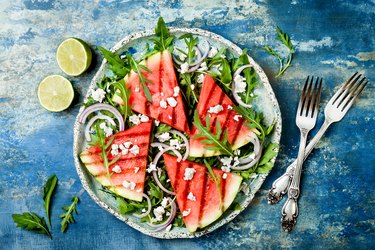
Fruit might not be the food group that comes to mind when searching for iron-rich foods for pregnancy, or anytime you need more iron, but interestingly, there are some fruits high in iron. Here are a few to add to your iron-rich foods list.
The Best Sources of Iron
Video of the Day
Iron is a mineral that's essential for making hemoglobin, a protein in red blood cells that carries oxygen through your body. Most people get adequate iron from their diet, but the National Institutes of Health states that certain groups are at higher risk of iron deficiency.
Video of the Day
These include pregnant women or those with heavy menstrual bleeding, infants and children, people with cancer or heart failure and those gastrointestinal disorders like celiac disease, which prevent you from absorbing iron. In addition, if you're a frequent blood donor, you might be low in iron, or you can at least benefit from eating more iron-rich foods.
In general, the foods at the top of the iron-rich foods list are meats, fish and poultry. Not only do they have the most iron per serving, but also, their iron is in the form of heme iron. Heme iron is more bioavailable than non-heme iron, which means your body can absorb and use it very easily.
Plant foods, like grains, legumes, nuts, seeds, vegetables and fruits have non-heme iron, which is harder for your body to absorb because of certain compounds in the plants.
Read more: Foods That Inhibit Iron Absorption
Fruits High in Iron
Of all of the plants, fruits are generally the lowest in iron. That doesn't mean you shouldn't look to them as a source, but it's probably a good idea to add other iron-rich foods for pregnancy or if you're low in iron.
As a rule, dried fruits tend to be good choices for fruits high in iron. That's because all of the nutrients in dried fruits are more concentrated. For example, a 100 gram serving of dried apricots provides about 3 milligrams of iron. A similar size serving of raisins has about 2 milligrams of iron and 100 grams of dried currents contain over 3 milligrams of iron.
The recommended daily allowance of iron for adult women is 18 milligrams per day, 27 milligrams for pregnant women, and for men it's 8 milligrams per day, so it's easy to see why fruit usually doesn't make the iron-rich foods list. The American Red Cross lists the following as fruits high in iron:
- Strawberries
- Watermelon
- Dates
- Figs
- Raisins
- Prunes and prune juice
- Dried apricots
- Dried peaches
In addition to these, some fruits that you probably consider vegetables, like tomatoes and avocados, also have some iron, although it's not too much. One whole avocado has 1 milligram of iron and a medium-sized tomato has less than 1 milligram.
Benefits of Iron From Fruits
Although they may have less iron per serving, a big benefit of eating fruits as a source of iron-rich foods for pregnancy, or when you have low levels of iron, is that they also come packaged with lots of other important nutrients. Even if you're not pregnant, eating more fruits with iron can help improve your diet quality.
Read more: Fruits to Eat and Avoid During Pregnancy
Most fruits are a source of vitamin C, and according to the Linus Pauling Institute at Oregon State University, vitamin C is a good iron-enhancer. Eating vitamin C-rich foods along with foods that have non-heme iron makes the non-heme iron easier for your body to absorb.
Many of the fruits high in iron are also good sources of antioxidants, like the lycopene in watermelon, the beta carotene in peaches and apricots and the anthocyanins in strawberries. These and other plant compounds in fruits can protect your cells from oxidative damage.
The bottom line is if you need some extra iron-rich foods, don't pass on fruits. As long as you pick the right ones, they're a great opportunity to add iron along with other important nutrients.
- National Institutes of Health Office of Dietary Supplements: “Iron”
- American Red Cross: “Iron-Rich Foods”
- Oregon State University Linus Pauling Institute: “Iron”
- USDA FoodData Central: “Apricot, Dried, Uncooked”
- USDA FoodData Central: “Raisins”
- USDA FoodData Central: “Currents, Dried”
- USDA FoodData Central: “1 Avocado, NS as to Florida or California (201 g)”
- USDA FoodData Central: “Tomatoes, Raw”