Purpose of Nebulizers
Nebulizers are inhaler devices used to treat asthma and allergies. The inhaler aerosolizes medication prescribed by a doctor to help reduce inflammation and dilate air passages. The treatments are used as a preventative measure against acute allergic reactions or as a treatment during asthma attacks. Some nebulizers are available over the counter, but most require a prescription from a doctor.
If you are experiencing serious medical symptoms, seek emergency treatment immediately.
Point of Nebulizers
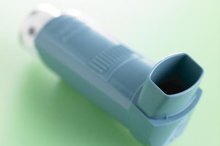
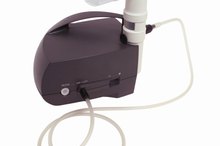
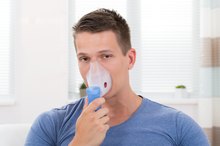
A nebulizer has a liquid medicine in a machine or hand-held bottle with an attached pump. Using the machine or compressing the hand-held pump converts the liquid medication into a mist. The mist is inhaled into the trachea of the patient. The inhalant medication travels to the lungs and reverses the symptoms of asthma and allergies. Wheezing, coughing, or difficulties in breathing are alleviated almost immediately when the medication is delivered.
- A nebulizer has a liquid medicine in a machine or hand-held bottle with an attached pump.
- The inhalant medication travels to the lungs and reverses the symptoms of asthma and allergies.
Delivery Procedures
Drugs Used in Nebulizers
Learn More
When using a machine, place it on a flat surface. For hand-held devices, place the liquid canister upright with the mouthpiece at the bottom. For both a machine and a hand-held device, breathe in the air while sitting upright. Continue slow deep breaths and relax. For the hand-held device, squeeze the pump while breathing in. The mist can be felt at the back of the throat. Breathe in deeply so the mist is inhaled into the lungs.
- When using a machine, place it on a flat surface.
- For hand-held devices, place the liquid canister upright with the mouthpiece at the bottom.
Caring for Nebulizers
Nebulizers are oral applications, so the mouthpiece and machine can accumulate bacteria and other microbes. The nebulizer should be stored in a safe location away from children. The mouthpiece also needs to be cleaned regularly using alcohol or hot water. It also lessens the chance of the pump getting clogged. Hand-held devices with a clogged pump need to be replaced.
- Nebulizers are oral applications, so the mouthpiece and machine can accumulate bacteria and other microbes.
- The mouthpiece also needs to be cleaned regularly using alcohol or hot water.
Nebulizer's Effects
What is the Difference Between Albuterol & Pulmicort?
Learn More
After a patient takes a dose from a nebulizer, the effects are almost immediate. The patient will feel less tightening in the chest and any wheezing should end. Patients should continue to inhale for several breaths or as instructed by a physician. Some asthma patients are instructed to carry the hand-held nebulizer with them at all times to help alleviate symptoms in emergency situations.
- After a patient takes a dose from a nebulizer, the effects are almost immediate.
- Some asthma patients are instructed to carry the hand-held nebulizer with them at all times to help alleviate symptoms in emergency situations.
Types
Several types of nebulizer medications are available, each with advantages and side effects. Acetylcysteine is used to reduce respiratory tract secretions. Albuterol is a common nebulizer medication that attaches to adrenergic bronchodilator, which means the medication opens airway passages to alleviate breathing difficulties. Tobramycin is an antibiotic used to treat patients with breathing difficulties from bacterial infections such as pseudomonas.
- Several types of nebulizer medications are available, each with advantages and side effects.
- Albuterol is a common nebulizer medication that attaches to adrenergic bronchodilator, which means the medication opens airway passages to alleviate breathing difficulties.
Related Articles
Drugs Used in Nebulizers
Learn More
What is the Difference Between Albuterol & Pulmicort?
Learn More
What Is the Difference Between a Vaporizer and a Nebulizer?
Learn More

Difference Between Nebulizer and Humidifier
Learn More

Ingredients in an Asthma Inhaler
Learn More

What Are the Dangers of Using a Nebulizer?
Learn More
How to Use Only Water in My Nebulizer
Learn More

Mucinex Warnings
Learn More
Side Effects of Nebulizer Use
Learn More

List of Nebulizer Medications and Ingredients
Learn More
References
- NHLBI Guidelines for the Diagnosis and Treatment of Asthma. Expert panel report 3: guidelines for the diagnosis and management of asthma.
- Biddiscombe, Martyn. (2017). Inhaler characteristics in asthma. European Respiratory & Pulmonary Diseases. 03. 32. doi:10.17925/ERPD.2017.03.01.32.
- The Cleveland Clinic. Home nebulizer instructions.
- American Academy of Allergy Asthma & Immunology. Tips to remember: inhaled asthma medications.
Writer Bio
Lysis is the pen name for a former computer programmer and network administrator who now studies biochemistry and biology while ghostwriting for clients. She currently studies health, medicine and autoimmune disorders. Lysis is currently pursuing a Ph.D. in genetic engineering.