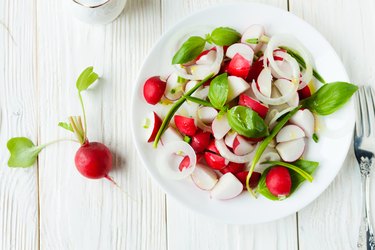
With their crunchy texture and slightly peppery taste, radishes are a delicious addition to side dishes and salads. They're chock-full of fiber, vitamin C and antioxidants, offering both nutrition and flavor.
These savory root vegetables belong to the Brassicaceae family, which also includes other cruciferous veggies, according to the Mayo Clinic.
Video of the Day
Video of the Day
Compared to other root veggies, they have fewer calories and carbs. A stronger immune system, weight loss and better digestion are just a few of the many health benefits you could potentially enjoy by eating radishes.
Radish Nutrition Facts
Low in calories and high in water, these vegetables fit into any diet. They're rich in nutrients, especially vitamin C, potassium, magnesium, calcium and zinc. One cup of sliced radishes has less than 20 calories but nearly 2 grams of fiber, per the USDA.
- Calories: 19
- Total fat: 0.1 g
- Saturated fat: 0 g
- Trans fat: 0 g
- Cholesterol: 0 mg
- Sodium: 45.2 mg
- Total carbs: 3.9 g
- Dietary fiber: 1.9 g
- Sugar: 2.2 g
- Protein: 0.8 g
- Vitamin C: 19% DV
- Iron: 2% DV
- Calcium: 2% DV
- Potassium: 6% DV
- Magnesium: 3% DV
- Zinc: 3% DV
The Health Benefits of Radishes
Radishes have been used as a natural remedy for centuries, and modern research confirms their health benefits. Here's what you can expect when you add these nutrient-rich vegetables to your diet.
1. They Could Make Your Skin Glow
Radishes are over 95 percent water, and staying hydrated by eating water-rich vegetables is good for your skin cells, according to Michigan State University.
These roots also boast large doses of vitamin C, which promotes skin health and slows aging, according to a July 2017 article in Nutrients. This nutrient stimulates collagen formation and neutralizes oxidative stress, protecting your skin from UV radiation and free radicals. Vitamin C promotes wound healing and may prevent age-related skin deterioration.
The B vitamins in radishes also contribute to a youthful complexion and glowing skin. Folic acid, for example, scavenges oxidative damage and may reduce the signs of aging, according to Tri-City Medical Center. Vitamin B6 increases the production of "feel good" hormones and wards off stress, which, in turn, may help prevent acne breakouts and premature aging.
2. They Help You Maintain a Healthy Body Weight
These veggies are high in fiber and low in calories, which will help you fill up quickly and stay fuller longer, which can help with weight management, according to North Carolina University.
Radishes also have diuretic properties and may help reduce fluid retention, according to a May 2016 article in the International Journal of Scientific and Research Publications.
When eaten as part of a balanced diet, radishes can potentially make weight loss easier. For example, swapping potato chips or trail mixes for radishes can save hundreds of calories. Enjoy them as a snack between meals, serve them as a side dish or drink fresh radish juice to quench your thirst and boost your antioxidant intake.
3. Researchers Are Studying the Role of Radishes in Disease Prevention
At this point, the science isn't there to link radishes with disease prevention in humans. But researchers are still hopeful, according to the National Cancer Institute (NCI).
So far, most studies that link eating cruciferous vegetables like radishes with reduced risk of disease have been done on animals. Studies involving humans have been few or have shown only weak connections, per the NCI.
But cruciferous vegetables are still part of a healthy diet. They are rich in glucosinolates, the substances that give cruciferous vegetables their distinctive smell and taste. Glucosinolates break down into biologically active compounds that could potentially have anticancer effects, according to the NCI.
This explains why cancer researchers are keeping an eye on foods like radishes and remaining hopeful they can make a stronger link between eating them and staving off chronic disease.
Types of Radishes
Radishes come in a variety of sizes, shapes and flavors, according to the University of Illinois. Different varieties include:
- French Breakfast
- Cherry Belle
- Plum Purple
- Early Scarlet Globe
- Burpee White
- Black Spanish
- China Rose
It's not just the types of radish roots that will give your diet variety — you'll want to try radish greens, which have versatile culinary uses, according to the University of Wyoming.
Make use of radish greens by preparing them as you would other salad greens: Use them as a base for salads, enjoy them sautéed with meat or process them up to make a great pesto.
Related Reading
Are Radishes Safe?
Despite their health benefits, radishes may not be safe for everyone.
Radishes may be a problem for people with irritable bowel syndrome (IBS), as these and other rough vegetables can cause bloating and gas, explains the University of Michigan.
In one case, a 46-year-old woman suffered anaphylaxis after being exposed to young radish, as detailed in a January 2015 article in Allergy, Asthma & Immunology Research, though instances such as these are rare.
How to Add Radishes to Your Diet
- To reap the health benefits of radishes, serve them whole with a pinch of salt or add them to your favorite salads.
- Sauté or roast them.
- If you're craving salsa, toss them with shallots, peppers, cucumbers, jalapenos and lime juice in a medium bowl.
- Both the radish root and greens are a healthy addition to sandwiches, soups, turkey wraps and risotto.
- Radishes can be used in place of carrots in most recipes, which offers you a chance for greater variety in your diet, as recommended by the Produce for a Better Health Foundation. Try shredding up radishes and adding them to everything from coleslaw to cake (yes, really).
- You can also cut up radishes and use them as a vehicle for healthy dips like beet hummus alongside carrots, celery and cucumber, suggests the Academy of Nutrition and Dietetics.
- You can make radish juice at home and boost the taste by combining it with other nutrient-packed fruits and vegetables like apples, watermelon, sweet potatoes or pears, based on recipe recommendations by Just Juice.
- University of Illinois: Radish
- Tri-City Medical Center: B Vitamins: Your Secret to Good Skin Health
- MDPI: Radish (Raphanus sativus) and Diabetes
- Academia.edu: Growth and Yield Performance of Radish (Raphanus sativus L.) 'cv' 'SNOW WHITE' in Response to Varying Levels of Vermicast Applications
- Produce for a Better Health Foundation: "Top 10 Ways to Enjoy Daikon Radish"
- Academy of Nutrition and Dietetics: "Roasted Beet Hummus Recipe"
- Michigan State University: "Hydrate with Water and Food"
- North Carolina University: "Root for Radishes"
- Mayo Clinic: "Radishes: Big Flavor in a Small Package"
- University of Wyoming: "Rethinking Your Radishes"
- Just Juice: "6 Radish Juice Benefits to Love (And 5 Delicious Radish Juice Recipes)"
- Allergy, Asthma & Immunology Research: "A Case of Anaphylaxis Induced by Contact with Young Radish"
- University of Michigan: "Irritable Bowel Syndrome: Controlling Symptoms With Diet"
- Phytother Res: "Raphanus Sativus L. Var Niger as a Source of Phytochemicals for the Prevention of Cholesterol Gallstones"
- Nutrients: "The Roles of Vitamin C in Skin Health"
- National Cancer Institute: "Cruciferous Vegetables and Cancer Prevention"