
Listen to Your Heart highlights the simple nutrition, fitness and lifestyle changes you can make for a healthy heart at any age.
There's a reason your co-worker, best friend and brother can't get enough of their workouts. Exercise is a body- and mind-altering experience, and those who engage in it understand why it's truly worth the sweat.
"It can literally change your mind, your body, your metabolism, hormones, bone structure, lung capacity, blood volume, sex drive, cognitive function and so much more," Chris Fernandez, an ACE-certified personal trainer, tells LIVESTRONG.com.
Video of the Day
Video of the Day
Adults should aim to get at least 150 to 300 minutes of moderate-intensity exercise a week, plus two strength-training sessions, according to the U.S. Department of Health and Human Services' Physical Activity Guidelines for Americans. You can divide that into at least five days of 30-minute workouts, or fewer longer sessions, as outlined in the chart below. If you prefer vigorous-intensity aerobic exercise, like HIIT or running, aim for 75 to 150 minutes a week.
How Often Should You Exercise?
Duration of Moderate-Intensity Cardio | Minimum Cardio Workouts per Week |
|---|---|
30 minutes | 5 |
45 minutes | 4 |
60 minutes | 3 |
However you choose to move, make it a point to vary your workouts. It's easy to fall into a rut of jogging every day or even lifting weights on back-to-back sessions. But by mixing up your workouts, you'll challenge your body in new ways.
A well-balanced workout routine includes aerobic exercise and resistance training, as well as mobility and recovery days, explains Leada Malek, a certified sports and conditioning specialist (CSCS) and board-certified physical therapist.
Avoid skimping on rest days. If you don't allow your muscles to recover properly in between your workouts, you run the risk of overtraining, which can reverse the benefits of exercise and cause muscle fatigue and weaken your immune system.
10 Big Exercise Benefits
Once you have a consistent workout routine in place, you'll start to reap the many perks of regular activity. But why is exercise so good for you?
"Workouts can have a compounding effect on each other, and after several weeks, individuals will see clear and measurable benefits from their workout regimen," says Alex Rothstein, an exercise science instructor at the New York Institute of Technology and certified personal trainer.
But the benefits of exercise extend beyond stronger muscles and more stamina. You may also improve your mood and energy levels and help your heart health. Here are a few reasons you should make an effort to move more throughout the week.
1. It May Help You Live Longer
There is no shortage of studies that tout the life-extending effects of exercise. A July 2020 BMJ study found folks who work out regularly with a mix of cardio and strength training had a greatly reduced risk of all-cause mortality, including from heart disease, cancer and diabetes.
In fact, research shows that as little as 5 to 10 minutes of vigorous exercise (or 15 minutes of moderate-intensity exercise) each day is linked to a lower risk of death from any cause, according to a March 2019 study in the British Journal of Sports Medicine.
The best part: You aren't required to do any specific type of exercise. Walking at a cadence of 100 steps or more per minute is tied to benefits, per a small May 2018 study in the British Journal of Sports Medicine.
If weight lifting is more your style, research from a June 2016 study in Preventive Medicine shows pumping iron is also linked to your lifespan. Researchers conducted a 15-year study and found older adults who lifted weights at least twice a week had a 46 percent lower risk of all-cause, cancer and cardiac death compared to those who didn't lift.
And it's never too late to start exercising. A June 2019 study in BMJ of 14,599 adults ages 49 to 70 found those who increased their overall physical activity to 150 to 300 minutes of moderate-intensity exercise per week had a 24 percent lower risk of death.
Related Reading
2. Exercise Can Improve Your Cognitive Function
Working out can support focus and attention, as well as increase your motor reaction time — all reasons Wendy Suzuki, PhD, professor of neural science and psychology at New York University, personally likes to break a sweat in the morning.
"Exercise has the capacity to change the brain's anatomy, physiology and function for the better," after just one workout, even a walk, Suzuki says.
Doing some form of exercise, especially an aerobic workout, improves blood flow and delivers oxygen directly to the brain tissue, says Jocelyn Bear, PhD, a board-certified neurologist based in Boulder, Colorado.
Breaking a sweat also releases brain-derived neurotropic factors, or growth factors, that "stimulate the birth of even more new brain cells," Suzuki says. These new brain cells allow the hippocampus — a part of the brain involved in memory and learning — to grow bigger while increasing memory function, according to a January 2011 research article in the Proceedings of the National Academy of Sciences of the United States of America.
"The hippocampus is one of the most vulnerable [of the major brain structures] to neurodegenerative disease states," Suzuki says, noting that Alzheimer's disease attacks it with its plaques and tangles.
"Exercise does not cure Alzheimer's or aging, but the more you work out, the more cells and connections are made and the longer it takes for those aging processes to have an effect," she explains.
According to Bear, "having a high cardiovascular fitness, even in middle age, has been tied to a lower risk of developing dementia or a later onset of dementia."
An April 2018 study in the Journal of Neurology evaluated the exercise habits of older adults in Sweden over a 44-year period and found those who were considered high-fit (people without health conditions who were physically active) staved off the onset of dementia by 9.5 years compared to those deemed low-fit (who had health conditions) and medium-fit (people who engaged in little physical activity and lived with some health conditions).
3. It Can Lift Your Spirits
Exercise can also help your mood by decreasing symptoms of anxiety and depression. That's because "every single time you exercise, it's like you are giving your brain a bubble bath of mood-enhancing neurochemicals," Suzuki says.
When you move, your body releases endorphins, aka feel-good chemicals, and serotonin, which contributes to less depression, stress and anxiety and enhanced emotional wellness, says Julia Kogan, PsyD, a certified group fitness instructor and coordinator of an integrative primary care behavioral health program at Jess Brown VA Medical Center in Chicago.
"Additionally, when we are exercising, we are less focused on negative and troublesome thoughts that can be related to both anxiety and depression," Kogan says. "Exercise can also improve self-esteem and cognitive function and reduce social withdrawal, which can also improve mood."
What's more, "exercise is as effective as medication for mild to moderate depression," says Gail Saltz, MD, associate professor of psychiatry at the NY Presbyterian Hospital Weill-Cornell School of Medicine and host of the Personology podcast.
An April 2022 meta-analysis in JAMA Psychiatry, adults who meet the recommendations of at least 150 minutes a week of moderate cardio had a lower risk of depression than those who got no physical activity.
That builds on older research, including a January 2011 review in The International Journal of Psychiatry in Medicine, that suggests being active is associated with decreased symptoms of depression and anxiety when coupled with medication, and a September 2018 Lancet study that found people who exercise reported having 1.5 fewer poor mental health days in the last month than their peers who didn't exercise.
Interestingly, exercising 30 to 60 minutes a day was associated with the best results, with an average of 2.1 fewer poor mental health days. Exercising more than three hours a day, on the other hand, was associated with worse mental health than not exercising at all. Team sports, cycling and aerobic and gym activities had the strongest association to positive mental health outcomes.
But how much exercise and how effective it is for treating mild-to-moderate depression varies from person to person. Dr. Saltz says exercising for a week or two is helpful for mood, and "for many, they can get relief from anxiety on the day of exercise." For this reason, exercise is helpful as a coping tool for treating mental health conditions and preventing them, Dr. Saltz says.
Don't have 30 minutes to work out daily? Hillary Cauthen, PsyD, a certified mental performance consultant (CMPC) and executive board member for the Association for Applied Sport Psychology, says as little as 10 to 15 minutes of intentional movement can make a difference.
"Instead of focusing on the duration of exercise, focus on the intention to move your body," Cauthen says. "This will set one's mindset in a positive frame, boost emotions and connect to the moment of movement."
4. Working Out Protects Your Heart
Your heart is a muscle — and a mighty important one at that. As the center of your circulatory system, it pumps blood, which carries oxygen and other nutrients to the entire body.
Cardio workouts — running, swimming, cycling, jumping rope or countless other options — "help the heart become more efficient and better able to pump blood throughout the body," says Rachel Bond, MD, a women's heart health and prevention specialist, and system director of women's heart health at Dignity Health in Arizona.
"This means [your heart] pushes out more blood with each beat, allowing it to beat slower, relaxing the arteries and keeping blood pressure under control," Dr. Bond says.
These aren't the only heart benefits of exercise: Working out can also help improve your cholesterol and triglyceride profiles, as well as your blood sugar and insulin levels. Plus, exercise can help you maintain a healthy weight and reduce overall inflammation, which helps lower your risk of heart disease, Dr. Bond says.
Don't think you need to jump right into the high-intensity stuff, either. Walking is a great alternative to more intense workouts and a highly underrated form of exercise, according to Kogan. In fact, brisk walking at least five days a week for 30 to 60 minutes was linked with a lower risk of heart attacks and sudden cardiac death in a February 2020 study in Circulation.
Related Reading
5. It Can Help You Sleep Better
If you have trouble falling and staying asleep at night, getting a workout in during the day can help make it easier to hit the hay.
"Physical activity appears to improve sleep quality by reducing the sleep latency, or time it takes to fall asleep, and the number of interruptions waking an individual during the night. It also increases time spent in deeper stages of sleep, allowing for more restorative sleep," says Allen Towfigh, MD, medical director of New York Neurology and Sleep Medicine, P.C. and attending physician at Weill Cornell Medical Center.
Sleep disturbance is common among those with anxiety and depression, too, Kogan notes. "When anxiety and depression are reduced, sleep quality tends to improve. So, because exercise can help with mood management, it can also improve sleep quality," she says.
Working out also reduces the severity of obstructive sleep apnea, a common sleep disorder that pauses breathing throughout the night. According to the Mayo Clinic, exercising at least 30 minutes on most days of the week can help ease symptoms of obstructive sleep apnea.
But if you have trouble falling asleep at night, it might be best to avoid exercise close to bedtime.
"Exercise definitely triggers the sympathetic nervous system — the part of the nervous system that triggers a flight-or-fight response, which, when activated, can delay sleep onset," Dr. Towfigh says. "There are studies suggesting exercising in the morning may be more beneficial for certain individuals because it can allow your body's sympathetic nervous system to wind down before bedtime."
However, Dr. Towfigh says this finding isn't universal and not everyone is "quite as sensitive to the activating elements of exercise, therefore, it is not a one-size-fits-all recommendation."
Exercising at a moderate intensity might also be more beneficial for sleep than high-intensity workouts. A June 2019 systematic review in the European Journal of Physiotherapy found moderate exercise was more favorable for sleep quality than vigorous exercise.
The review looked at different exercise intensities and found more moderate-intensity exercise, such as walking, tai chi and Pilates, was linked to improved sleep quality. So before you snooze, try some Pilates-inspired exercises to help you relax.
Related Reading
6. Exercise Builds Stronger Bones
Exercise helps keep your bones strong by increasing bone mineral density levels, says Kristen Gasnick, PT, DPT, a board-certified doctor of physical therapy practicing in outpatient orthopedics.
"Bone mineral density refers to the average concentration of mineral in a defined section of bone and correlates with bone strength," she explains. "Most people reach peak bone mass by the age of 30, and levels steadily decline thereafter, especially in sedentary individuals."
The best exercises for strong bones are strength training and dynamic weight-bearing activities, like walking, running, dancing and plyometric exercises, Gasnick says.
That's because "osteocytes [bone-forming cells] comprise more than 95 percent of the cells within adult bones and respond to mechanical strain, either through joint-reaction forces, which occur when muscles are recruited during resistance training or through ground-reaction forces, which occur during dynamic weight-bearing activities," she says. "When subject to mechanical strain, osteocytes send signals to increase the activity of osteoblasts — cells responsible for building new, stronger bone."
Gasnick also suggests doing body-weight exercises, such as squats, lunges and step-ups, for older adults and anyone new to an exercise routine. "Any movement that allows the joints to bear the weight of one's body helps to build up bone strength," she says.
Once you've nailed down these movements, you can add weight to increase the intensity and build more muscle strength. "Research has indicated that load-bearing exercises that use many large muscle groups and require multi-joint movements tend to elicit the most beneficial response when it comes to improving bone health," Rothstein says.
"Handheld dumbbells are best to use to add weight to avoid the potential compression of the spine that a barbell can induce, something to be especially mindful of for those with osteoporosis," Gasnick says.
Related Reading
7. It Helps You Move With Ease
Think of exercise like your daily dose of vitamins — it supplements your ability to do everyday tasks, such as walking, climbing stairs, carrying groceries, lifting luggage overhead, moving a couch or playing with your kids.
The more you do it, the more you "diminish your risk of disease and musculoskeletal issues and pain," Jeff Young, CSCS, a kinesiologist and certified strength and conditioning specialist based in New York City, tells LIVESTRONG.com.
And when the body is strong and conditioned, it "increases your ability to tolerate loads, forces and stressors, and allows the different systems in the body — bone, muscle, nervous and endocrine — to communicate better with each other and function better overall," Young says.
To help you stay strong, Young recommends building workout routines around functional movements, like the squat, hip hinge and multi-directional lunges.
Related Reading
8. Working Out Can Help You Lose Weight
There are many factors that affect weight loss, but it ultimately comes down to energy balance: "You need to be in a calorie deficit," Young says. "The input side of the equation is the food we eat, and the output side is physical activity."
To be in a calorie deficit, you need to eat fewer calories than you burn from exercise. When you incorporate more movement in your day, then you are increasing your chances of expending more calories than you take in.
Young also notes that physical activity has the greatest influence on overall metabolism. "As we age, we tend to reduce physical activity. It can then negatively impact basal/resting metabolic rate and body mass, which sabotages metabolism."
Exercise can help boost a slow metabolism, which "leads to increased calorie burn and will help drive weight loss," he says. "Exercise can also reduce feelings of hunger, especially if vigorous-intensity exercise is included within the exercise regimen."
9. It's Linked With a Lower Risk of Cancer
Many risk factors for cancer are out of your control, but your activity level is one you can alter. In fact, physical activity is linked to a lower risk of 13 types of cancer, including colon, breast, endometrial and liver cancers, according to the American Cancer Society.
Another bonus: Getting sweaty is also tied to better outcomes during cancer remission. An April 2020 study in the Journal of the National Cancer Institute found people with breast cancer who followed national physical activity guidelines before they were diagnosed and after chemotherapy treatment had lower rates of recurrence and death than people who did not meet exercise guidelines.
10. Exercise May Help Reduce Your Risk of Diabetes
More than 34 million Americans have diabetes, according to the Centers for Disease Control and Prevention, a condition in which your body either resists the effects of insulin — the hormone that regulates the amount of glucose (sugar) in your blood — or doesn't produce enough of it required to maintain normal levels.
What's more, 88 million adults have prediabetes, meaning they have a higher than normal blood sugar level.
But regular exercise is linked with a 26 percent reduction in the risk of developing type 2 diabetes, per an October 2016 analysis in Diabetologia. That's because "increased strength and conditioning improves insulin function and sensitivity," Young says.
Exercise also helps after a diabetes diagnosis. A November 2010 study in JAMA showed doing aerobic and resistance training together helped improve A1C levels, which test your average blood sugar level for the past two to three months, in people with type 2 diabetes.
Ready to Exercise Regularly? Start With These Beginner Workouts
The 9 Best Workout Videos for Beginners, According to a Trainer

This 20-Minute Walk-Jog Workout Is Perfect for Beginner Runners
Grab Your Favorite Free Weights for This Full-Body Beginner Workout
HIIT Over 50: A 20-Minute, Low-Impact Workout for Beginners
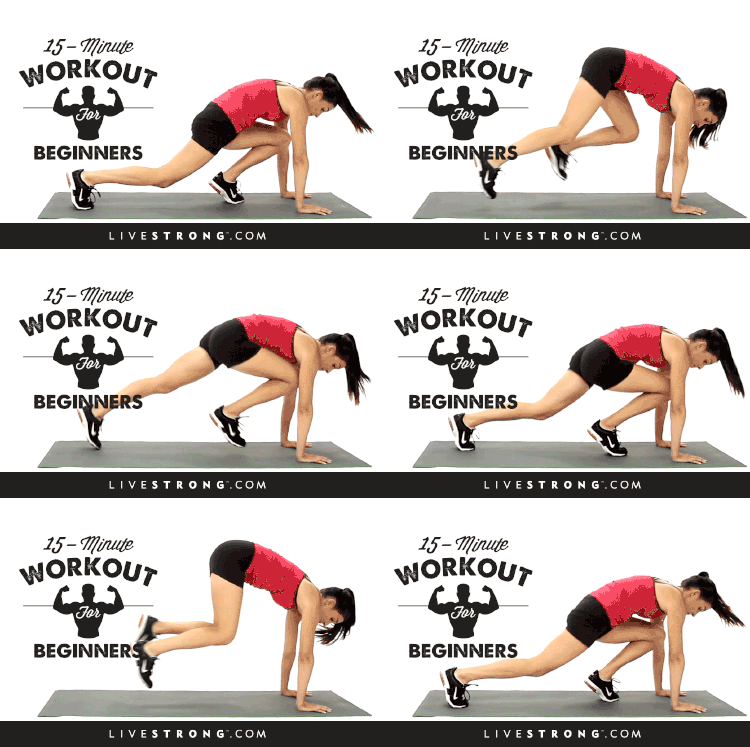
This 15-Minute Full-Body Workout Was Tailor-Made for Beginners
- BMJ: "Recommended Physical Activity and All Cause and Cause Specific Mortality in US Adults: Prospective Cohort Study"
- HHS: "Physical Activity Guidelines for Americans"
- Proceedings of the National Academy of Sciences of the United States of America: "Exercise Training Increases Size of Hippocampus and Improves Memory"
- Journal of Neurology: "Fitness and Dementia Risk Further Evidence of the Heart-Brain Connection"
- Circulation: "Exercise-Related Acute Cardiovascular Events and Potential Deleterious Adaptations Following Long-Term Exercise Training: Placing the Risks Into Perspective–An Update: A Scientific Statement From the American Heart Association"
- Journal of Sleep Research: "A Single Night of Sleep Deprivation Increases Ghrelin Levels and Feelings of Hunger in Normal‐Weight Healthy Men"
- European Journal of Physiotherapy: "The Effect of Physical Activity on Sleep Quality: A Systematic Review"
- Mayo Clinic: "Sleep Apnea"
- Maintained Physical Activity Induced Changes in Delay Discounting
- Comparative Relevance of Physical Fitness and Adiposity on Life Expectancy
- Strength training helps older adults live longer
- National Cancer Institute: "Cancer Stat Facts: Common Cancer Sites"
- American Cancer Society: "Exercise Linked With Lower Risk of 13 Types of Cancer"
- Centers for Disease Control and Prevention: "National Diabetes Statistics Report, 2020"
- Diabetologia: "Physical Activity and Incident Type 2 Diabetes Mellitus: A Systematic Review and Dose–Response Meta-Analysis of Prospective Cohort Studies"
- JAMA: "Effects of Aerobic and Resistance Training on Hemoglobin A1C Levels in Patients with Type 2 Diabetes: A Randomized Controlled Trial"
- British Journal of Sports Medicine: "Beneficial Associations of Low and Large Doses of Leisure Time Physical Activity with All-Cause, Cardiovascular Disease and Cancer Mortality: A National Cohort Study of 88,140 U.S. Adults"
- British Journal of Sports Medicine: "How Fast is Fast Enough? Walking Cadence (Steps/Min) as a Practical Estimate of Intensity in Adults: A Narrative Review"
- Preventive Medicine: "Is Strength Training Associated With Mortality Benefits? A 15-Year Cohort Study of U.S. Older Adults"
- BMJ: "Physical Activity Trajectories and Mortality: Population-Based Cohort Study"
- The International Journal of Psychiatry in Medicine: "Exercise for the Treatment of Depression and Anxiety"
- Journal of the National Cancer Institute: "Physical Activity Before, During, and After Chemotherapy for High-Risk Breast Cancer: Relationships With Survival"
- JAMA Psychiatry: "Association Between Physical Activity and Risk of Depression"
- Lancet Psychiatry: "Association between physical exercise and mental health in 1·2 million individuals in the USA between 2011 and 2015: a cross-sectional study"