
How to Learn Dragon Style Kung Fu Movements
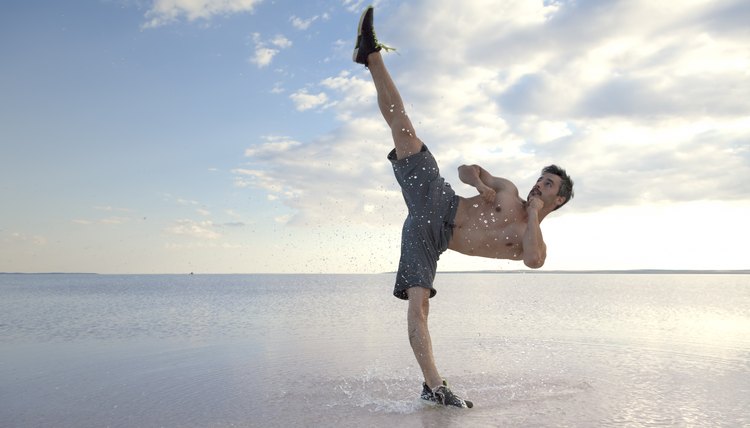
Kung Fu is typically thought of as a physical martial art, but Shaolin Monks fused combat techniques with their spiritual way of life to create Shaolin Kung Fu. From Shaolin Kung Fu sprang a wealth of new styles, like Dragon Style Kung Fu, which draws inspiration from mythology and spirituality. There are also animal styles, which draw from powerful creatures like the tiger.
Shaolin Kung Fu
Shaolin Kung Fu is a fusion of pure Kung Fu and Shaolin boxing. Developed by Buddhist monks, Shaolin Kung Fu is a martial arts system that emphasizes mental and spiritual growth that comes from the dedicated practice of martial arts. They developed a style of Kung Fu that's unique to China and became famous in Western culture when Bruce Lee used some of the techniques in his films.
The basic techniques of Shaolin Kung Fu were transformed over hundreds of years and new styles emerged, like Dragon Style Kung Fu, which preserved the overarching philosophy of mental and physical growth but introduced new techniques, mostly drawing on inspiration from animals and the mythological dragon.
Read More: List of Kung Fu Fighting Styles
Dragon Style
The dragon is revered and respected in the East, but it's not necessarily seen as evil. It's not uncommon for the dragon to be portrayed as happy and peaceful in Chinese culture. It's believed that the dragon could change instantly from a forceful beast to a pacifist.
Just like the mystical dragon, Dragon Style Kung Fu is full of contrast. You're expected to move gently and fluidly, then in an instant become aggressive and throw a strike. It's a very adaptable style of martial arts, because you become the opposite of your opponent.
In boxing terms, Dragon Style Kung Fu fighters would be considered counter-punchers, who wait for their opponent to strike first and then react by attacking their weakest point.
There are two types of Dragon Style Kung Fu, one is known as Northern Dragon Style and the other is Southern Dragon Style. In Nothern Dragon Style, your goal is to be rooted to the ground so that you can draw energy from it for strikes and blocks.
Southern Style focuses more on fluidity. The techniques involve rapid flurries of kicks, punches and blocks coupled with spinning evasion techniques. Southern Dragon Style fighters focus more on evading and confusing their opponents, and Northern Style fighters stand their ground.
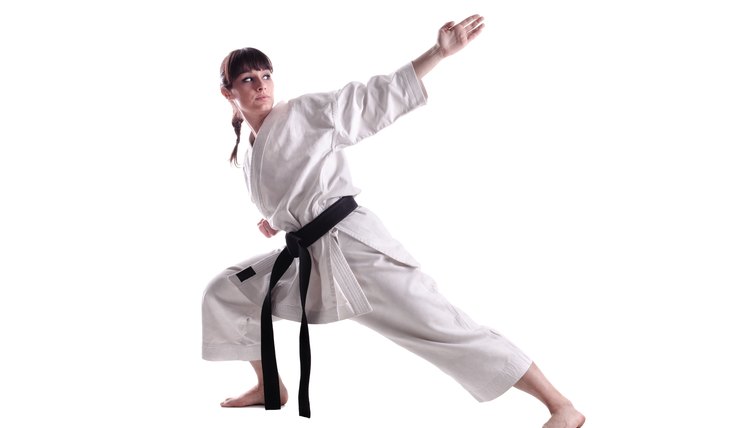
Basic Techniques
While there's a wide variety of techniques that you can use in Dragon Style, the basic strikes are easy to learn.
Dragon Claw
A unique feature of Dragon Style is the dragon claw technique. Take your thumb, index and middle finger and curl them in together to form a pincer. You can use that to rapidly grab at tendons, ligaments and pressure points in your opponents body.
Read More: How to Learn Kung Fu at Home
Hand Strikes
In Dragon Style Kung Fu, you can use a closed fist or open palm to strike opponents. If you use your palm, open up your hand and use the heel of your palm, the hardest part, to strike. Closed fist strikes also work well and are similar to the punches used in Shaolin Kung Fu.
Kicks
Kicks are generally limited to below the waist in Dragon Style Kung Fu. There are also sweeping techniques where you try to kick the legs out from under your opponent. When kicking below the waist, try to hit the knee or groin, since those are particularly sensistive areas.
References
- Black Belt Mag: Dragon Kung Fu
- Susanti VH, Suryadi BU, Yandi S, Redjeki T. Phytochemical screening and analysis polyphenolic antioxidant activity of methanolic extract of white dragon fruit (hylocereusundatus). Indonesian J. Pharm. 2012:23(1);60-64. doi:10.14499/indonesianjpharm0iss0pp60-64
- Dragon fruit bite size fruit cubes. FoodData Central. U.S. Department of Agriculture. Published April 1, 2019.
- Jiménez G, Gómez G, Pérez AM, Blanco-Metzler A. Estimation of glycaemic index of peach palm (Bactris gasipaes) cooked fruits and chips, and pitahaya (Hylocereus spp.) pulp. Arch Latinoam Nutr. 2012;62(3):242-8.
- Sinha R, Jha MK, Karuna K. Dragon fruit: A fruit for health benefits and nutritional security. Int J Agric Sci. 2018;8(2):97-100. doi:10.24247/ijasrapr2018014
- Vitamin C: Fact Sheet for Consumers. National Institutes of Health Office of Dietary Supplements. Updated December 10, 2019.
- Omidizadeh A, Yusof RM, Roohinejad S, Ismail A, Abu Bakar MZ, Bekhit AEA. Anti-diabetic activity of red pitaya (Hylocereuspolyrhizus) fruit. Rsc Adv. 2014;4(108):62978-86. doi:10.1039/C4RA10789F
- Poolsup N, Suksomboon N, Paw NJ. Effect of dragon fruit on glycemic control in prediabetes and type 2 diabetes: A systematic review and meta-analysis. PLoS ONE. 2017;12(9):e0184577. doi:10.1371/journal.pone.0184577
- Kleinheinz A, Lepp U, Hausen BM, Petersen A, Becker WM. Anaphylactic reaction to (mixed) fruit juice containing dragon fruit. J Allergy Clin Immunol. 2009;124(4):841-2. doi:10.1016/j.jaci.2009.05.025
- Mallhi T, Sarriff A, Adnan A et al. Effect of fruit/vegetable-drug interactions on CYP450, OATP and p-glycoprotein: A systematic review. Trop J Pharm Res. 2015;14(10):1927. doi:10.4314/tjpr.v14i10.27
Writer Bio
Henry is a Philadelphia-based personal trainer and writer. He has trained a wide range of clients, from professional athletes to working professionals. Feel free to contact Henry with any questions regarding an article that he's written.