Alena Dvorakova/iStock/Getty Images
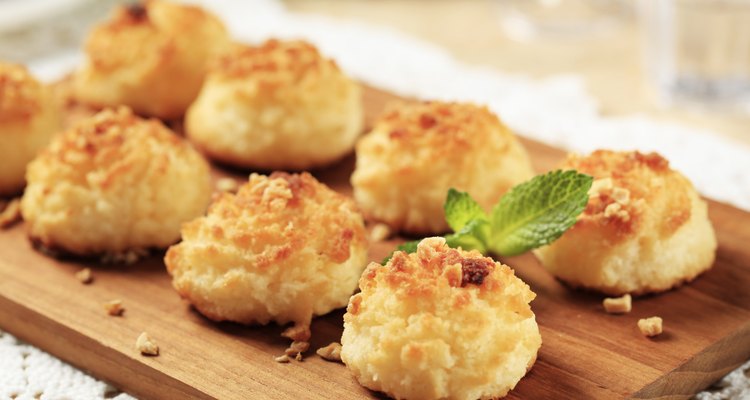
Coconut macaroons, with their distinctive appearance and rich taste, are a satisfying sweet treat. Whether you like them pale white in color or a toasty tan shade, coconut macaroons have a crunchy exterior and a chewy inside. Naturally gluten-free, coconut macaroons can be transformed into a vegan baked good simply by substituting the egg used in the recipe for a vegan-friendly alternative.
What Is Veganism?
Veganism is a form of vegetarianism in which no animal products are consumed whatsoever. While some vegetarians may eat eggs, dairy products, honey and even seafood, vegans abstain from all of these items, although some allow honey in their diet. Vegans also try to abstain from using animal products, such as leather or wool, in their daily lives. A vegan diet is often plentiful in legumes, whole grains, and fruits and vegetables to ensure that all essential nutrients, including protein, are provided for. Coconut macaroons are almost entirely vegan, with the exception of the eggs.
Coconut Nutrition
The primary ingredient in coconut macaroons is shredded, dried coconut meat. Harvested from mature coconuts, the meat is dried in pieces, then shredded and sweetened before it is packaged for sale. Coconut meat can be found in most grocery stores, as well as in some health food stores. A 1-cup serving of dried, flaked and sweetened coconut has 388 calories per serving, almost 8.5 grams of dietary fiber, 2.7 grams of protein, 44 grams of carbohydrate and more than 31 grams of sugar. Before mixing the ingredients for your coconut macaroons, gently toast the flakes until they are a delicate brown to add depth to the flavor of your finished macaroons. This is especially helpful in a vegan recipe, as you will not be able to rely on the richness of eggs for extra flavor.
Egg Replacement Options
Choose an egg replacement based the role of eggs in your recipe. For coconut macaroons, the function of the egg whites is to bind together the other ingredients, while providing a little extra richness in flavor. Common egg substitutes include prepackaged egg substitutes, blended flax seeds or cornstarch, all of which help bind ingredients. These will not help with leavening, however. Use 2 tablespoons of flax seed powder with 3 tablespoons of water to make enough substitute for one egg. Similarly, use 1 tablespoon of cornstarch with 3 tablespoons of water to replace one egg.
Adding Extras To Your Macaroons
To break up the richness of coconut macaroons, add in small pieces of dried fruit, such as chopped dried apples or apricots, or even raisins. Mix in the dried fruit with your other ingredients before baking. Another option is to flavor macaroons with carob, a natural chocolate substitute. Baking chocolate can sometimes contain milk or milk products. Carob is a vegan-friendly alternative with a similar taste profile. Drizzle melted carob onto macaroons after they have cooled, or for an extra decadent cookie, dip half of the cookie into melted carob for a contrasting appearance.
Related Articles
How to Store Coconut Macaroons After ...

Can I Make Boxed Devil's Food Cake Mix ...
Baking With Almond, Rice & Coconut Flour

Shredded Coconut Substitute

Non-Dairy Alternatives for Heavy ...
How to Cook Coconut-Crusted Tilapia ...

The Nutrition in Coconut Powder
Can You "Sour" Almond Milk With Vinegar?
Can You Substitute Eggs With Cream ...
What Is the Nutrition in Coconuts & ...
Role of Xanthan Gum in Vegan Baking

What Frosting Goes Well With Angel Food ...
How to Eat Buckwheat Raw

What Can I Use as an Egg Substitute ...
Coconut Breakfast Cookies with Cacao ...
How to Bake Non-Graham Cracker ...
Nutrients and Fiber in Coconut
How to Cook With Coconut Flour for Main ...
How to Make Green Tea Frappuccino
What Can Be Used Instead of Eggs for ...
References
- The Vegetarian Resource Group: Veganism in A Nutshell
- The Kitchn: How To Make The Best Coconut Macaroons
- The Cook's Thesaurus: Eggs
- U.S. Department of Agriculture: Coconut Meat, Flaked, Dessicated, Sweetened
- Whole Foods Market: The Advantages of Carob
- The Joy of Cooking; Irma S. Rombauer, Marion Rombauer Becker and Ethan Becker
Writer Bio
Marie Dannie has been a professional journalist since 1991, specializing in nutrition and health topics. She has written for "Woman’s Own," the "Daily Mail," the "Daily Mirror" and the "Telegraph." She is a registered nutritionist and holds a Bachelor of Science degree with honors in food science from the University of Nottingham.
Photo Credits
Alena Dvorakova/iStock/Getty Images