Health Benefits of Pumpkin Seed Oil

Health Benefits of Pumpkin Seed Oil
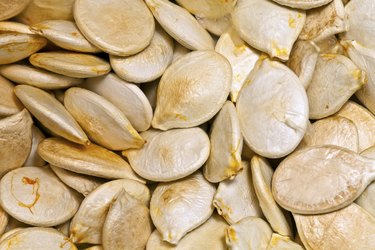
Photo Credit Pumpkin Seeds image by Sarpy from Fotolia.com

Pumpkin seed oil comes from the flat, green and nutty-tasting pumpkin seed, which has been used by Native Americans and others for years. The pumpkin seed is one of the most nutrition-packed seeds you can eat, according to OrganicFoodie.com. Pumpkin seed oil may be beneficial in treating various ailments and contains important nutrients, according to Eco-Natural.com. While believed to benefit certain conditions, pumpkin seed oil and other nutritional supplements have not been medically proven to treat any medical condition.

Overall Wellness

The essential fatty acids in pumpkin seed oil are necessary for cells to perform vital actions. Eco-Natural.com states that pumpkin seed oil has one of the three highest concentrations of Omega-3 and Omega-6 fatty acid oils. Pumpkin seed oil also contains nutrients, minerals and vitamins important for a properly functioning body, such as zinc, vitamins E and A and phytosterol. Though used by many, pumpkin seed oil, fatty acids, vitamins E and A and phytosterol have not been medically proven to treat any ailment.

Prostate Health

WHfoods.com recommends pumpkin seed oil for American men 50 and older with Benign Prostatic Hypertrophy, or BPH. BPH symptoms include an enlarged prostate gland in which testosterone may be a prominent culprit. Testosterone and dihydrotestosterone, or DHT, are said to stimulate the prostate cells to overproduce. Pumpkin seed oil seems to inhibit the multiplication of prostate cells.

Parasitic Infection

Chinese research reported on OrganicFoodie.com found that pumpkin seeds appear to benefit people with acute schistosomiasis---a severe parasitic disease---transmitted mostly through snails in Asia and Africa. The amino acid, cucurbitin, found in pumpkin seed, might play a role in defeating this parasite.

Bladder Health

The American Journal of Clinical Nutrition features a study on the effect of pumpkin seeds on bladder stone formation. Numerous children in the northern regions of Thailand were developing bladder stones. These children had low phosphate urine levels---due to their limited diets---and high levels of calcium oxalate in their urine, which forms stones. Twenty boys ages 2 to 7 were fed pumpkin seeds for various lengths of time; those who ate the seeds for the longest periods of time had lower amounts of calcium oxalate and increased levels of phosphorus in their urine. The researchers recommend using pumpkin seeds to increase levels of phosphorus and lower your chances of getting a bladder stone disease.

Heart Health

Phytosterol comes from plants and is a component of pumpkin seed oil. Phytosterols are a chemical much like cholesterol; when an adequate amount are present in the diet, they appear to reduce cholesterol blood levels, says WHfoods.com. An editorial by Gustav Schonfeld, of Washington University School of Medicine, tells about the effects of various amounts of stanols--chemically related to sterols--on lowering LDL cholesterol. Ninety-three healthy human participants, along with mice, were given varied quantities of stanols. Results found that the humans and mice taking the largest amount of phytostanols had the most significant decrease of LDL cholesterol.

References

Article reviewed by demand12324 Last updated on: Jul 20, 2010

Must see: Photo Galleries

Member Comments