
Sports Awards Ideas for Kids
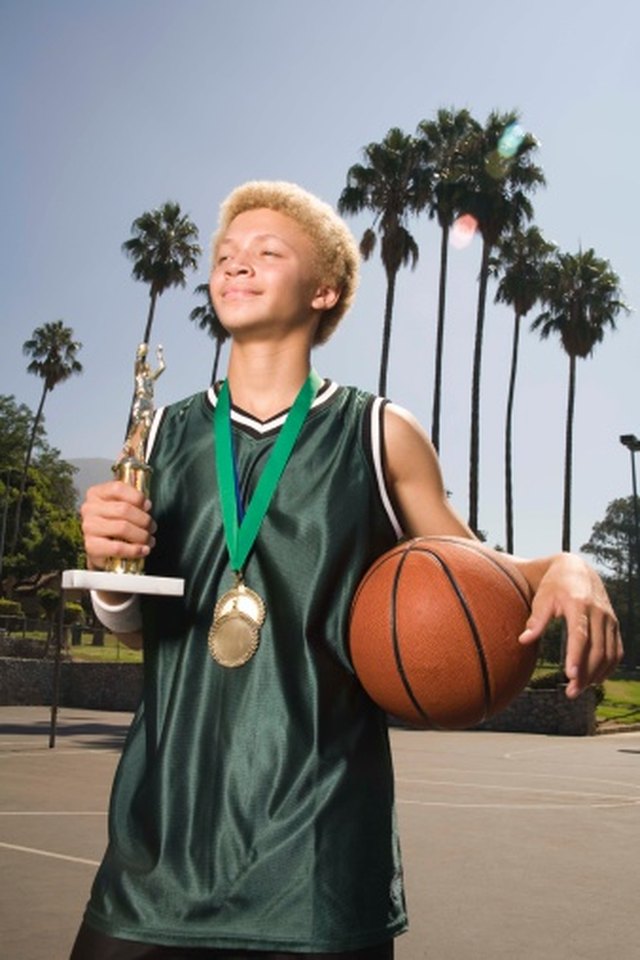
Coaches of kids' sports teams often want to present special awards at the end of games or the end of the season. The physical awards can range from handmade certificates to customized trophies, depending on the coach's preference. When giving awards, try to honor as many players as possible, or give some type of award to every player on the team so no one is excluded.
Game Certificates
Instead of giving all awards at the end of the season, give a special certificate to one or two players after each game, recognizing outstanding achievements or contributions. You can either present one Most Valuable Player (MVP) award, an award for the best defensive and offensive players of the game or an award for strong leadership during the game. Keep track of who receives the award after each game so each child gets an award at some point during the season. This also prevents one or two children from always getting the awards after each game.
Athletic Awards
At the end of the season, give young players special awards that highlight their athletic abilities. Make awards such as MVP, best defensive player and best offensive player, if it fits the sport. Give out other awards pertaining to certain skills and abilities needed for the sport you're coaching. For example, if you are coaching basketball, give out an award for the best shooter, best dribbler and best passer. You also can give awards for the fastest player and the highest jumper. An award for the player who is the most improved athletically is also appropriate.
Attitude Awards
Attitude awards are a good way to recognize kids who may not be the most athletic players at the end of a sports season. Give out awards for kids who have the best attitude, best sportsmanship and best leadership skills. You also can give awards for the most supportive player or those who have the most team spirit. These attitude awards can give players a boost of confidence at an age where they might need it most.
Funny Awards
Funny awards can get a good laugh out of players and their parents at the end of the season. Make sure the kids you are coaching are old enough to appreciate and understand the humor of your awards. Give awards for things such as the biggest "oops" or the best fall of the season. You also can give funny superlative awards, voted on by players or coaches, that highlight each player's personality. For example, you can give an award for team clown or a "most likely to" award, such as "most likely to fall asleep at practice."