Turmeric Powder & Yeast Infection
Yeast, or Candida, is part of your normal internal flora. However, it can also cause opportunistic infections in individuals with reduced immunity. In recent times, there has been a significant increase in yeast infections, which include mild conditions such as oral thrush and vaginitis to severe, life-threatening infections of the blood and brain. Your doctor may prescribe antifungal medications to manage the condition. Individuals with systemic infections may require hospitalization. Certain supplements and herbs such as turmeric also may help to control candida infections.
If you are experiencing serious medical symptoms, seek emergency treatment immediately.
Turmeric
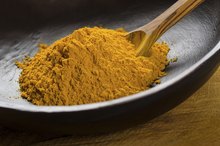
Turmeric is a spice and a coloring agent derived from the roots and underground stems of the perennial Curcuma longa plant. It has a characteristic yellow color and contains a polyphenolic antioxidant called curcumin, which is responsible for its biological activity. Turmeric has been used in Chinese and Ayurvedic medicine to treat several conditions, including ulcers, arthritis, indigestion, heart disease and certain cancers. Apart from using turmeric powder in food, you can also consume it in the form of capsules, tablets, liquid extracts and tinctures. The dose is different in different people. Your doctor may help you to establish a regimen that is right for you.
- Turmeric is a spice and a coloring agent derived from the roots and underground stems of the perennial Curcuma longa plant.
- Turmeric has been used in Chinese and Ayurvedic medicine to treat several conditions, including ulcers, arthritis, indigestion, heart disease and certain cancers.
Role in Yeast Infections
Can Turmeric Cause Blood Sugar Levels to Drop?
Learn More
Curcumin significantly inhibited the growth of candida isolated from HIV patients in the laboratory, according to a study published in the February 2009 issue of the “Journal of Antimicrobial Chemotherapy.” Another study in the December 2010 issue of the journal “Bioscience Reports” reveals that the anti-candida activity of curcumin is due to its ability to induce oxidative stress in the yeast cell and thereby, preventing the development of Candida hyphae, which invade the human cells. Candida also has significant antioxidant activity and it may protect the immune cells from the harmful effects of free radicals. This may help the body to fight yeast infections more effectively. Curcumin also has the ability to lower the resistance of yeast cells to antifungal drugs such as flucanozole. This helps to restore the sensitivity of candida to these drugs, according to a study in the May 2011 issue of the journal “Medical Mycology.”
- Curcumin significantly inhibited the growth of candida isolated from HIV patients in the laboratory, according to a study published in the February 2009 issue of the “Journal of Antimicrobial Chemotherapy.” Another study in the December 2010 issue of the journal “Bioscience Reports” reveals that the anti-candida activity of curcumin is due to its ability to induce oxidative stress in the yeast cell and thereby, preventing the development of Candida hyphae, which invade the human cells.
Side Effects
Turmeric has been used in food for centuries and is considered safe when consumed in moderate amounts. High doses of turmeric or curcumin supplements, however, may cause an upset stomach and diarrhea. They may also cause allergic reactions such as skin rash and hives in rare cases. The Memorial Sloan-Kettering Cancer Center warns patients with gallstones and gastrointestinal disorders against the use of turmeric supplements 4. Turmeric may also interfere with certain anticoagulant, diabetes and antacid medications.
- Turmeric has been used in food for centuries and is considered safe when consumed in moderate amounts.
- The Memorial Sloan-Kettering Cancer Center warns patients with gallstones and gastrointestinal disorders against the use of turmeric supplements 4.
Precautions
How to Do a Lemon Juice Candida Cleanse
Learn More
Always talk to a doctor before using turmeric supplements. Remember that the Food and Drug Administration does not regulate the turmeric supplements sold in the United States. So, make sure that the supplement has been tested for safety and efficacy by an independent testing agency such as the U.S. Pharmacopeial Convention, whose USP seal appears on the label of tested products.
Related Articles
Can Turmeric Cause Blood Sugar Levels to Drop?
Learn More
How to Do a Lemon Juice Candida Cleanse
Learn More
Toxicity and Berberine HCL Supplements
Learn More
Can a Turmeric Overdose Cause a Stroke?
Learn More

Antibiotics Recommended for Infected Wounds
Learn More
What Are the Treatments for Candida Parapsilosis?
Learn More
Which Yeast Is Used to Gain Weight?
Learn More

Side Effects of Culturelle
Learn More
Side Effects of Curry Powder
Learn More
Can Certain Herbs Increase Dopamine?
Learn More
References
- "Journal of Antimicrobial Therapy"; Curcumin as a Promising Antifungal of Clinical Interest; C. V. B. Martins, et al.; February 2009
- "Bioscience Reports"; Antifungal Curcumin Induces Reactive Oxygen Species and Triggers an Early Apoptosis but Prevents Hyphae Development by Targeting the Global Repressor TUP1 in Candida Albicans; M. Sharma, et al.; December 2010
- "Medical Mycology"; Curcumin Acts Synergistically with Fluconazole to Sensitize a Clinical Isolate of Candida Albicans Showing a MDR Phenotype; A. S. Garcia-Gomes, et al.; May 2011
- Memorial Sloan-Kettering Cancer Center: Turmeric
- National Center for Complementary and Integrative Health (NCCIH). Turmeric. Updated November 27, 2018.
- Gupta SC, Patchva S, Aggarwal BB. Therapeutic roles of curcumin: lessons learned from clinical trials. AAPS J. 2013;15(1):195-218. doi:10.1208/s12248-012-9432-8
- Daily JW, Yang M, Park S. Efficacy of turmeric extracts and curcumin for alleviating the symptoms of joint arthritis: a systematic review and meta-analysis of randomized clinical trials. J Med Food. 2016;19(8):717-29. doi:10.1089/jmf.2016.3705
- Hewlings SJ, Kalman DS. Curcumin: A review of its effects on human health. Foods. 2017;6(10). doi:10.3390/foods6100092
- Cavaleri F. Presenting a new standard drug model for turmeric and its prized extract, curcumin. Int J Inflam. 2018;2018:5023429.
- Khayat S, Fanaei H, Kheirkhah M, Moghadam ZB, Kasaeian A, Javadimehr M. Curcumin attenuates severity of premenstrual syndrome symptoms: a randomized, double-blind, placebo-controlled trial. Complement Ther Med. 2015;23(3):318-24. doi:10.1016/j.ctim.2015.04.001
- Maulina T, Diana H, Cahyanto A, Amaliya A. The efficacy of curcumin in managing acute inflammation pain on the post-surgical removal of impacted third molars patients: a randomised controlled trial. J Oral Rehabil. 2018;45(9):677-683. doi:10.1111/joor.12679
- Buhrmann C, Mobasheri A, Busch F, et al. Curcumin modulates nuclear factor kappaB (NF-kappaB)-mediated inflammation in human tenocytes in vitro: role of the phosphatidylinositol 3-kinase/Akt pathway. J Biol Chem. 2011;286(32):28556-66. doi:10.1074/jbc.M111.256180
- Fusar-poli L, Vozza L, Gabbiadini A, et al. Curcumin for depression: a meta-analysis. Crit Rev Food Sci Nutr. 2019;1-11. doi:10.1080/10408398.2019.1653260
- Kunnumakkara AB, Bordoloi D, Padmavathi G, et al. Curcumin, the golden nutraceutical: multitargeting for multiple chronic diseases. Br J Pharmacol. 2017;174(11):1325-1348. doi:10.1111/bph.13621
- Burge K, Gunasekaran A, Eckert J, Chaaban H. Curcumin and intestinal inflammatory diseases: molecular mechanisms of protection. Int J Mol Sci. 2019;20(8). doi:10.3390/ijms20081912
- Bai X, Oberley-deegan RE, Bai A, et al. Curcumin enhances human macrophage control of Mycobacterium tuberculosis infection. Respirology. 2016;21(5):951-7. doi:10.1111/resp.12762
- Lee SW, Nah SS, Byon JS, et al. Transient complete atrioventricular block associated with curcumin intake. Int J Cardiol. 2011;150(2):e50-2. doi:10.1016/j.ijcard.2009.09.530
- Milton S. Hershey Medical Center. Possible interactions with: turmeric. Updated January 5, 2015.
- American Academy of Allergy, Asthma & Immunology. Can spices cause allergic reactions?
- Tayyem RF, Heath DD, Al-delaimy WK, Rock CL. Curcumin content of turmeric and curry powders. Nutr Cancer. 2006;55(2):126-31. doi:10.1207/s15327914nc5502_2
- Gupta SC, Kismali G, Aggarwal BB. Curcumin, a component of turmeric: from farm to pharmacy. Biofactors. 2013 Jan-Feb;39(1):2-13. DOI: 10.1002/biof.1079.
- Gupta SC, Patchva S, Koh W, Aggarwal BB. Discovery of curcumin, a component of golden spice, and its miraculous biological activities. Clin Exp Pharmacol Physiol. 2012 Mar;39(3):283-99. DOI: 10.1111/j.1440-1681.2011.05648.x.
- Patrick K, Stanbrook MB. Take turmeric with a grain of salt. CMAJ. 2018;190(43):E1270. doi:10.1503/cmaj.181358
Writer Bio
A freelance writer and blogger since 2007, Shamala Pulugurtha's work has appeared in magazines such as the "Guide to Health and Healing" and prominent websites like Brain Blogger and NAMI California. Pulugurtha has a postgraduate degree in medical microbiology from Manipal Academy of Higher Education, India and has completed course work in psychology and health education.