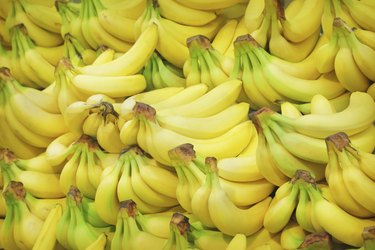
Individuals with gout may be better able to manage their condition by following a low-purine diet. Purines are naturally occurring compounds that your body metabolizes into uric acid. If you consume too many high-purine foods, the excess uric acid may build up in your joints and cause the pain, swelling and stiffness that are the primary symptoms of gout. Game and organ meats, meat extracts or sauces, and certain seafood -- such as scallops or herring -- are high-purine foods that gout sufferers should avoid. Fresh fruits, such as bananas, are low-purine foods and should not cause any problems for gout sufferers.
Purine Content
Video of the Day
According to the Reliant Medical Group, all types of fresh fruit -- including bananas -- contain only trace amounts of purines. Foods considered to have a moderate concentration of purines, or between 9 to 100 milligrams in every 100 grams, include most types of poultry, meat and fish, as well as vegetables such as beans, legumes, spinach, asparagus and mushrooms. Any foods with more than 100 milligrams of purine compounds per 100 grams are defined as high-purine.
Video of the Day
Recommended Intake
To help treat gout, aim to have at least two to four servings of fruit, such as bananas, each day, recommends the University of Pittsburgh Medical Center. Consume enough carbohydrates from low-purine produce, because a diet that lacks adequate carbohydrate sources may increase your level of ketone compounds and raise your blood's concentration of uric acid. Approximately 50 percent of the caloric content of a balanced low-purine diet should be supplied by low-fat carbohydrates, such as those from fruit.
Effect of Vitamin C
The vitamin C supplied by bananas may also play a role in lowering the risk of developing gout. In 2009, a study published in the "Archives of Internal Medicine" reported that men with a diet rich in vitamin C may be less likely to have gout as they age. One large banana contains nearly 12 milligrams of vitamin C, or about 13 percent of a man's daily requirement and 16 percent of a woman's. More research is needed, however, because subsequent studies -- including one published in "Arthritis & Rheumatism" in 2013 -- indicate that supplementing with vitamin C does not significantly lower the uric acid levels of people with gout.
Serving Tips
To increase your intake of your low-purine produce while following a gout diet, aim to fill at least half of your plate at every meal with allowed vegetables and sliced or whole fruit like bananas. Eating plenty of low-fat dairy products regularly may help prevent gout, determined a 2011 study conducted by medical researchers at the University of Auckland. For a low-purine, nutrient-dense snack, mix sliced bananas with plain low-fat yogurt or prepare a smoothie from frozen bananas and low-fat milk.
- National Institute of Arthritis and Musculoskeletal and Skin Diseases: Questions and Answers About Gout
- Myrtue Medical Center: Low Purine Diet - Gout Diet Treatment
- Reliant Medical Group: Purine Content of Foods
- UPMC: Low-Purine Diet
- Archives of Internal Medicine: Vitamin C Intake and the Risk of Gout in Men - A Prospective Study
- Arthritis & Rheumatism: Clinically Insignificant Effect of Supplemental Vitamin C on Serum Urate in Patients with Gout - A Pilot Randomized Controlled Trial
- USDA National Nutrient Database: Basic Report - 09040, Bananas, Raw
- Current Rheumatology Reports: Effects of Dairy Intake on Hyperuricemia and Gout