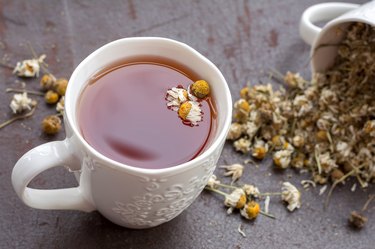
When chronic acid reflux becomes a problem, switching from traditional tea or coffee to caffeine-free herbal teas may help reduce heartburn and other symptoms. Tea made from the Camellia sinensis leaves – which includes "black" and green tea – and coffee both contain caffeine and other substances that can aggravate acid reflux, also known as gastroesophageal reflux disease, or GERD. Herbal teas may offer more than just a neutral alternative. Some have properties that might actually help soothe acid reflux symptoms.
Chamomile Tea
Video of the Day
Perhaps one of the best-known natural remedies for digestive trouble, chamomile has a centuries-old history as a versatile medicinal herb. A member of the daisy family, it has also been used for a variety of gastrointestinal conditions and is thought to be effective for calming the stomach, dispelling gas and soothing other conditions likely to accompany acid reflux. There are preliminary indications that chamomile could have antiinflammatory properties similar to certain nonsteroidal antiinflammatory drugs. That, combined with its long-trusted use in easing indigestion, makes it a good bet for acid reflux. A small percentage of people may have allergic reactions to chamomile.
Video of the Day
Licorice Tea
The medicinal or folk use of licorice root is also ancient. Many curative properties are attributed to the root. Historically it has been administered as a cough medicine, laxative, sedative and even an antibiotic. In Europe, one of its more popular historic folk uses has been to promote healing of gastric ulcers. Licorice has also been shown to reduce stomach acid and is known for its antiinflammatory effect of stimulating the production of cortisol, the body's own natural antiinflammatory steroid. In an animal study, licorice was shown to be as effective as famotidine (Pepcid) in protecting against ulcers and as effective as a certain nonsteroidal antiinflammatory drug in reducing inflammation. Prolonged use of licorice root can cause fluid retention and high blood pressure. However, a special preparation called deglycyrrhizinated licorice, called DGL, is free from these side effects.
Ginger Tea
Sometimes people with acid reflux or indigestion have some nausea along with their other symptoms. Ginger has properties that may be helpful for nausea, leading to its use for morning sickness and nausea associated with chemotherapy and some types of surgery. Ginger's anti-nausea effects aren't completely understood, but compounds in ginger may work through serotonin receptors, perhaps acting directly on the gastrointestinal system and the central nervous system. Another theory about ginger's activity relates to what's known as gastric emptying. Slow gastric emptying can worsen acid reflux in some people. The longer it takes food to empty from the stomach into the intestines, the more opportunity lingering stomach contents have to cause problems such as acid reflux. Some evidence supports the idea that ginger may help the stomach to empty in a more timely fashion, but it's unknown for sure whether ginger tea has this effect.
Teas to Avoid
Although mint tea has many properties that aid digestion, mint also has properties that can loosen the lower esophageal sphincter, which is the muscular valve that closes to keep stomach contents from leaking into the esophagus. That's bad for acid reflux. The same goes for yerba mate, which also contains caffeine.
Considerations
When it comes to dietary intake and acid reflux symptoms, people tend to be highly individual in terms of what helps and what hinders. There is increasing scientific interest in herbal medicine; however, the lack of standardization of herbal ingredients limits the conclusions that can be drawn about particular preparations. Many herbs have always been valued for their medicinal properties. On the other hand, many herbs are unknown quantities to modern science, having potential for drug interactions and other untoward effects. Herbal tea is not a magic cure for acid reflux, but swapping out the coffee or caffeinated beverages for a soothing herbal tea is something you can try easily, and it may even help ease your symptoms.
Medical advisor: Jonathan E. Aviv, M.D., FACS
- Molecular Medicine Reports: Chamomile: A Herbal Medicine of the Past With Bright Future
- AAPS PharmSciTech: Licorice: A Possible Anti-inflammatory and Anti-ulcer Drug
- World Journal of Gastroenterology: Effect of Ginger on Gastric Motility and Symptoms of Functional Dyspepsia
- Herbal Medicine: Biomolecular and Clinical Aspects, 2nd edition; Ann M. Bode and Zigang Dong
- Annals of Surgery: Delayed Gastric Emptying in Patients With Abnormal Gastroesophageal Reflux
- University of Maryland Medical Center: Mint
- Life Sciences: Chamomile, a Novel and Selective COX-2 Inhibitor With Anti-inflammatory Activity
Is this an emergency? If you are experiencing serious medical symptoms, please see the National Library of Medicine’s list of signs you need emergency medical attention or call 911.