
How to Calculate BMI Using Waist and Hip Measurements
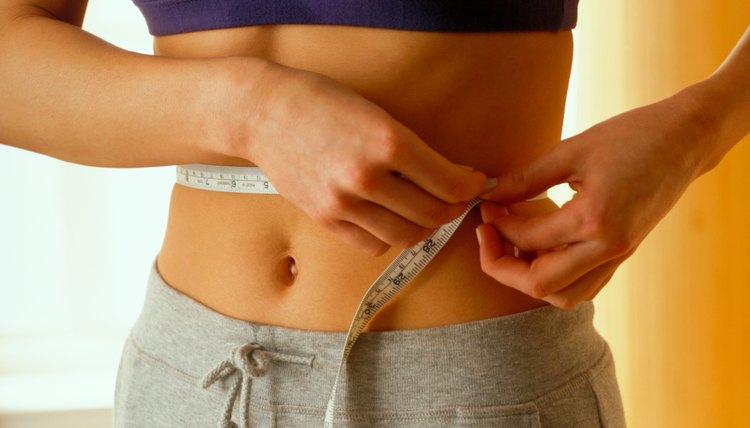
You can't actually calculate your body mass index, or BMI, using your waist and hip measurements. These two measurements are used to calculate your waist-to-hip ratio, or WHR, which can be helpful for determining whether you're carrying your weight in a healthy way. Knowing your BMI, plus your waist and hip measurements can be useful though, just for slightly different purposes.
Calculating Body Mass Index
The easiest way to figure out your BMI is to use an online calculator. If you'd rather do the math yourself, use this equation using your height and weight:
BMI = (weight in pounds x 703) / (height in inches x height in inches).
To be at a healthy weight, your BMI needs to be between 18.5 and 24.9. For a person who's 5 feet, 6 inches tall, this would be from 118 to 148 pounds.
BMI is useful as a screening tool. It can help pinpoint whether you might have a high body fat level, which could indicate an increased risk of obesity-related health conditions, such as cancer, diabetes and heart disease.
Waist-to-Hip Ratio
To calculate your waist-to-hip ratio, measure your waist about halfway between your ribs and your belly button. Then measure your hips at their widest point. Write down both numbers, and divide your waist measurement by your hip measurement. The simple equation is: WHR = waist in inches / hips in inches.
If your WHR is less than 0.8, you have a healthy "pear" shape, but a WHR greater than 0.8 makes you an "apple" shape. Carrying extra weight around your waist puts you at an increased risk for health problems, as it indicates you have more of a dangerous type of fat around your organs called visceral fat.
Waist-to-hip ratio is good for predicting an increased risk of heart disease, high cholesterol, high blood pressure, gallbladder problems, breast cancer and type 2 diabetes, because these are all associated with high levels of visceral fat.
Limitations of BMI
BMI doesn't actually measure body fat, and people with the same BMI numbers may have widely different body fat percentages. In one study, people with a BMI of 18.5 had body fat percentages ranging from 24.6 to 32.3 for women and 12.2 to 19 percent in men. The research was published in the American Journal of Clinical Nutrition in 2012. The average body fat percentage is 25 to 31 percent for women and 18 to 24 percent in men, but fit and athletic people typically have lower body fat levels ranging from 14 to 24 percent for women and 6 to 17 percent for men. To get your body fat tested, consult a fitness professional. Some gyms and health clubs offer this service to their members.
While BMI is a good screening tool for many people, it may overestimate body fat in people with a lot of muscle, such as athletes and bodybuilders. On the other hand, BMI can underestimate body fat in older people, who tend to have less muscle. BMI is just a number, so it doesn't give any information about how fat is distributed across your body.
Using Both Measurements
WHR determines whether you have too much fat around your middle, but the measurement has limitations too. WHR doesn't tell you whether you weigh too much or if you're carrying too much body fat overall. Looking at both measurements -- BMI for an overall body fat estimate and WHR to check for visceral fat -- is a more comprehensive way to assess whether your body composition is relatively healthy.
If you want additional information to assess your health, your doctor can order more accurate tests to measure body fat levels and your risk for obesity-related health problems, including heart disease and diabetes.
References
- University of Nevada Cooperative Extension: Weighing in on Body Fat
- American Cancer Society: Normal Weight Ranges: Body Mass Index (BMI)
- Centers for Disease Control and Prevention: Body Mass Index: Considerations for Practitioners
- The American Journal of Clinical Nutrition: Weight, Shape, and Mortality Risk in Older Persons: Elevated Waist-Hip Ratio, Not High Body Mass Index, Is Associated With a Greater Risk of Death
- Medical Journal of Australia: Waist-Hip Ratio Is the Dominant Risk Factor Predicting Cardiovascular Death in Australia
- European Journal of Clinical Nutrition: Body Mass Index, Waist Circumference and Waist:Hip Ratio as Predictors of Cardiovascular Risk -- A Review of the Literature
- The American Journal of Clinical Nutrition: Percentage of Body Fat Cutoffs By Sex, Age, and Race-Ethnicity in the US Adult Population From NHANES 1999-2004
- American Council on Exercise: What Are the Guidelines for Percentage of Body Fat Loss?
Writer Bio
Based in Massachusetts, Jessica Bruso has been writing since 2008. She holds a master of science degree in food policy and applied nutrition and a bachelor of arts degree in international relations, both from Tufts University.