yipengge/iStock/Getty Images
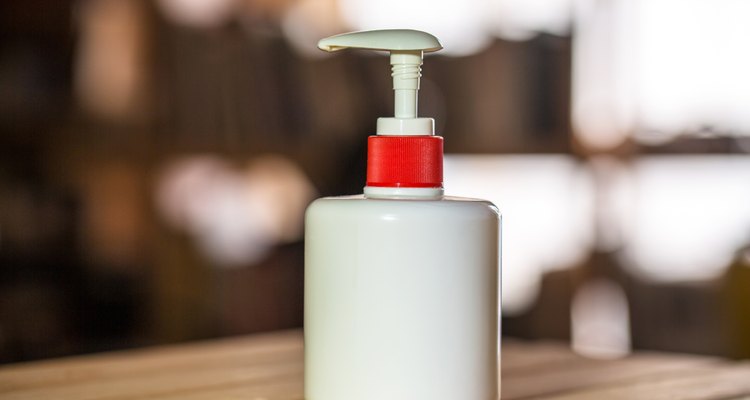
When you want to show someone affection, you may reach out and touch them -- hold their hand, brush their cheek. The point is to show you care, but you may also be unintentionally spreading disease-causing germs. Keeping your hands clean is one of the most effective ways to prevent the spread of germs and disease, according to the Centers for Disease Control and Prevention. Since soap and water is not always readily available, hand sanitizer was created in 1966 to serve as a secondary method of hand washing.
Lets See What You're Made Of
In order to be effective, hand sanitizer must contain at least 60 percent alcohol; most hand sanitizers contain 60 to 65 percent, according to the Maryland Poison Center. The alcohol in hand sanitizers is in the form of either ethyl alcohol, also known as ethanol, or isopropyl alcohol, also known as rubbing alcohol. Hand sanitizers also often contain humectants, like glycerin, which help prevent skin dryness, and emollients or moisturizers, like aloe vera, which replace some of the water that is stripped by the alcohol. Avoid hand sanitizers that contain any harsh chemicals, like bleach.
Debunking the Myth
You may think hand sanitizer serves as a secondary method of hand washing when soap and water is not available, but according to Johns Hopkins Medicine, hand sanitizer may actually be more effective at ridding your hands of microbes. Hand sanitizer kills a variety of pathogens that regular soap may leave behind. These pathogens include fungi, the Influenza virus, HIV, the Hepatitis-B virus and drug-resistant bacteria, such as MRSA and VRE. Hand sanitizers do not get rid of all germs, however, and they are not effective if hands are visibly soiled. If you can actually see dirt or oil on the surface of your hands, you must wash your hands with soap and water.
The Right Time
Hand sanitizers are appropriate for most situations where hand washing is required or recommended. You can use hand sanitizer before preparing food, eating, and taking out or inserting contact lenses. Hand sanitizers also effectively clean the hands after using the toilet, touching animals, preparing food, blowing your nose, coughing into your hand or handling garbage. Healthcare workers can use hand sanitizer prior to treating wounds, administering medication or inserting IVs.
Correct Use
For hand sanitizer to be effective, you must use it correctly. The Connecticut Department of Public Health recommends applying the hand sanitizer directly into a dry palm, making sure you use enough to cover the entire surface of your hand. Once you’ve applied the hand sanitizer, rub your hands together until the sanitizer has been absorbed and the entire surface of your hand is dry. Don't rinse the hand sanitizer off; instead, allow it to dry, at which time the alcohol will evaporate on its own. Although small amounts of hand sanitizer will not cause harm if ingested, it is best to avoid contact with your mouth or eyes until after the hand sanitizer has evaporated.
Related Articles
The Effectiveness of Purell

Effectiveness of Non-Alcohol Hand ...
How Does Soap Kill Germs?
How to Remove Stains From Nylon ...

Do You Have to Wash Your Hands When You ...
How to Clean Cheerleading Shoes
How to Get Rid of Belly Button Odor
Homemade Foaming Hand Sanitizer
How to Sterilize Safety Goggles

Sports & Nonverbal Communication

How to Sanitize Cooking Utensils With ...
How to Kill a Nail Bed
How to Take the Ball Off of a Lip Ring
How Do I Repair Scratches on an Oakley ...
What Is Hand Salve?

How to Not to Get Smudges on Your ...
How to Freeze Empanadas
How to Take a Blade Out of a Disposable ...

How to Avoid Bad Breath With a Tongue ...

How to Get Lint Out of Your Nails
References
- Connecticut Department of Public Health: Hand Sanitizers
- Maryland Poison Center: The Facts About Hand Sanitizers
- Ohio Department of Health: The Use of Alcohol-Based Hand Sanitizers in Ohio Schools
- Johns Hopkins Medicine: Cleaning Your Hands
- Centers for Disease Control and Prevention: Wash Your Hands
Writer Bio
Lindsay Boyers has a Bachelor of Science in nutrition from Framingham State College and a certificate in holistic nutrition from the American College of Healthcare Sciences. She is also a licensed aesthetician with advanced training in skincare and makeup. She plans to continue on with her education, complete a master's degree program in nutrition and, ultimately, become a registered dietitian.
Photo Credits
yipengge/iStock/Getty Images