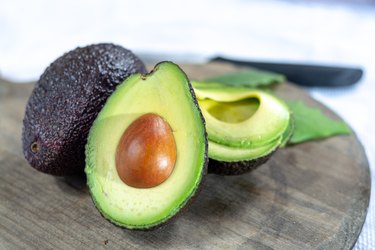
Avocados are generally served raw, such as in guacamole, a salad or a sandwich. If you have a hard specimen but need a ripe avocado, think twice before microwaving it. If you microwave an unripe fruit, it may soften slightly, but it won't taste like a ripe avocado.
Tip
Microwaving an avocado isn't a good idea. Heating the flesh can alter its flavor and the fruit won't ripen properly.
Video of the Day
Before You Microwave Avocado
It can be disappointing when you want chips and homemade guacamole but your avocados are as hard as a rock. Short of going out and buying a ripe avocado, your best bet is to soften them.
Video of the Day
Avocados, along with other fruits, such as apples and kiwifruit, produce ethylene gas. Ethylene acts as a hormone that triggers ripening. Place your unripe avocados in a brown paper bag with an apple or kiwi and close it up to soften the avocado faster.
As the Academy of Nutrition and Dietetics points out, when fruits that produce a lot of ethylene gas during ripening are stored with other unripe fruit, it hastens ripening. This process still may take a few days, though.
Putting your avocados in the microwave doesn't help them ripen faster. You may get a slightly soft fruit with sliceable flesh, but the flavor won't have mellowed into the buttery, nutty deliciousness of a ripe avocado. Instead, you'll get a watery vegetable with an off taste.
Heating Hurts Avocado Flavor
The University of Texas Southwestern Medical Center points out that avocados are usually served raw. When the fruit is heated, some versions can become inedible. The Hass avocado, or alligator pear — so-called due to it's tough, leathery exterior — can sustain heat for a short time without becoming bitter. This variety is found in most grocery stores.
If you want a warm avocado dip or heated slices to put in a soup, cut ripe avocado into slices or cubes and just zap in the microwave for a few seconds until they reach the desired warmness. The intention isn't to cook the fruit but raise the temperature to match your recipe.
In general, if you've chosen a ripe avocado, use it as a condiment for sandwiches or tacos, toss cubes into a salad, or add slices to toasted bread, like this recipe for Walnut Ricotta Avocado Toast on Almond Bread from LIVESTRONG.com.
If you are using avocados, cut them just before serving — otherwise, they're likely to brown when they come into contact with air. A little lemon or lime juice can delay discoloration, but it won't prevent it altogether.
Health Benefits of Ripe Avocado
Avocado is chock-full of healthy fats and seems to have beneficial effects on blood lipids. According to a meta-analysis published in the Journal of Clinical Lipidology in January-February 2016, regular avocado consumption may significantly reduce total cholesterol, triglyceride levels and LDL cholesterol — the bad kind. Researchers concluded that avocados make a good substitute for other dietary fats, such as the saturated type found in meat and dairy.
The Academy of Nutrition and Dietetics hails the monounsaturated fat in avocado as a dietary addition that may reduce your risk of heart attacks and strokes when used instead of saturated fat.
One average avocado provides about 227 calories, according to the USDA. These calories are made up of 2.7 grams of protein, 21 grams of fat and 11.8 grams of carbohydrates. The fruit also offers 9.3 grams of fiber for healthy digestion and it's a good source of vitamin E, potassium and folate.
- USDA Food Data Central: "Avocado, California"
- Academy of Nutrition and Dietetics: "Choose Healthy Fats"
- Journal of Clinical Lipidology: "Impact of Avocado-Enriched Diets on Plasma Lipoproteins: A Meta-Analysis."
- University of Texas Southwestern Medical Center: "An Avocado a Day Is Good for Your Health"
- Academy of Nutrition and Dietetics: "Produce From Purchase to Plate - Steps to Reduce Food Waste"