What does fact checked mean?
At Healthfully, we strive to deliver objective content that is accurate and up-to-date. Our team periodically reviews articles in order to ensure content quality. The sources cited below consist of evidence from peer-reviewed journals, prominent medical organizations, academic associations, and government data.
The information contained on this site is for informational purposes only, and should not be used as a substitute for the advice of a professional health care provider. Please check with the appropriate physician regarding health questions and concerns. Although we strive to deliver accurate and up-to-date information, no guarantee to that effect is made.
Turmeric & Potassium
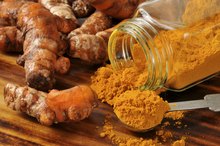
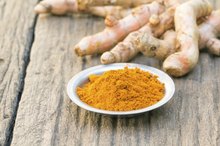
Bright orange-yellow turmeric, common to East and Southeast Asian cuisines, is a wonderful source of potassium. If you're concerned about hypertension or cardiovascular health, including turmeric in your diet may be helpful, especially if you also worry about low potassium 5. You can sometimes purchase turmeric fresh in ethnic grocery stores, but many supermarkets stock it in its powdered, dried form in their spice aisles.
Potassium in Turmeric
A 100-gram serving of turmeric contains 2,525 milligrams of potassium, or 54 percent of your daily recommended intake. The daily recommended amount for adults is 4.7 grams per day. You won't likely consume this much turmeric in one sitting, however, or even in one day. Thus, while a small amount of turmeric can help increase your potassium levels, you'll have trouble eating enough turmeric to fulfill your nutritional requirements.
- A 100-gram serving of turmeric contains 2,525 milligrams of potassium, or 54 percent of your daily recommended intake.
Turmeric Benefits
How to Use Turmeric to Reduce Inflammation and Pain
Learn More
According to the University of Maryland Medical Center, turmeric has additional health benefits and might help prevent certain cancers and lower cholesterol levels 234. Some people use turmeric as an anti-inflammatory to assist with digestion and liver problems and help with skin diseases. Curcurmin, found in turmeric, is a strong antioxidant and can help prevent blood clots.
Potassium Functions
Potassium has a wide range of functions in your body, helping maintain healthy kidneys, nerve system transmissions, cellular fluid levels and bone mass. It also aids in regulating sodium levels and thus blood pressure. Potassium also helps your body store carbohydrates, which provide energy for your muscles. According to the University of Maryland Medical Center, potassium may also reduce the likelihood of a stroke 234.
- Potassium has a wide range of functions in your body, helping maintain healthy kidneys, nerve system transmissions, cellular fluid levels and bone mass.
- Potassium also helps your body store carbohydrates, which provide energy for your muscles.
Including Turmeric In Your Diet
Does Potassium Aid in Weight Loss?
Learn More
Since few people consume turmeric in large quantities, including it regularly as a spice with other potassium-rich foods will help increase your potassium consumption. Turmeric is a common ingredient in curries in Southeast Asia, so if you'd like to try your hand at making these traditional dishes, you'll automatically start using more turmeric.
Potassium also occurs in other foods, including lima beans, meats, soy products, potatoes and winter squashes. Citrus fruits and bananas are also well-known sources of potassium. Mix in turmeric with a three-bean salad or as a seasoning for roast chicken to increase your overall potassium consumption.
- Since few people consume turmeric in large quantities, including it regularly as a spice with other potassium-rich foods will help increase your potassium consumption.
Related Articles

How to Use Turmeric to Reduce Inflammation and Pain
Learn More

Does Potassium Aid in Weight Loss?
Learn More
How to Use Turmeric for Staph Infections
Learn More

Foods With Potassium Bicarbonate
Learn More
Turmeric to Dissolve Blood Clots
Learn More
Turmeric & Side Effects From an Allergic Reaction
Learn More
Turmeric Toxicity
Learn More
Can Papaya Lower Blood Pressure?
Learn More
Does Potassium Chloride Cause Water Weight Gain?
Learn More
Side Effects of the Curcumin in Turmeric
Learn More
References
- Nutritionvalue.org: Turmeric
- University of Maryland Medical Center: Turmeric
- University of Maryland Medical Center: Potassium
- University of Maryland Medical Center: Potassium in Diet
- MedlinePlus: Potassium in Diet
- Rodale News: Cooking Tips and Tasty Recipes for Turmeric
- Hewlings SJ, Kalman DS. Curcumin: A Review of Its' Effects on Human Health. Foods. 2017;6(10)
Writer Bio
Bethany Lalonde has been a professional writer since 1997. She has published for CBS Health Watch, WebMD, the "Ann Arbor Daily News" and "Entertainment Weekly." She holds two masters degrees from the University of Michigan, in dietetics and nutrition as well as journalism.