
Description of the Parts of a Football Helmet
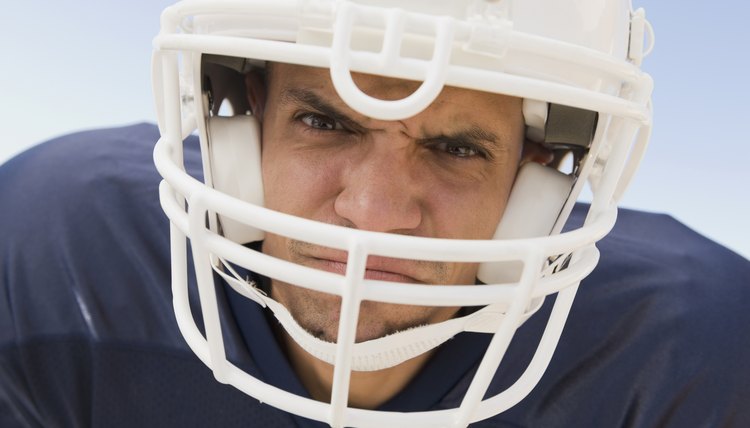
A football helmet has one main job: to keep the player from getting a head injury in a high-impact sport. Several key elements work together to ensure the helmet performs its job successfully. Each element serves a specific purpose, although the material and size of each element can differ between football positions and manufacturer -- a kicker might have a smaller face mask than a linebacker, for example.
Exterior Protection
Most football helmets use a polycarbonate shell, which is a type of hard, durable plastic. This helps deflect the force of blows to the head to help prevent skull fractures and other serious head injuries. The plastic is light enough to keep the player from adding too much weight to his head while still providing the necessary protection.
Soft on the Inside
Inside the hard shell, football helmets offer a variety of softer protection around your head. The front of the helmet protects your forehead with a firm foam designed to deflect direct forward hits. The foam around the jaw area is a bit softer for comfort, while still providing firm support. The rest of the helmet provides several layers of foam, including a spongy layer that rests against your head to make the helmet more comfortable. Some also offer inflatable air pockets to help you custom fit the helmet to your head.
Holding It Steady
When you look at vintage football helmets, you'll notice the strap at the bottom is longer than modern versions. It was designed to sit lower on the neck, about even with the Adam's apple. Newer helmets use chin straps instead, holding the helmet more securely while helping prevent potential neck injuries caused by the straps. Most straps are adjustable to help keep the helmet securely on your head, and many have padding where the strap rests on your chin for comfort.
Protecting Your Face
The face mask of a helmet is a balance between protecting your face while allowing you to see and providing adequate ventilation to the helmet. The birdcage-style face mask should protect your face from coming in direct contact with other players, the ball or the ground. Some masks are smaller than others; if you play a position likely to be tackled hard and often, you'll likely have a face mask with more coverage than players less likely to sustain direct hits. If you have an eye injury, you might wear a tinted visor above the face mask for additional protection.