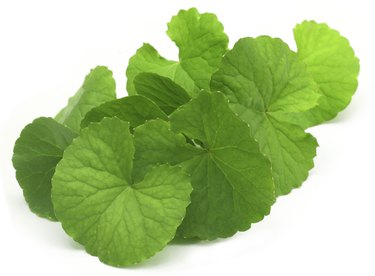
Brahmi and gotu kola are popular herbal supplements used to treat Alzheimer's disease and memory loss. However, there is some confusion because some herbalists also refer to gotu kola as "brahmi." Gotu kola and brahmi are native to North America and parts of India, where their stems and leaves are collected for medicinal use. Although both brahmi and gotu kola affect the central nervous system, there are some differences between the two herbs. For example, they are not taken in the same dose and each possesses other benefits and side effects. Consult your doctor for advice before taking brahmi or gotu kola.
Other Uses of Brahmi
Video of the Day
Brahmi, or Bacopa monnieri, is a member of the snapdragon family of plants and also called water hyssop. Along with its use in treating Alzheimer's disease, brahmi possesses calming effects and is also used to ease stress and nervous tension; it induces feelings of peace and curbs restlessness. Brahmi increases mucus production in the digestive tract and is used to treat stomach ulcers and irritable bowel syndrome. It is also used to aid liver function. According to the University of Michigan Health System, brahmi is taken in a dose of standardized extract of 300 milligrams to 450 milligrams per day.
Video of the Day
Brahmi Precautions
Brahmi is considered safe when taken as directed and under the supervision of your health-care provider. Although it doesn't induce drowsiness as gotu kola does, brahmi can cause nausea, dry mouth and muscle fatigue. Do not take brahmi if you are pregnant or nursing. Women taking oral contraceptives or hormone replacement therapy should not take brahmi, as excess estrogen interacts with this herb, causing a temporary hearing loss. Don't take brahmi if you have a thyroid disorder, as brahmi can increase thyroid hormone levels and interfere with thyroid medications.
Other Gotu Kola Uses
Although gotu kola is referred to as "brahmi" by some, it is a separate herb called Centella asiatica, belonging to the carrot family of plants. Aside from its use in aiding memory loss, gotu kola is also taken to treat varicose veins and venous insufficiency by decreasing associated swelling and improving venous circulation. Applied topically, gotu kola cream helps to regenerate collagen and inhibit scar formation. For that reason, it is used to treat wounds, scars, minor burns, psoriasis and scleroderma. The University of Maryland Medical Center states that divided doses of 50 to 250 milligrams of standardized extract are taken daily.
Gotu Kola Precautions
Gotu kola can affect the liver, so only take it under direct supervision of your health-care provider. As with brahmi, it should not be taken if you are pregnant or nursing; however, it produces other side effects and interactions that differ from brahmi. Side effects include burning irritation on skin, headache and drowsiness. Do not take gotu kola if you have liver disease or have skin cancer. Gotu kola raises blood glucose and cholesterol levels, so don't take it if you have diabetes or high cholesterol. Don't use gotu kola along with diuretic medications or other sedatives.