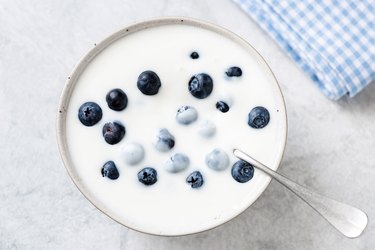
Protein powders may seem like an easy fix to up protein intake, but they can contain additional ingredients such as sugars and extra calories. A more natural substitute for protein powder comes through our food choices — Greek yogurt, nuts and lean meats can help meet daily protein requirements.
How Much Protein a Day?
Video of the Day
The USDA's 2015-2020 Dietary Guidelines for Americans gives a rough estimate for how much protein we should be taking in every day. It advises that adult women consume 46 grams of protein a day — about 10 to 35 percent of their daily calories — and adult men consume 56 grams of protein a day — or about 10 to 35 percent of their daily caloric intake.
Video of the Day
Harvard Health Publishing at Harvard Medical School outlines the ongoing research on how much protein a person needs, mentioning that those who are active may need to eat more protein. It cautions against loading up on red meat and notes that protein is found in many sources including beef, poultry, pork, milk, cheese and eggs as well as plant-based options including whole grains, beans and other legumes, nuts and vegetables.
The type of protein you eat matters: Harvard advises choosing protein sources that are low in saturated fat and processed carbohydrates and rich in many essential nutrients. The USDA states that most Americans get enough protein in their diets, but may need to make leaner and more varied selections of the foods in the Protein Foods Group such as lean meats, seafood and plant-based proteins such as dried peas, beans and nuts.
Protein Powder Alternatives
Protein powders, which are powdered forms of protein that come from plants such as soybeans, peas, rice, potatoes, hemp, eggs or milk (casein or whey protein), may include other ingredients such as added sugars, artificial flavoring, thickeners, vitamins and minerals.
A Harvard Health Publishing Health Letter details some of the risks of ingesting protein powder; for one, protein powder is a dietary supplement, which means it is not evaluated by the FDA. Protein powders may also be high in added sugars and calories. It's fairly easy to find more natural alternatives to protein shakes and powders through food.
There are many foods that pack a powerful protein punch and make for an easy, delicious substitute for protein powder. For example, a cup of plain, low-fat Greek yogurt can contain as much as 25 grams of protein depending on the brand, the USDA's FoodData Central shows. It also contains 282 mg of calcium and probiotics that are beneficial to gut health. It's important to read nutrient labels, however, as some brands of Greek yogurt contain added sugars.
Another way to sub protein powder is by eating nuts. A half-cup of whole, raw almonds comes in at 15 grams of protein, the USDA details. Almonds are also high in nutrients such as potassium, iron and calcium (they are also high in calories, at 411 per half-cup). A half-cup of raw cashews comes in at about 12 grams of protein, according to the USDA; cashews also are a source of magnesium and potassium.
Also consider hemp seeds — a 3-tablespoon serving provides almost 10 grams of protein, the USDA reveals, as well as all nine essential amino acids. Try them sprinkled on top of your oatmeal, in granola, over yogurt or as a garnish on a bowl of soup.
Harvard Health Publishing gives an example of how to easily incorporate more protein from food sources into your daily diet:
- An egg for breakfast (6 grams of protein)
- 6 ounces of plain Greek yogurt at lunch (18 grams of protein)
- A handful of nuts for a snack (4 to 7 grams of protein)
- A cup of milk (8 grams of protein) and 2 ounces of cooked chicken for dinner (14 grams of protein).
Read more: 5 Tips for Eating Protein the Right Way
- USDA: "Dietary Guidelines 2015-2020"
- Harvard University Medical School Health Blog: "How Much Protein Do You Need Every Day?"
- USDA Choose My Plate: "Protein Foods"
- Harvard University Health Letter: "The Hidden Dangers of Protein Powders"
- USDA: "Yogurt, Greek, Plain, Low Fat"
- USDA: "Nuts, Cashew Nuts, Raw"
- USDA: "Almonds, Unroasted"
- USDA: "Seeds, Hemp Seeds, Hulled"