Signs that Baby is Cutting Teeth
Many parents dread the days when their baby begins cutting his first teeth, and it's true that teething babies can be crabby. The process is inevitable, though, so it's best to prepare yourself. Most babies cut their first teeth between the ages of 4 to 7 months, according to the American Academy of Pediatrics. The central incisors on either the top or the bottom are typically the first to grow in. When your baby's first tooth is erupting, you will likely notices some changes in his behavior.
Drooling and Biting
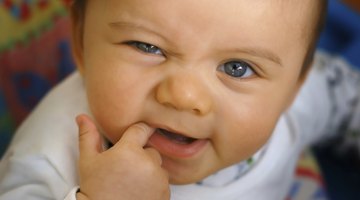
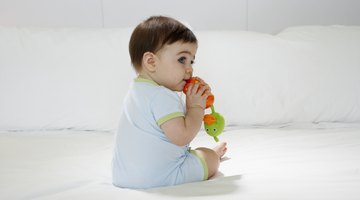
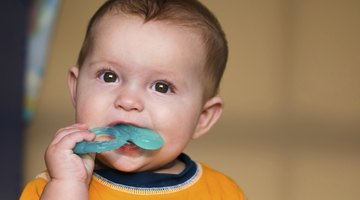
Babies who are cutting their first teeth often begin to drool much more than usual. In some cases, the drooling may be constant and can even cause a mild rash on the cheeks and chin, warns the Ask Dr. Sears website. Nothing can be done to prevent drooling; just keep a clean cloth handy to wipe your baby's face. You may also notice your little one biting or chewing on hard items, the AAP reports. He may bite his toys and any other objects he can get his hands on, so make sure only items that are safe for him are within reach. Teething babies also may begin biting their hands or fingers, or even biting your fingers if they are handy.
Gum Changes
Do Babies Cry Inconsolably When Teething?
Learn More
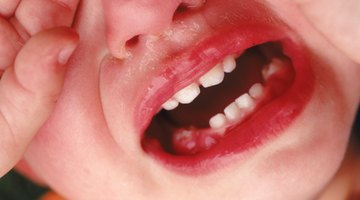
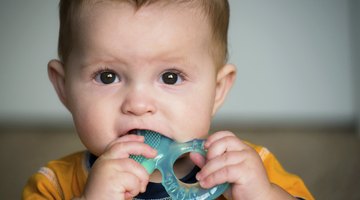
As the teeth begin to erupt, your baby's gums may appear swollen and red and may even be tender. It can be tempting to use pain-relieving medications that are applied directly to the gums, but the AAP recommends against this because these products will be rinsed away within a few minutes of application. Instead, try rubbing or massaging the swollen gums gently. If biting seems to help, give her a teething toy to chew on.
Mild Fever is Possible
Some babies may develop a mild fever when they are teething. However, this is not true of all babies, and when they do develop, teething-related fevers are generally lower than 101 degrees F. If your baby's fever is higher than 101 degrees F, it is likely caused by an illness and not teething and she should be evaluated by her pediatrician, the AAP advises.
Fussiness Woes

Signs of Teething in a 6-Month-Old
Learn More
Babies who are cutting teeth may also be noticeably more cranky and fussy than usual, according to Medline Plus. Even good-tempered babies may be crabby because of discomfort. Sleep patterns may also change, and your baby may start waking up several times a night even if she has already mastered sleeping through the night.
Related Articles
Do Babies Cry Inconsolably When Teething?
Learn More
Signs of Teething in a 6-Month-Old
Learn More
Can Babies Get Hives From Teething?
Learn More
How Long Before You See Teeth Once Teething Symptoms Start?
Learn More
Do Babies Get Runny Noses When Teething?
Learn More
Swollen Gums in an Infant
Learn More
Teething & Congestion
Learn More

Side Effects of Teething
Learn More

How to Safely Use Ice Cubes With Teething Babies
Learn More
Are Red Cheeks a Symptom of Teething?
Learn More

Anna Aronson began working as a journalist in 2000 and spent six years at suburban Chicago newspapers before pursuing freelance work. She enjoys writing about health care topics, in particular obstetrics, pediatrics and nutrition. She received a Bachelor of Arts in journalism from Eastern Illinois University and is now studying for a Master of Science in medicine degree to become a physician's assistant.
