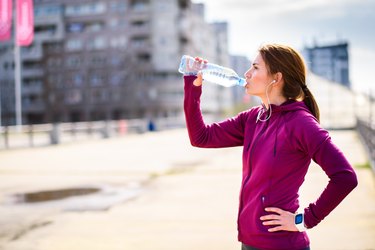
Let's get straight to the point: There are 128 ounces in a gallon, so to drink a gallon of water in one day, you'd need to drink 16 eight-ounce glasses. It seems like an impossible task, but a 2008 study from the journal Obesity found that drinking more water every day can help bolster weight-loss efforts. Using a calorie-tracker tool is also a great resource to help shed the pounds.
And according to another 2009 study also from Obesity, people who drink a couple glasses of water before a meal tend to eat up to 75 fewer calories at that particular sitting. Even though this amount might not seem impressive at first, study author Brenda Davy, Ph.D, says that can add up to losing 10 pounds or more in a year.
Video of the Day
Video of the Day
So what does drinking a gallon of water in one day look like? Ounce by ounce, it's a lot of liquid to ingest — and a lot of trips to the bathroom — but spread throughout the day, it's an achievable goal.
How Much Water Should You Drink a Day?
How many ounces of water you should drink each day depends on several factors including your body weight, activity level and current health status. While there's no magic number of glasses of water to drink in a day, many health authorities recommend using your thirst as your guide.
If you eat plenty of fruits and vegetables and consume beverages that contain water, you're likely getting 70 percent of your water needs met through your overall diet. While the majority of that amount comes from the beverages you drink, there are some estimates that we get about 22 percent of our water from food. This is good news, especially if you struggle to sip water throughout the day.
But in case you need some hard numbers to help guide your water intake, The National Academies of Sciences, Engineering, and Medicine determined that an adequate daily fluid intake is:
- About 15.5 cups (3.7 liters) of fluids for men
- About 11.5 cups (2.7 liters) of fluids a day for women
Additionally, the Institute of Medicine recommends that a healthy adult drink 78 to 100 ounces (about nine to 13 cups) of fluids per day, on average.
Conversion Rate for Ounces to Gallons
Water is often referred to in ounces, especially when talking about how much you need to drink in a day. But what happens when the bottle you're using is in gallons? How do you convert ounces to gallons? First, let's go over how many ounces are in a gallon:
- 128 fluid ounces = 1 US gallon
- 160 ounces (UK) = 1 UK gallon
If you're not excited about the idea of lugging around a one-gallon plastic container of water, you might be wondering how many glasses you need to drink to get to one-gallon. A typical glass of water is eight ounces. If you use the same size glass, you will need to drink 16 glasses of water (8 ounces each) to reach one gallon each day.
How to Drink a Gallon of Water a Day
Step 1: Chug Water When You Wake Up
Drink two glasses of water right after you wake up. Make sure each glass holds approximately eight ounces of water. An easy way to accomplish this is by filling a 16-ounce water bottle and placing it beside your bed each night so you always have easy access to water.
Step 2: Sip Water While You Get Ready
Have a glass of water while you're preparing breakfast and getting dressed. Then, during breakfast, drink an additional glass, which will help you digest your meal and ensure that you start the day well-hydrated.
Keep a designated 8-ounce glass of water that you use when at home. Even decorating it can help you remember to keep drinking while making the experience a bit more fun.
Step 3: Have a Glass of Water With Lunch
Enjoy three glasses of water before lunch. If you exercise during this part of the day, drink additional water to replenish the reserves you expel through sweating.
Have two glasses of water with lunch. If your lunch is protein- or fiber-heavy, having this amount of water will also help digestion. Remember to keep a filled water bottle with you at all times, wherever you go, so that you can continue hydrating throughout the day.
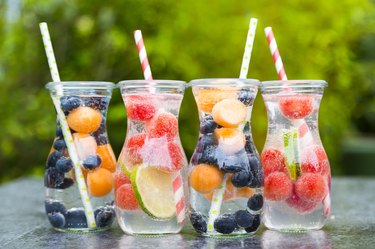
Step 4: Enhance the Flavor of Your Water
Consume at least three glasses of fresh water between lunch and dinner. Add a slice of lemon, some fresh mint or cucumber slices to give your drink a refreshing flavor and add variety, but don't add sugar, which reduces the effectiveness of all of the hydrating you're doing.
Remember, your total water intake can also come from other beverages. If you need a sugar-free alternative to water, consider a commercial sparkling water drink such as La Croix.
Read more: 12 Ways to Make Water Taste (Much) Better
Step 5: Drink Water With Dinner
Have a glass of water while you're preparing dinner then wash down dinner with another two glasses of water. You should have consumed nearly a gallon of water by this time. It's important to drink the majority of your water before late evening to help reduce bathroom breaks during the night.
Step 6: Finish the Day by Drinking More Water
Instead of dessert or a late-night snack, have a warm glass of water, perhaps with some lemon or grated ginger, which can have a calming effect before getting ready for bed.
It's easy to confuse the feeling of thirst with hunger, causing many people to overeat when they're actually just thirsty. Ending your day with a drink of water will help reduce late-night munching and facilitate digestion throughout the night.
Track How Much Water You’re Drinking
Making the commitment to increase your total water consumption is only half of the equation; you also need to track how much you're actually drinking each day. There are several ways to tally your water each time you reach for a glass.
One method that's easy, convenient, and keeps all of your information in one place is the MyPlate Calorie Tracker from LIVESTRONG. All you have to do is drink your water, input the information into MyPlate and the program does the rest. With handy charts and graphs, you will always know how close you are to your one-gallon goal for the day.
If you're tracking efforts show that you're coming up short on your daily quota, consider trying a few of these tips:
- Instead of a sip of water with your morning medication or vitamins, drink a full eight-ounce glass.
- Heavy coffee drinker? Have a full serving of water between mugs.
- Do the same when you're drinking alcohol, alternating cocktails or beer with a full 16-ounce pub glass of water (which counts as two servings).
- Drink 20 ounces of water two hours before a workout, drink about 10 ounces every 15 minutes of the workout and another eight ounces as soon as the workout completes.
- Feel hungry at the 3 pm slump? Have a glass of water because you may just be thirsty.
- Never leave home without a full reusable water bottle.
- Order water with your meal at restaurants and save the cocktail for dessert, if you still have room.
The Health Benefits of Drinking Water
Your body needs water to survive. Plain and simple. But beyond the requirement to sustain life, water also has countless benefits that contribute to your overall health including:
- Water helps cushions your joints as you move.
- Water helps to regulate your internal body temperature at a constant 98.6 degrees Fahrenheit by sweating and respiration.
- Water can help you lose weight.
- Water flushes toxins out of your organs and helps eliminate waste (helps relieve constipation).
- Water carries nutrients and oxygen to your cells.
- Water helps protect your spinal cord and other sensitive tissues.
Side Effects of Drinking Too Much Water
Even if you're concerned about your weight, don't drink massive amounts of water, which may lead to overhydration. In addition to people trying to lose weight, this can sometimes happen with endurance athletes who drink in excess believing they will prevent dehydration.
Unfortunately, when taken to excess, overhydration can lead to hyponatremia, a condition characterized by low levels of sodium in the blood. Symptoms include irritability, confusion, nausea, headaches and, in severe cases, coma.
Since there's no "one-size-fits-all" recommendation for the amount of water you need to drink in a day, knowing if you are overhydrated can be difficult. A general rule of thumb for endurance athletes is to weigh yourself before and after a long exercise session. This can help determine the amount of water you lost and how much you need to drink to replenish your body.
When it comes to dehydration, heat stroke and overhydration, it's best to let your symptoms be your guide, and consult your doctor right away if you have any concerns.
What Do YOU Think?
How much water do you drink each day? Did you know about the general guidelines for water consumption? Do you usually wait until you're thirsty to drink water? Or do you sip constantly throughout the day? Have you ever tried drinking a gallon of water a day? Share your thoughts and questions in the comments below!
- USA Today: Study: Drink more water, lose more weight
- CNN Health: Can Drinking Lots of Water Help You Lose Weight?
- Obesity: Drinking water is associated with weight loss in overweight dieting women independent of diet and activity.
- Obesity: Water Consumption Increases Weight Loss During a Hypocaloric Diet Intervention in Middle-aged and Older adults
- Nutrition Reviews: Water, Hydration and Health.
- Center for Disease Control: Get the Facts: Drinking Water and Intake
- USGS: What Does Water do for You?
- LIVESTRONG: Water Carries Oxygen and Food to Your Body Cells
- Harvard Health: Water and health: Follow your thirst
- MedlinePlus: Low sodium level
- ACSM Health and Fitness Journal: The Hydration Equation
- American Academy of Family Physicians: Hydration for Athletes