Can I Repair Chemically Treated Hair Loss?
There is really no way to fix your hair after it has been damaged by straighteners, dyes and perms, but you can take action to regrow a healthy mane and prevent further damage. According to the American Academy of Dermatology, people often misconceive that hair is living, but in reality, it does not heal itself once it is injured. Chemicals strip the hair of natural moisturizers that protect it and make it shiny. As a result, the hair breaks off or becomes dull, dry and frizzy.
Trim your hair at least 1/2 inch each month to slowly remove the damaged hair, as there is no way to truly restore your hair to its original condition.
Harmful Effects of Conditioner
Learn More
Shampoo your hair just a few times a week with a creamy, sulfate-free hair cleanser. On the other days, you may opt not to wash your hair or use strictly conditioner 3.
Apply a protein-based, leave-in conditioner to your mane on a daily basis depending upon the level of dryness.
How to Repair Chemically Damaged Hair
Learn More
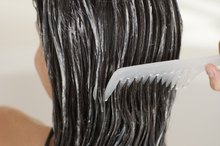
Apply a mask to your hair for 10 to 20 minutes once a week. Consider using warm olive oil or a mixture of egg whites and tepid water. Leave the mask on overnight with a shower cap for even deeper conditioning. Rinse with a sulfate-free shampoo.
Use a 50 percent synthetic and 50 percent boar bristle brush to gently push the oils from your scalp to the ends of your mane. Cut back on wearing intricate updos that put stress on your tresses. Whenever possible, limit the use of heated styling tools to a few times per week and allow your hair to air dry. If you must use heated tools, ensure the heat does not exceed 200 degrees Fahrenheit.
Tips
Stick to a color that is within three shades of your natural color to cause less damage, if you must dye your hair. Dying your hair darker will also be less damaging.
Related Articles
Harmful Effects of Conditioner
Learn More

How to Repair Chemically Damaged Hair
Learn More
How to Restructure Brittle Hair
Learn More

How to Restore Hair Elasticity
Learn More

How to Reverse Traction Alopecia
Learn More
How to Protect Hair From Falling Out
Learn More

Hair Breakage Symptoms
Learn More

How to Prevent Dandruff in Black Hair
Learn More

How to Remove Chlorine From Hair Naturally
Learn More
Hair Brushing Technique to Prevent Hair Loss
Learn More
References
- American Academy of Dermatology: Going to Great Lengths for Beautiful Hair: Dermatologist Shares Hair Care Tips for Healthy and Damaged Hair
- Health Magazine: Your Top 5 Hair Bummers Solved
- Glamour: 4 Ways To Undo Hair Damage (You Can Do One Of Them In Your Sleep)
- Glamour: Every Woman’s Top 5 Hair Issues, Solved!
- Elle: Dry Hair Detox: 6 Steps for Repairing Damaged Strands
- Freites-Martinez A, Shapiro J, Goldfarb S, et al. Hair disorders in patients with cancer. J Am Acad Dermatol. 2019;80(5):1179-1196. doi:10.1016/j.jaad.2018.03.055
- Memorial Sloan Kettering Cancer Center. Hair loss and your cancer treatment.
- American Society of Clinical Oncology. Hair loss or alopecia. Updated August 2018.
Writer Bio
Jillie Reil is a stand-up comedian as well as an actress, model and writer. Reil graduated summa cum laude with a Bachelor of Arts in management and communication from Concordia University in Saint Paul, Minnesota and is a certified makeup artist with experience in cosmetic, skin care and plastic surgery sales.