
You're outdoors with friends, enjoying good eats fresh off the grill. What could go wrong at a summer barbecue?
For one, fogetting to follow food safety guidelines can wreak havoc after your meal. Whether you're hosting the shindig yourself or bringing a dish to share with the group, your top priority when cooking food for others (and yourself) is that no one gets sick.
Video of the Day
Video of the Day
It's especially important for young kids, older adults and anyone with a weakened immune system. But everyone benefits from food that's safe to eat.
With barbecue season upon us, it's time to brush up on the basics — and learn a few lesser-known tricks of the trade, too. Avoid these common food safety mistakes the next time you host a cookout or bring a dish.
Tip
Try the Is My Food Safe? app for any questions regarding food safety. It’s free but only available for iOS.
1. You Partially Cook Meat Ahead of Time
Pre-cooking meat seems like a smart way to save time when grill day comes, but it can also introduce health risks.
"The problem is that when you partially cook meat, you're not getting it to the right temperature," says Wesley Delbridge, RD, spokesperson for the Academy of Nutrition and Dietetics.
"Even if you put it right back in the refrigerator, it's spending some time in the danger zone," says Delbridge, referring to the temperature range between 40 and 140 degrees Fahrenheit that promotes the growth of harmful bacteria that can make you sick. When in the "danger zone," bacteria can double in as little as 20 minutes, per the USDA.
If you absolutely have to pre-cook your meat, Delbridge recommends regular temperature checks and limiting total time in the danger zone to under two hours.
2. You Defrost Frozen Food Outdoors
Have you ever been tempted to defrost frozen foods outdoors? It seems like a good idea until you realize that means your food is sitting out in the temperature danger zone.
For this reason, you should never leave food unrefrigerated for more than 2 hours (or one hour if temps are above 90 degrees Fahrenheit), according to the USDA.
"Always defrost food in the refrigerator or in the microwave, not on the counter or outdoors," says Vandana Sheth, RDN, a spokesperson for the Academy of Nutrition and Dietetics.
3. You Rinse Raw Proteins
It's a common misconception that you have to wash the juices off your meat, poultry or fish before cooking it. In fact, doing so could make you sick.
The USDA warns against washing raw meat and poultry before cooking because rinsing can spread bacteria around your kitchen — which can lead to foodborne illness like Salmonella and E.coli. Water can splash bacteria up to 3 feet surrounding your sink.
Instead of rinsing, just transfer your animal proteins from their original packaging to the grill, where the heat will kill any bacteria that may be present.
4. You Cook on Dirty Grates
If you don't want a mouthful of microbes with your meat, make sure your grill grates are clean before you light up. That's because grimy grates can harbor germs.
"Food particles left behind are a magnet for bacteria and can attract animals, which may introduce even more bacteria (and even waste) to the grill's surface," dietitian and chef Julie Harrington, RD, tells LIVESTRONG.com.
Plus, dirty grates can mess with the flavors of your food and increase stick risk.
"To clean your grill properly, first dislodge food debris with a grill brush, then preheat the grill and brush with a little oil to prevent food from sticking," Harrington says.
For a spotless, spick and span grill, soak your grates several times a year (or more depending on how frequently you use them). Fill up a large bucket with water and dish soap, add a little baking soda and let the grates soak for at least an hour before you scrub and rinse, Harrington says.
5. You Leave Too Much Fat on the Meat
You probably know that eating an excessive amount of animal-based fats isn't wise for your health, but grilling fatty meats poses a food safety issue, too.
Fat dripping into the flame can produce flare-ups that may cause soot to settle on your meat, Harrington says.
To prevent ash and smut from sabotaging your perfect plate of barbecue, trim excess fat from your meat before your slap it on the grill. And if you still prefer the flavor of fattier meat, you can cook it in a cast-iron pan on the grill.
"This will prevent the fat from dripping into the grill grates and still give the meat a smoky grill flavor," Harrington says.
6. You Don't Preheat the Grill
You might be eager to enjoy some mouthwatering marinated meat, but being impatient with preheating can produce problems with food safety.
"Preheating the grill begins the process of burning away stuck-on food and potentially harmful bacteria," Harrington says.
And if the grill grates aren't appropriately warmed in advance, your food won't heat properly or evenly, which can leave your meat undercooked and result in dangerous foodborne illnesses. Plus, when you rush to grill, food will bond to the grates, making it tough to remove residue that may possibly grow even more bothersome bacteria, Harrington adds.
The takeaway: Get your grill nice and hot before barbecuing. For gas and charcoal grills, preheat between 10 and 15 minutes prior to cooking.
7. You Don't Cook Meat Fully Through
"Some major foodborne illnesses can happen with raw meat, including Salmonella, E.coli and parasites," says Delbridge, "so we always want to make sure we're fully cooking it."
Salmonellosis from undercooked poultry and beef can lead to stomach cramps, diarrhea and fever 6 hours to 6 days after infection, per the Centers for Disease Control and Prevention (CDC).
Symptoms of E.coli appear 3 to 4 days after exposure and include severe stomach cramps, diarrhea and vomiting, according to the CDC.
And parasites such as worms in undercooked pork can cause stomach upset, fatigue and fever within days of infection, followed by a second wave of symptoms two to eight weeks later involving flu-like symptoms, face swelling and even heart and breathing problems, per the CDC.
8. You Don't Use a Food Thermometer
Each kind of meat has a different temperature at which it's safe to eat (ranging from 145 to 165 degrees Fahrenheit), and ground meat requires a higher temperature because greater surface area means more bacterial exposure.
Only a food thermometer ($8, Amazon) can truly tell you when it's done. Check meat temperatures correctly by inserting the thermometer midway through the thickest part of the meat (the edges will be hotter, which won't tell you if the meat is safe to the core), Delbridge says.
Metal thermometers are an affordable option, but they need to be calibrated daily in boiling water or the freezer. Delbridge prefers a digital thermometer, which guarantees temperatures without constant calibration.
One last thing: "Clean your thermometer after every check to avoid cross-contamination," says Delbridge.
9. You Reuse Marinade for Sauce
Marinades are full of flavor, and it seems wasteful to toss the leftovers. Unfortunately, it's as much of a bacterial risk as whatever was marinating in it, and the same food safety rules apply.
That's why Sheth says you should marinate food in the refrigerator to minimize time in the danger zone.
"Harmful bacteria can spread from raw to cooked food if the same marinade is used as is," she says. That pretty much rules out using the marinade as a sauce at a barbecue.
But at home — or if you have a full-service outdoor kitchen at your disposal — if you're really set on reusing the marinade, boil it before using, Sheth says.
10. You Reuse Platters or Utensils That Touched Raw Meat
When you're socializing with friends, it can be easy to lose track of what's touched raw meat, especially because you can't see bacteria.
Reusing cooking utensils is one of the most common mistakes. The grill may be hot, but that doesn't mean it cleaned your cooking tongs.
"Reusing platters or utensils that have been used to handle raw meat can cross-contaminate cooked food with bacteria," says Sheth.
And remember that hands count as cooking utensils, too. "Always wash your hands before doing any meal prep," says registered dietitian Kelly Plowe, RD.
"Even after your initial wash, it's important to continue while preparing different dishes for a summer barbecue, especially if you're handling raw meats or seafood or fruits and vegetables."
Tip
“To minimize accidental cross-contamination, consider using different colored plates or utensils for cooking versus serving," Sheth says.
11. You Pack Raw Meat With Raw Fruits and Vegetables
Is it possible to pack raw meat and produce together without cross-contamination? "My advice is don't risk it," says Delbridge. "It's not a good idea."
Even if everything is in separate, sealed containers with produce on top, he says it's nearly impossible to guarantee that cross-contamination didn't occur somewhere in all of the packing, traveling and moving about.
And packing different meats in the same container is also problematic. "Chicken has to be cooked to a higher temperature than beef — so if they touch, you won't be cooking beef to a high enough temperature."
If you're already in the park reading this, his advice is to cook all meat to 165 degrees Fahrenheit for at least 15 seconds.
12. You Forget to Wash Fruits and Vegetables
Remember the last E. coli outbreak? The frequency of these alerts is a good reminder that sometimes, a little bit of dirt can do a lot of harm, Plowe says.
Washing fresh produce can minimize the bacteria from soil, but if there's a recall, throw it out.
Plowe recommends washing produce under running water and rubbing it to remove any stubborn dirt — yes, even if you're going to peel it, because slicing the skin pushes bacteria into the edible part of the fruit or vegetable.
"If you're making a salad, make sure to rinse the individual leaves, as dirt is often trapped in between, and be mindful of lemons and limes as a beverage garnish or orange slices in a sangria — the intact skin carries bacteria if not washed," she says.
Related Reading
13. You Leave Potato Salad Out for Too Long
Potato salad's reputation as a high-risk picnic food comes from a time when people made mayonnaise from scratch (which involves raw eggs). Fresh mayo or not, though, leaving any food out in the sun for more than two hours is not a good idea.
"As temperature rises, the harmful bacteria multiply," says Sheth. That means, "potato salad is best enjoyed within two hours, or one hour if it's more than 90 degrees out."
Bacteria love warmth and thrive especially well between 70 and 135 degrees Fahrenheit, so if you're blessed with a warm, sunny day, keep your cold foods cold (bring along a cooler!) so they stay safer to eat for longer.
And consider the total time food has been in the danger zone: prep time, travel time, cooling time and time that food's been out on a table waiting for people to dig in, Delbridge says. It adds up quickly.
14. You Let Hot Food Cool on the Counter
When it comes to summer barbecues, it's easy to think about food getting too warm and festering with bacteria. However, it's just as dangerous to let hot food cool down into the danger zone where bacteria love to multiply.
In fact, it may be even more dangerous, as bacteria prefer the upper end of the temperature danger zone.
At home, you could stash uneaten food in the refrigerator to be reheated whenever you wanted. But outdoors, that's not an option.
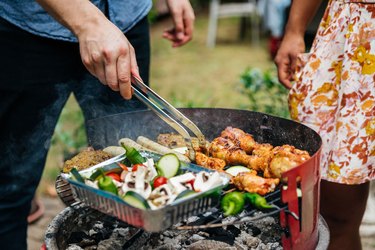
Ideally, there's no lag time between when food is fully cooked and when someone is eating it. But if people aren't ready when the food is, the best option is to keep hot food on the grill, set to the side away from the coals or flame where it could overcook.
Was this article helpful?
150 Characters Max
0/150
Thank you for sharing!
Thank you for your feedback!