g-stockstudio/iStock/Getty Images
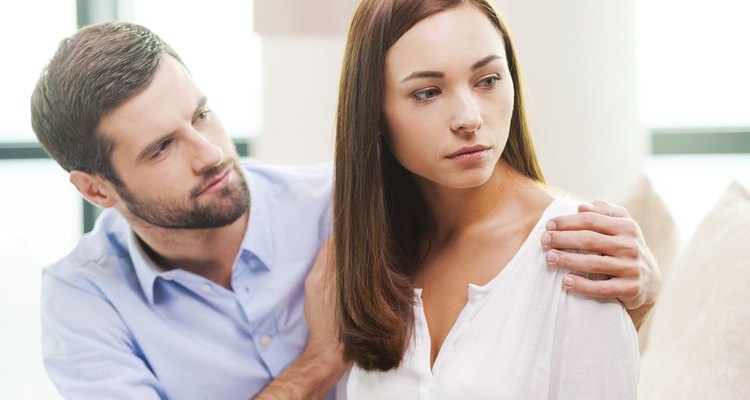
Jealousy in females arises from comparison, competition and the fear of losing a mate or potential partner. Women tend to be more jealous than men in a range of situations, and seem to suffer more from emotional jealousy than from sexual jealousy. Evolutionary scientists suggest that for some women jealousy may stem from a need keep a partner to ensure support for their children.
Emotional vs. Sexual
Compared to men, women are more likely to be upset by the thought of a partner falling in love with -- as opposed to sleeping with -- another person, research reveals. This is because for a woman, a mate becoming emotionally involved with someone else is likely to mean that the money, time and protection that partner provides may be diverted away from her own children. A study published in "Human Nature" showed that emotional jealousy lessens in older women, presumably because they are past child-bearing age.
Blinded by Jealousy
The more jealous a woman feels, the less she is able to function properly, research has shown. Psychologists at the University of Delaware asked women to click on specific targets on a computer screen at the same time their partners were asked to rate the attractiveness of other single women. The results of the study, published in the journal "Emotion," showed that the more uneasy women felt about their significant others completing the task, the more poorly they performed their own tasks.
Threatened by Attractiveness
Women are most likely to feel jealous of other women based on physical attractiveness, research indicates. When asked to rate the things that made them most jealous in respect of a rival to whom their partner might feel attracted, both heterosexual and homosexual women felt most threatened by a woman who was attractive. The study, published in the "European Journal of Social Psychology," showed that lesbians were most jealous when it came to a rival who was considered very attractive, and women who tended to compare themselves with others were most affected by jealousy.
Power Shopping
Digital Vision./Photodisc/Getty Images
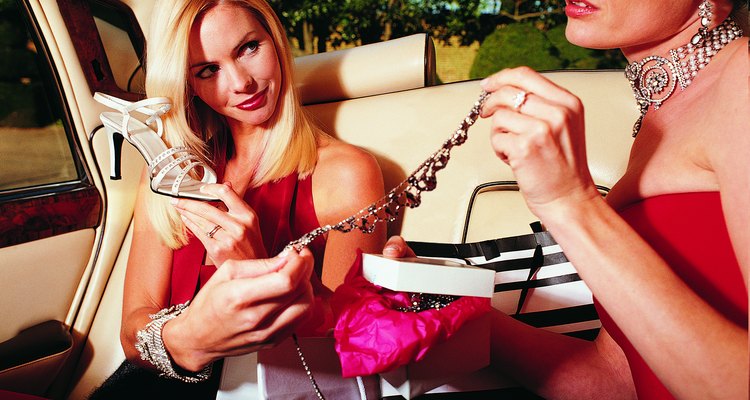
Jealous women often turn to shopping for luxury goods to deter other women from attempting to steal their mates, scientists have found. Research published in the "Journal of Consumer Research" suggested that women view the expensive possessions of other females as indicating that their partners are particularly devoted, regardless of who purchased the items. Women who felt like their relationships were threatened expressed an increased desire for designer handbags and expensive shoes. The parading of these luxury goods serves as a signal to other women to back off, researchers concluded.
Related Articles

Advantages & Disadvantages of a Younger ...

Types of Jealousy

The Effect of Divorced Parents on a ...

Is Soy Milk Casein-Free?

Traditional Gender Roles in Marriage

How to Understand Men in Breakups

How to Keep Intimacy Alive in a ...

The Effects of Divorce on Women

Teens Dealing With Jealous Boyfriends

How Does Stereotyping Affect ...

About Narcissistic Men

How to Overpower a Narcissist

What Were the Traditional Gender Roles ...

How Absent Fathers Affect Men

Relationship drama: why men suffer more ...

Long-Term Effects of Being Molested As ...

How to Look More Masculine in the Face

What Does a Committed Relationship Look ...

What Is Healthy Jealousy?

The Effects of the Silent Treatment
References
- Human Nature: Romantic Jealousy in Early Adulthood and in Later Life
- Emotion: Blinded by Jealousy?
- European Journal of Social Psychology: Sex Differences in the Jealousy-evoking Effect of Rival Characteristics
- Journal of Consumer Research: Conspicuous Consumption, Relationships, and Rivals: Women’s Luxury Products as Signals to Other Women
Writer Bio
Beth Burgess is a health and happiness expert. Burgess works as a therapist, specializing in addiction, anxiety, stress and mental well-being. Author of "The Recovery Formula" and "The Happy Addict," she writes articles to help others achieve happy lives and healthy relationships.
Photo Credits
g-stockstudio/iStock/Getty Images