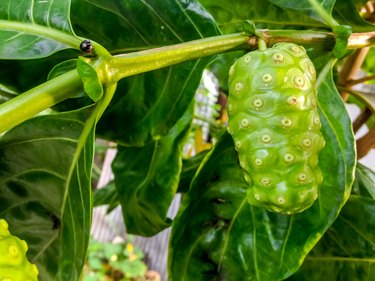
The noni fruit, also known as wild pine or Indian mulberry, is native to the Pacific Islands. According to the American Cancer Society, noni fruit is used in Polynesian folk medicine as an herbal remedy. Several companies market noni juice as a weight-loss aid, but little scientific evidence supports these claims. Noni juice is known for being rich in antioxidants, which helps protect the body from free radicals and toxins. Losing weight requires creating a calorie deficit by burning more calories than you eat daily. Including noni juice in your nutrition plan may provide a dose of antioxidants; but a healthy, balanced diet and exercise are required for weight loss.
Step 1
Talk to your doctor before starting a weight-loss program with noni juice. Ask about possible drug interactions, complications and side effects associated with noni juice.
Video of the Day
Step 2
Visit your local organic grocery or health food store. Purchase organic noni juice to avoid preservatives that can affect the health benefits of the juice.
Step 3
Drink 2 oz. of noni juice per day to reap the benefits of its antioxidant properties. Have a 1-oz. serving in the morning and another 1-oz. serving in the evening.
Step 4
Blend noni juice with your favorite fruit juice to add flavor.
Step 5
Decrease your calorie intake to create a deficit. Record your calories using a food journal. Monitor your calorie totals for three days. Subtract 500 from your average intake to calculate the calories needed to lose about 1 lb. per week.
Step 6
Eat healthy foods. Consume foods in their natural form, such as lean meats, eggs, fish, low-fat dairy, healthy fats like avocado and olive oil, whole grains, vegetables and fruits. Eating natural foods helps keep you feeling fuller longer so you consume fewer calories.
Step 7
Exercise regularly to burn calories and promote weight loss. Engage in full-body strength-training workouts three times per week to increase lean muscle mass and boost metabolism. Participate in 30 to 45 minutes of cardiovascular exercise four days a week to burn stored body fat.
Video of the Day