janaph/iStock/Getty Images
Acne, an embarrassing skin problem characterized by whiteheads, blackheads, pimples, pustules and boils, affects between 40 million to 50 million Americans, according to the American Academy of Dermatology. While acne is a highly treatable disorder, the Acne Resource Center reports that only 11 percent of sufferers seek treatment. Although further clinical analysis is needed to confirm its efficacy, eucalyptus oil may prove beneficial in the battle to banish blemishes.
Eucalyptus Origin
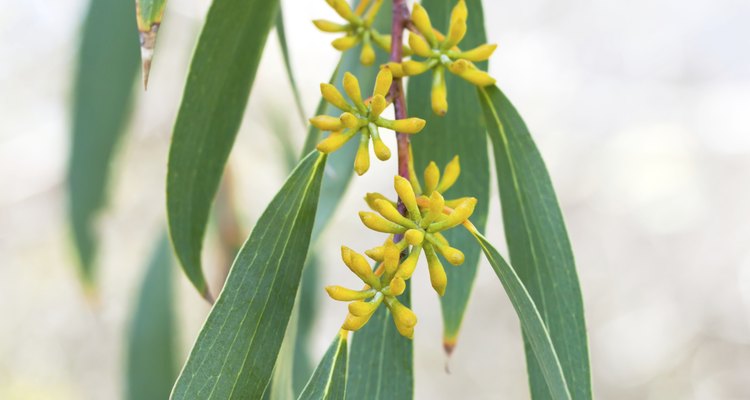
Indigenous to the Australian states of Tasmania, New South Wales and Victoria, eucalyptus trees, commonly called gum trees, grow to heights exceeding 300 feet. The spreading evergreen produces creamy white bark, large cream-colored flowers, green leaves and woody fruit. Rich in volatile oils that are used medicinally, the eucalyptus tree thrives in moist valleys of upland areas.
Generational Remedy
Australian Aborigines used eucalyptus oil therapeutically for generations. In fact, according to the book "Nature's Medicine" by Steven Foster, they were most likely the first people to recognize the healing properties of the tree's oil. In their herbal medicine tradition, Aborigines used the oil to heal wounds and fungal infections. The therapeutic value of eucalyptus oil spread to China, India and Western herbal and conventional medicine in the 19th century where it is still used today to treat headaches, coughs and colds.
Healing Properties
Andrew Chevallier, medical herbalist and author of the book "Herbal Medicine," states that extensive clinical research into eucalyptus oil has shown it to possess potent antiseptic properties helpful in healing skin issues such as acne. When applied topically in diluted form to the skin, the oil helps dry up blemishes and pus-filled pimples. Eucalyptus oil also contains antibacterial qualities that help prevent acne outbreaks. According to Dr. C. Norman Shealy, author of the book "Healing Remedies," when outbreaks occur, the oil helps alleviate inflammation and reduces pain associated with acne boils.
Banish Acne Blemishes
To treat acne blemishes, blend one drop of eucalyptus oil with three drops of water. Dab a cotton swab into the solution and generously apply it on your pimples, paying special attention to oily areas. Avoid the eye, nose and mouth areas as well as any cracked or open skin.
Dos and Don'ts
According to the University of Maryland Medical Center, topical use of eucalyptus oil is nontoxic. However, because it can trigger asthma attacks, do not use the oil if you have asthma. Pregnant and lactating women should avoid eucalyptus oil. Never apply eucalyptus oil directly to the nostrils, as it is highly poisonous. The University of Michigan Health System strongly warns that internal use of eucalyptus oil has proven fatal. Seek immediate medical help if you accidentally swallow the oil.
Related Articles

Can Borage Oil Help Acne?
Carrot Oil for Acne

Castor Oil for Joint Pain

Tea Tree Oil as a Natural Remedy for ...
Arnica for Acne

Lavender Oil & Acne

The Use of Neem Juice in Skin Care as ...
Burdock Root for Acne
How to Use Bleach on Poison Oak

How to Cook Filet of Branzino
Anise Seed Cautions and Side Effects
Is Peppermint Oil Good for Skin Care?

Jojoba Oil Benefits
How to Put Vegetable Oil on Dry Cracked ...
How to Dilute Patchouli Oil
The Uses of Castor Oil for Healing
Skin Benefits of Eating Coconut Oil

Peppermint Oil for a Cough

Brazilian Pepper Wood for Cooking

Fenugreek for Acne
References
- "Nature's Medicine"; Steven Foster: 2006
- "Herbal Medicine"; Andrew Chevallier; 2000
- "Healing Remedies"; C. Norman Shealy, M.D.; 2002
- University of Michigan Health System: Eucalyptus
- University of Maryland Medical Center: Eucalyptus
Resources
Writer Bio
Susan DeFeo has been a professional writer since 1997. She served as a community events columnist for New Jersey's "Cape May County Herald" for more than a decade and currently covers the family and pet beat for CBS Philadelphia. Her health, fitness, beauty and travel articles have appeared in various online publications. DeFeo studied visual communications at SUNY Farmingdale.
Photo Credits
janaph/iStock/Getty Images