Fueling your body with the right food before a hard cardio session can improve your performance while you work out. Some people prefer to skip a meal before exercising, but you might find yourself hitting a wall sooner if you go that route.
Try out a few different types of meals, and see which one works best for you.
Video of the Day
Video of the Day
Read more: 5 Good Foods to Eat After Doing Cardio
First Thing in the Morning
Your body burns calories and nutrients while you sleep. If you work out first thing in the morning, you'll need a bit of refreshment first. Eat a carb-loaded snack about 30 minutes before your workout. Between 75 and 100 percent of your snack should be composed of carbs. The snack probably won't give you that much energy to fuel your workout, but it will make the distracting hunger pangs go away, according to the Mayo Clinic. If you plan on exercising for more than 40 minutes, add some (a very little) protein to your snack and give yourself at least an hour or even better, two hours to digest it recommends Heart.org.
Quick Snacks Before Workouts
If you just need a quick snack before a workout, eat a single piece of fruit such as a banana, orange or apple. You might also snack on carrot sticks or chug a glass of juice or a sports drink and plenty of water. If you're aiming for a long cardio session, add some yogurt, an egg, a slice of cheese or a small piece of meat — this protein will help power you through a longer workout.
Read more: Is Cardio Good to Do on an Empty Stomach?
Afternoon or Evening Workouts
If you'll be doing your cardio later in the day, make sure you eat a few hours beforehand. Schedule a snack that includes protein and carbohydrates about two to three hours before your cardio session. If you're an athlete, chances are you'll digest the food sooner, so wait about an hour and a half before working out.
Sample Pre-Workout Meal
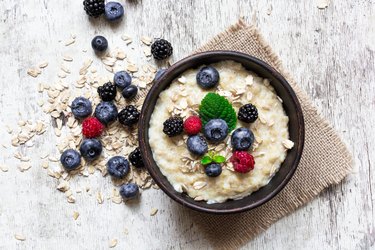
Not sure what to eat? Try a slice of whole-wheat bread and a piece of fruit such as an apple or a small bowl of oatmeal topped with raisins or a banana or yogurt. If you need protein to sustain through a long workout, try a glass of milk with your snack or eat a small tuna sandwich. Avoid any food with fat says ACE Fitness, as it takes much longer than carbs to be absorbed into your bloodstream.
Read more: A Complete Guide to Complex Carbohydrates
Timing Your Meals
Consider eating four or five small meals throughout the day instead of eating three larger meals. Eating less often means you're more likely to run out of energy before a workout. Continually replenishing your body with small meals means you'll always have enough energy to hop on the treadmill. When your body runs out of fuel between meals, your metabolism slows down — which means you're more likely to store fat.
Was this article helpful?
150 Characters Max
0/150
Thank you for sharing!
Thank you for your feedback!