Terms such as "reducetarian" and "flexitarian" are cropping up everywhere.
And with plant-based products flooding grocery store shelves, swapping meat for more fruits, veggies, grains, beans, nuts and seeds has never been more easy or popular.
Video of the Day
Video of the Day
Plus, there's never been a better time to do it: The amount of meat we're eating in the U.S. is more than ever before — clocking in at over 219 pounds of meat and poultry yearly, to be exact, according to the USDA.
Here are four major reasons to consider eating less meat along with some simple tips from registered dietitians on how to get started, stat.
1. People Who Eat More Plants Have Healthier Hearts
A growing body of evidence shows that eating more plants is associated with heart health.
In fact, people who ate more plant-based foods and ate fewer animal products were observed to have a lower risk of dying from a stroke, heart attack or another heart-related event, an August 2019 study in the Journal of the American Heart Association found.
Eating plant protein is associated with a lower risk of all-cause and heart disease mortality — and replacing foods high in animal protein with plant protein sources could be associated with longevity, per a July 2020 BMJ meta-analysis.
The caveat here is that the quality of the plant-based foods you're eating matters, too.
Healthy plant-based dieters who enjoyed a diet filled with whole grains, nuts, fruits and veggies were observed to have a significantly lower risk of heart disease while plant-based eaters who frequently indulged in sugary beverages, refined grains and other highly processed foods were observed to have a higher risk of heart disease, a July 2017 study in the Journal of the American College of Cardiology found.
Not all plant-based foods are created equal — check for these 10 best and worst ingredients when you're buying meat-free products.
And a cohort study of almost 30,000 people found that eating just two servings of red meat, processed meat or poultry (yes, chicken and turkey, too!) per week was linked to a 3- to 7-percent higher risk of getting heart disease, according to the February 2020 study in JAMA Internal Medicine.
So, the key here is replacing meat with whole, minimally-processed plant-based foods rather than refined products.
2. It Might Help You Lose Weight
There's solid research connecting vegetarian and vegan diets to a lower BMI and smaller waistlines. But the good news for meat eaters is that you might not have to give it all up to reap the benefits.
In a study of more than 9,000 people, those who adhered to a plant-based diet the most — as in, ate more plants and less (but in many cases still some) meat — were observed to have lower BMIs, body fat percentages and smaller waists, according to the March 2019 Epidemiology report.
While the study didn't prove that going vegan or vegetarian can guarantee weight loss, it did highlight a promising link between the diets and dropping a few pounds.
3. Eating Plant-Based Is Linked to a Lower Cancer Rate
A plant-based diet may offer protection against cancer. Indeed, we see a lower risk of gastrointestinal cancer among vegetarians who eat dairy and eggs, a February 2013 study published in Cancer, Epidemiology, Biomarkers, & Prevention found.
Additionally, a major World Cancer Research Fund report states that a plant-based diet can reduce your risk of cancer and that eating red meat and processed meat can raise your risk for cancer.
The American Institute of Cancer Research's (AICR) recommendations for cancer prevention is to eat a plant-based diet that focuses on vegetables, fruits, grain products, beans, nuts and seeds and only includes some animal foods in order to get more plant-based, cancer-protective nutrients such as fiber, vitamins, minerals and phytochemicals.
Related Reading
4. It's Better for Animals and the Planet
Raising animals for meat puts a strain on many of our natural resources. So making a conscious and collective effort to eat just a little bit less could go a long way when it comes to taking care of Mother Earth.
The amount of water it takes to grow the food to just feed the animals is startling. The meat and dairy industry is responsible for 27 percent of the total water footprint globally, according to Johns Hopkins University.
To put that into perspective, it takes over 1,200 gallons of water to produce an eight-ounce steak but only 80 gallons of water to produce an ounce of almonds, according to the Water Education Foundation.
But then there's land and air, too. The entire meat production process from start to finish is responsible for almost 10 percent of total greenhouse gases that contribute to climate change in the U.S., according to Johns Hopkins University.
Major sources of emissions include cattle belching, manure and fertilizers used to grow feed crops. On top of that, the waste from animals can enter and contaminate waterways, creating dead zones where the water is so polluted it can't sustain life.
Many people adopt a plant-based diet to encourage the ethical treatment of animals. By eating less meat, you're putting less demand for the product.
And, because going plant-based, vegetarian or vegan is so popular these days, there are so many great alternative products available on the market that are both nutritious and delicious.
Easy Ways to Eat Less Meat

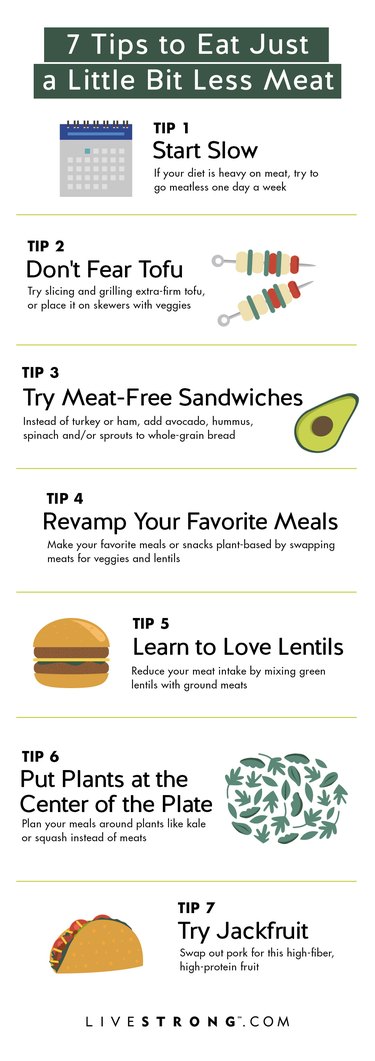
- Start slow. If your diet is heavy on the meat, gradually swapping animal-based products for plant-based picks might be the way to go. "Try to go meatless one day a week," Sharon Palmer, RDN known as The Plant-Powered Dietitian, tells LIVESTRONG.com. Hello, Meatless Mondays! "It's easy to do just one day. And then if you like it, you can add more meat-free meals during the week."
- Don't fear tofu. If you think you'll miss the grill, be open-minded to tofu and hearty veggies. "I was intimidated when I first started cooking with tofu. You'll want to purchase it extra-firm and give it time to marinate prior to slicing and grilling or placing it on skewers with veggies," Kelly Jones, RD, tells us.
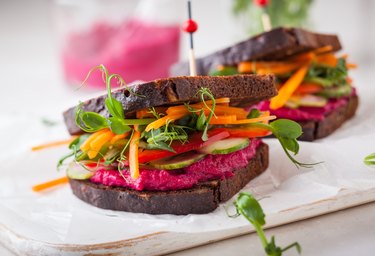
- Try meat-free sandwiches. Instead of a turkey sandwich, add avocado, hummus, spinach and sprouts between two slices of hearty whole-grain bread, suggests Lisa Moskovitz, RD and CEO of NY Nutrition Group. Or go for a black-bean-and-veggie burrito without the chicken. Top with guacamole or salsa and you'll barely notice it's meat-free. Another idea? Have a quinoa-veggie burger in lieu of a beef burger the next time you barbecue. It's tasty and filling yet 100 percent plant-based.
- Revamp your favorite meals. Keep it doable by sticking to what you know. "A lot of us don't realize that we are eating plant-based at some meals. When you eat red beans and rice, steel-cut oats with blueberries and walnuts, you are essentially eating plant-based meals," offers Palmer. "But you can also extend this strategy further. Take your favorite meals and make them plant-based. If you love Taco Tuesdays, go for black bean tacos instead of meat tacos. If you are hosting pizza night, go for a veggie pizza instead of pepperoni. If you love spaghetti bolognese, make it lentil bolognese."
- Learn to love lentils. "Lentils are one of my favorite meat replacements," says Jones. Ground meat and lentils have a similar texture, making legumes a great swap. "For anyone who's transitioning away from meat or attempting to reduce their meat intake, start by mixing green lentils with ground meats. If you're ready to completely replace meat products, I recommend slightly overcooking the lentils to get the right texture for a faux meat sauce, tacos or even lasagna filling."
- Put plants at the center of the plate. Try planning your meals around plants instead. Do you have a bag of lentils in the pantry? A bunch of kale in the fridge? Butternut squash on the counter? Let that be the inspiration for your meal. For example, stuff the squash with a lentil-kale filling. It's a new way of thinking about meal planning," suggests Palmer.
- Try jackfruit. When cooked, jackfruit has a similar texture to pulled pork or chicken. "Try swapping out pork for jackfruit in your favorite pulled pork recipe. It's a high-fiber, relatively high-protein fruit that's vegan-friendly," says Moskovitz.
Related Reading
- Journal of the American Heart Association: "Plant‐Based Diets Are Associated With a Lower Risk of Incident Cardiovascular Disease, Cardiovascular Disease Mortality, and All‐Cause Mortality in a General Population of Middle‐Aged Adults"
- Journal of the American College of Cardiology: "Healthful and Unhealthful Plant-Based Diets and the Risk of Coronary Heart Disease in U.S. Adults"
- Epidemiology: "Plant-Based Diet and Adiposity Over Time in a Middle-aged and Elderly Population: The Rotterdam Study"
- Cancer, Epidemiology, Biomarkers, & Prevention: "Vegetarian Diets and the Incidence of Cancer in a Low-Risk Population"
- World Cancer Research Fund: "Diet, Nutrition, Physical Activity and Cancer: a Global Perspective"
- Water Education Foundation: "Food Facts: How Much Water Does It Take to Produce … ?"
- USDA: "Livestock, Dairy, and Poultry Outlook: August 2019"
- JAMA Internal Medicine: "Associations of Processed Meat, Unprocessed Red Meat, Poultry, or Fish Intake With Incident Cardiovascular Disease and All-Cause Mortality"
- BMJ: "Dietary intake of total, animal, and plant proteins and risk of all cause, cardiovascular, and cancer mortality: systematic review and dose-response meta-analysis of prospective cohort studies"