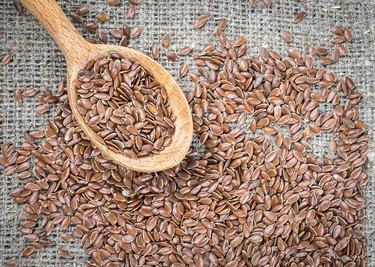
Flaxseeds are known for being high in fiber and full of heart health benefits. To experience some of the health benefits of flaxseeds for yourself, it is helpful to know the serving size of flaxseeds that you should consume per day. Making flaxseed recipes may help you reach that threshold.
You can opt for ground flaxseeds or whole flaxseeds. Both are full of nutrients and benefits, but the experts at Mayo Clinic note that ground flaxseeds are typically easier to digest than whole flaxseeds. You can purchase ground flaxseeds or grind them yourself using a blender, food processor or coffee grinder.
Video of the Day
Video of the Day
Since flaxseeds have a mild nutty flavor, you have to get creative with flaxseed recipes. To encourage yourself to consume flaxseeds every day, you can blend flaxseeds in smoothies, sprinkle them on oatmeal or make flaxseed muffins.
Tip
A typical serving size of flaxseeds is two tablespoons. Overconsuming flaxseeds can cause digestive discomfort.
Flaxseed Nutrition and Benefits
The flaxseed nutrition facts are impressive. Flaxseeds contain many vitamins and minerals, and they are even considered a plant-based protein source.
According to the USDA, 2 tablespoons of flaxseeds contain the following nutrients:
- 130 calories
- 4 grams of protein
- 10 grams of fat
- 7 grams of carbohydrates
- 7 grams of fiber
- 8 percent daily value (DV) of iron
- 6 percent DV of calcium
Though they are grouped in the "healthy fat" category, flaxseeds are also high in protein. So much so that they can count toward your daily protein requirement. Per the USDA Dietary Guidelines, the protein in seeds like flaxseeds can be substituted for animal protein.
The healthy fats in flaxseeds also contribute to heart health. According to the American Heart Association, the compounds in flaxseeds can help reduce blood cholesterol and lower blood pressure.
Read more: Ground Flaxseed & Weight Loss
Flaxseeds Side Effects
If you are new to this food, you may be concerned about the potential flaxseed side effects. Because flaxseeds are high in fiber, many of the downsides are related to digestive problems.
According to Mayo Clinic, flaxseeds can cause bloating, gas and diarrhea. To avoid these side effects, do not over consume flaxseeds. When consuming fiber-rich foods like flaxseeds, drink plenty of water throughout the day. This will prevent the fiber from causing constipation or other uncomfortable symptoms.
The National Center for Complementary and Integrative Health advises to avoid raw flaxseeds as they may contain toxic compounds prior to cooking. They also report that pregnant women should avoid flaxseeds, flaxseed oil and flaxseed supplements due to the mild hormonal effects.
Fortunately, the flaxseeds' side effects can be prevented. Allergic reactions to flaxseeds are rare. When consumed responsibly, the risk of experiencing these side effects is low.
Read more: Do You Eat Flax Seeds Raw?
Flaxseed Recipes
Flaxseeds absorb moisture, so they are often included in recipes for baked goods. They can also be added to both sweet and savory meals.
Other flaxseed recipes include the following LIVESTRONG.com recipes:
Whether you are intrigued by the flaxseed nutrition facts or their heart health benefits, flaxseeds can be included in a balanced diet. A couple of tablespoons per day is plenty to reap the benefits while avoiding the potential flaxseeds side effects.
- USDA: “Flax Seeds”
- American Heart Association: “Know The Flax (and the Chia): A Little Seed May be What Your Diet Needs”
- USDA Dietary Guidelines: “A Closer Look Inside Healthy Eating Patterns”
- Mayo Clinic: “Flaxseed and Flaxseed Oil”
- National Center for Complementary and Integrative Health: “Flaxseed and Flaxseed Oil”
- Mayo Clinic: "Does Ground Flaxseed Have More Health Benefits Than Whole Flaxseed?"