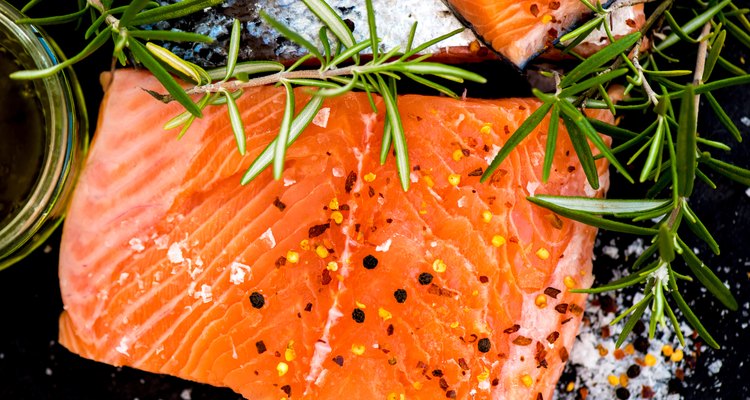
Manuta/iStock/Getty Images
A salmon may be any of several species in the family Salmonidae, which fisheries typically categorize into Atlantic and Pacific species. These fish generally spend most of their lives in salt water, and only migrate to fresh water to spawn. Baking is a low-fat method of cooking salmon, which tends to be high in healthy fats and protein.
Serving Size
A serving of baked salmon filet weights approximately three to four ounces and includes no seasonings or additional ingredients.
Calories
A serving of baked salmon filet contains about 100 to 140 calories. On average, this meal provides about five percent of the daily value for calories based on a standard diet of 2,000 calories per day.
Protein and Carbohydrates
A baked salmon filet provides 17 to 25 grams of protein in each serving. The average man should consume 56 grams of protein a day, while the average women should consume 46 grams of protein a day for optimal health. Salmon contains less than one gram each of carbohydrates, sugar and dietary fiber.
Fat
A serving of baked salmon contains two to six grams of fat, including one gram of saturated fat. This provides about five percent of the daily value for total fat and five percent of the daily value for saturated fat.
Vitamins and Minerals
Salmon is high in potassium, though exactly how many milligrams of potassium are delivered in a serving depends on the type of salmon you've chosen to bake. A baked sockeye salmon filet contains around 345 milligrams of potassium per serving; a baked Atlantic farmed salmon provides about 325; a baked wild Atlantic salmon has the most at 534 milligrams of potassium — or a bit over 10 percent of your daily potassium needs.
Related Articles

How to Cook Rockfish Fillets
How to Brine a Grilled Salmon
How to Cook Salmon in Pineapple Juice
How to Grill a Cod Fish
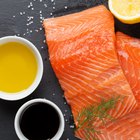
Calories in Wild Alaskan Salmon
How to Cook Atlantic Cod Fillets

How to Bake a Frozen Halibut Fillet
How to Cook Hog Fish

How to Cook Frozen, Boneless & Skinless ...
How to Bake Boneless Skinless Tilapia
How to Cook Sardines in the Oven
How to Cook a Pork Loin Fillet
How to Bake Lingcod

How to Cook Drum Fish
How to Broil Salmon in Foil
How to Cook Rockfish in the Oven
How to Cook Salmon to Moist & Tender ...
How to Bake a Frozen Halibut Filet
How to Cook Silver Salmon

Substitutes for a Tuna Steak
References
Writer Bio
Allan Robinson has written numerous articles for various health and fitness sites. Robinson also has 15 years of experience as a software engineer and has extensive accreditation in software engineering. He holds a bachelor's degree with majors in biology and mathematics.
Photo Credits
Manuta/iStock/Getty Images