
You've felt it: That burning sensation that starts in your chest and slowly creeps up your throat like a slow-burning fire. It goes by many names, including the expletive-laden terms sufferers keep to themselves, but the most common are acid reflux, heartburn and acid indigestion.
If it only happens every once in a while, that means you probably ate something that didn't agree with you. If it happens more than twice a week, though, you may have a more serious condition called gastroesophageal reflux disease (GERD), according to the National Institutes of Health (NIH).
Video of the Day
Video of the Day
Either way, your diet is the best place to start to tame the symptoms of acid reflux so it doesn't get out of control.
What Is an Acid Reflux Diet?
Taking a good look at your diet is the first line of defense in combatting acid reflux, especially because most symptoms are reported after a meal, according to July 2017 research published in the Journal of Neurogastroenterology and Motility.
If you have acid reflux, chances are you have trigger foods, meaning those that provoke the burning pain, regurgitation or difficulty swallowing many sufferers experience. Trigger foods can vary from person to person.
Following an acid reflux diet means you should take out the foods that commonly cause heartburn and add in foods that are known to tame the symptoms.
For most people, that means removing suspect foods and monitoring the effect on symptoms, then slowly adding them back in, one at a time, to see if the acid reflux reemerges. That's how you find your personal trigger foods.
Much of how diet affects acid reflux has to do with a ring of muscle that relaxes to let food pass from the esophagus to the stomach, called the lower esophageal sphincter (LES).
Some foods and lifestyle behaviors cause the LES to relax too much, and that allows stomach contents to come back up into the esophagus, according to August 2019 research published in the Journal of Thoracic Disease.
What Foods Help Heal the Esophagus?
What Do You Eat on an Acid Reflux Diet?
An acid reflux diet is extremely personalized, since a trigger food for you may not be a trigger food for someone else. This type of eating can be healthful overall, though, and you might see the quality of your diet improve.
Some common trigger foods are ones that should be limited in the diet anyway, and others are just known to cause the LES to relax too much.
Foods to eat
- Fresh fruit with lower acidity, including berries, stone fruit, bananas, melon, most apples
- Vegetables
- Lean proteins, including chicken, lean beef, fish, eggs
- Whole grains
- Nuts and seeds
- Legumes
- Low-fat dairy
Daily Menu for an Acid Reflux Diet
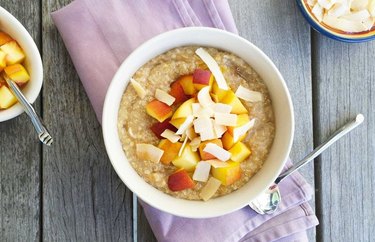
- Breakfast: Peaches and Creamy Coconut Quinoa Oatmeal Bowl
- Lunch: Kale, Bacon and White Bean Soup with a whole-grain roll and low-acid fruit
- Dinner: Roasted salmon with green beans and sautéed spinach
Foods to avoid
- Caffeine
- Spicy foods
- Foods high in fat, including full-fat dairy and fried foods
- Chocolate
- Mint
- Carbonated beverages, such as soda
- Alcohol
- Acidic foods and beverages, including citrus, tomatoes, pineapple, foods containing vinegar, buttermilk
What Can I Drink for Acid Reflux?
Since caffeine typically aggravates acid reflux, opt for caffeine-free herbal teas like chamomile. Avoid peppermint or spearmint tea, though, as it may trigger symptoms. Other drinks that are usually safe for those with acid reflux include:
- Water
- Coconut water
- Low-fat or fat-free milk
- Milk alternatives, such as almond or soy milk
- Low-acid juices, such as those made from carrots, watermelon or cucumber
Is an Acid Reflux Diet Healthy?
Obviously, there are some foods on the "avoid" list that are healthy foods, but that doesn't mean you can't get those nutrients in other foods that won't aggravate your symptoms of acid reflux.
Following an acid reflux diet that is high in fruits, vegetables and whole grains may help tame your symptoms and, yes, it is a very healthy way to eat.
According to November 2017 research published in the Journal of Research in Medical Sciences, people who had a higher intake of fiber in their diet had a lower risk for GERD. In addition, an August 2019 research article published in the Journal of Thoracic Disease found that people who increased their fiber intake saw a reduction in symptoms of acid reflux.
Tip
When it comes to fiber, aim for the recommended 25 grams a day for women and 38 grams for men, per the Academy of Nutrition and Dietetics.
Pros and Cons of an Acid Reflux Diet
Pros | |
Symptoms and severity of acid reflux may decrease by eliminating common trigger foods. | It can take a long time to figure out your trigger foods. |
Your overall diet may improve | Meal planning may become more difficult. |
If your symptoms calm down after eliminating foods, you decrease your risk for developing esophagitis (inflammation of the esophagus) or Barrett's esophagus (cancer), according to the Mayo Clinic. | Some healthy foods are eliminated from the diet. |
It may be harder to eat away from home. | |
You may have to eliminate foods you love to eat. |
Should You Try It?
If your symptoms of acid reflux are bothering you enough to seek out solutions to tame them, then you should try modifying your diet.
However, diet isn't the only change you should make. There are many lifestyle factors that are also known to cause acid reflux, and diet alone may not be enough to completely get rid of the heartburn.
Related Reading
The Mayo Clinic suggests other modifications you can make to your lifestyle that may tame your symptoms:
- Stop smoking
- Eat smaller meals
- Don't lie down after eating; wait at least one hour
- Speak with your doctor to see if any medications you're taking might be causing reflux
- Weight gain can cause acid reflux, so losing weight may help reduce symptoms
What Sweets Can You Eat With Acid Reflux?
While you should mostly avoid desserts that are high in fat or that contain chocolate, peppermint or spearmint, according to UPMC HealthBeat, the following sweets are typically safe for those with heartburn:
- Angel food cake
- Low- or nonfat ice cream, frozen yogurt, sherbet, pudding and custard
- Low-fat cookies
- Gelatin
- Sugar, honey, jelly, jam, syrup, marshmallows
When to See a Doctor
Even though occasional acid reflux is fairly common, if you have continuing symptoms that don't get better with diet and lifestyle modifications, seek help from your doctor for other remedies or medication.
If you have difficulty or painful swallowing, pain when you eat, problems breathing or are vomiting in large amounts, it has a strange color, or looks like coffee grounds, you should seek help immediately, per the NIH.
- National Institutes of Health: "Definition & Facts for GER & GERD"
- Journal of Neurogastroenterology and Motility: "Foods Inducing Typical Gastroesophageal Reflux Disease Symptoms in Korea"
- Journal of Thoracic Disease: "The Role of Diet in the Development and Management of Gastroesophageal Reflux Disease: Why We Feel the Burn"
- Journal of Research in Medical Sciences: "The relationship between fruit and vegetable intake with gastroesophageal reflux disease in Iranian adults"
- National Institutes of Health: "Symptoms & Causes of GER & GERD"
- Academy of Nutrition and Dietetics: "Fiber"
- Mayo Clinic: "Gastroesophageal reflux disease (GERD)"
- UPMC HealthBeat: "The Right Diet for GERD"
Is this an emergency? If you are experiencing serious medical symptoms, please see the National Library of Medicine’s list of signs you need emergency medical attention or call 911.