What Causes Pimples on a Baby's Ears?
Acne commonly affects the faces and ears of infants. This condition typically does not need treatment -- it usually resolves on its own within a few weeks. If your baby continues to have acne past this point, contact your pediatrician. The exact cause on infant acne is not known, however it may be related to the mother's fluctuating hormones during pregnancy or may be caused by allergies in the environment.
Baby Acne
Baby acne may occur on the chin, cheeks or even the ears. Like teenage acne, the pimples will appear red and have white or green centers. Whiteheads, or white dots surrounded by red, inflamed skin, may also appear. If your baby has white bumps that do not appear inflamed and do not lead to pimples, these bumps may be milia, which are not related to acne. Milia are normal bumps that appear on a newborn's face. If your baby experiences a rash that does not form pimples, he may have eczema or a skin irritation caused by contact with something in the environment.
Causes

Infant Acne & Discoloration of the Face
Learn More
Pediatricians and researchers haven't come to a consensus about what causes baby acne. Many experts believe that the acne may be a result of the mother's fluctuating hormone levels at the end of the pregnancy. However, baby acne sometimes appears weeks or even months after they are born. As a result, some experts say that baby acne might be caused by clogged pores or irritation from harsh detergents, just like teenage or adult acne.
Treatment
Wash your baby's face with a mild soap meant for babies and water once a day. Do not use astringents or other products meant for adult acne on your baby's face. You also do not need to scrub his skin because baby acne isn't caused by dirt or lack of hygiene. If the acne is very severe, your pediatrician might recommend a mild soap or treatment, but typically no medication is required. The acne will go away on its own within a few months.
When to Consult Your Pediatrician
Red Bumps Under an Infant's Chin
Learn More
If you are worried about the acne or if your child appears to be in pain, contact your pediatrician. If the pimples appear in conjunction with a fever or if they grow larger and appear to be sores rather than pimples, contact your physician because she may have an illness, such as chicken pox, or she may be suffering from an insect or spider bite. If this is the case, your baby needs medical attention to make sure that the condition doesn't become worse.
Related Articles

Infant Acne & Discoloration of the Face
Learn More

Red Bumps Under an Infant's Chin
Learn More
My Baby's Top Lip Is Peeling
Learn More
Baby Scalp Acne
Learn More
Little Red Bumps on My Baby's Face
Learn More
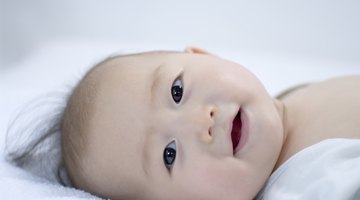
Baby Acne & Breast Milk
Learn More
How to Clear Dark Spots on Children's Skin
Learn More

Dark Patches Were on My Areola During My Pregnancy
Learn More
How to Wash a Baby's Face
Learn More
White Bumps on My Infant's Legs
Learn More

Natalie Smith is a technical writing professor specializing in medical writing localization and food writing. Her work has been published in technical journals, on several prominent cooking and nutrition websites, as well as books and conference proceedings. Smith has won two international research awards for her scholarship in intercultural medical writing, and holds a PhD in technical communication and rhetoric.
