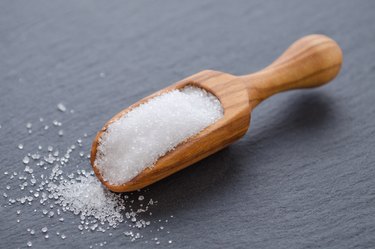
Xylitol and sorbitol are sugar alcohols, which are natural alternatives to sugar that can help keep your blood sugar levels steady and improve your oral health. Although they have a range of health benefits, they are associated with some unpleasant side effects. Despite this, they are considered to be better for you than many other sweeteners, which sometimes cause severe and varied side effects.
Read more: The 12 Best and Worst Sugar Substitutes
Video of the Day
Video of the Day
Negative Sugar Alcohol Side Effects
Sugar alcohols are popular substitutes for sugars. Also known as polyols, sugar alcohols can benefit your health in a number of ways but are not as sweet as sugar. In general, sugar alcohols are also known for causing gastrointestinal side effects.
Natural sweeteners within the sugar alcohol family typically affect the digestive system. This happens because they are not absorbed by your intestines in the same way that sucrose-based sugar and most other foods are. In fact, most sugar alcohols are considered indigestible. Consuming large quantities of a type of food your body cannot completely digest can cause side effects that include:
- Bloating
- Diarrhea
- Gas
- Stomachaches and cramps
- Unintentional weight loss
Side effects like these tend to occur when you intake substantial amounts of sugar alcohols. This means that these products are more useful in candy and gum, which you're meant to ingest in minimal amounts. However, people may experience side effects when they consume too much candy or gum sweetened with sugar alcohols.
Fortunately, if you frequently eat foods that contain sugar alcohols, your body should be able to adjust, and you should experience fewer side effects after a few weeks. But if you have health problems that require a special diet, like celiac disease or irritable bowel syndrome, sugar alcohol sweeteners may not be suitable for you and you may want to remove them from your diet entirely.
Excess Sugar Alcohol Consumption
Xylitol and sorbitol are natural sweeteners that are found in a variety of fruits. Typically, the amounts of naturally occurring xylitol and sorbitol are fairly low. However, the laxative effect you may experience when eating large quantities of certain foods, like dried prunes, actually happens partially because of their sugar alcohol content.
In addition to gastrointestinal side effects, xylitol can cause heart palpitations. These side effects are temporary and only occur with excess consumption of the product. Too much sorbitol is a bit more serious. This sugar alcohol is converted into glucose and can then accumulate in organs, like your kidneys, or damage your eyes.
However, neither of these sweeteners is generally considered to be toxic to humans, which would only occur if you were consuming much more than the recommended amounts. In fact, compared to other sweeteners, most sugar alcohols provide health benefits that far outweigh their side effects.
Positives of Sugar Alcohol Consumption
Sugar alcohols, like xylitol and sorbitol, have a range of positive health benefits and are known for being better for your oral health than sucrose-based sugar. Natural sugar alternatives like these are in demand because they are considered to be low-calorie or zero-calorie products. Both of these products look and feel like sucrose-based sugar, but won't negatively affect your blood sugar, making them particularly desirable for people with diabetes and those following low-carbohydrate or ketogenic diets.
Xylitol has a wide range of health benefits. Although sugar alcohols are generally considered to be beneficial to your oral health, xylitol is unique as it's actively helpful for your teeth and mouth. It can reduce the incidence of cavities, remineralize your teeth and help balance the pH (acid to alkaline ratio) in your mouth. Xylitol can also help decrease rates of ear infections and may be able to help increase bone volume, as well as having prebiotic effects that allow it to help lower your cholesterol and triglyceride levels.
Sorbitol has less-well-studied health benefits, but its digestive side effects are actually considered a positive in some types of products. You'll find it used in laxatives and other medical products, as well as in foods and cosmetic items, as it can thicken products and increase their moisture content. Unlike many natural alternative sweeteners, sorbitol is considered to be a nutritive sweetener as it gives your body energy when you consume it, which means it supplies calories.
Artificial Sweeteners' Side Effects
Natural alternatives to sugar are considered to be better for your health than artificial sweeteners because they cause fewer side effects. Although the side effects caused by sorbitol and xylitol may seem undesirable, artificial sweeteners may have a much wider range of side effects, including:
- Migraines and headaches
- Skin problems
- Weight gain
- Organ problems (especially for your kidneys and liver)
- Neuropsychological issues
You may want to use artificial sweeteners because they seem similar to sugar or are easier to cook with. But multiple scientific studies, including a 2018 study in the Journal of Inflammatory Bowel Diseases, a 2017 study in the Frontiers in Physiology Journal and a 2016 study in the Indian Journal of Pharmacology, have highlighted the negative effects of such products on the body.
In particular, artificial sweeteners like sucralose may be bad for your digestive system and your gut's microbiome. Having too much bad bacteria in your digestive system can affect everything from your metabolism to your brain via the gut-brain axis. The link between your digestive system and brain is so important that it can influence neuronal function, contributing to the development of depression and other neuropsychological issues.
Foods With Xylitol and Sorbitol
As naturally occurring sugar alcohols, xylitol and sorbitol are present in various plant-based products. The foods most likely to contain both xylitol and sorbitol are fruits and berries. Xylitol is easier to source than sorbitol as it exists in a variety of plant stalks and within the bark of trees.
Sorbitol is usually made from corn syrup. However, you can also find it in a variety of fruits and berries, including apples, pears, peaches, cherries, dates and prunes. Pears are particularly rich in sorbitol, more so than other commonly consumed fruits.
Xylitol is found in a wide variety of foods aside from berries, including fungi and grains. It is naturally produced from these foods or produced by microorganisms like yeast and bacteria. Xylitol can be made from a variety of different sources, including foods like:
- Corn stalks, cobs and leaves
- Rice, barley bran and other grains
- Trees like sago, eucalyptus, birch and bamboo
- Plant waste, like sunflower stalks and fruit pulp
Xylitol can be found in all sorts of products, from chewing gum to candy and even toothpaste. Sorbitol is found in similar products. Sugar alcohols are not typically used in beverages or for cooking as their consumption should be limited because of issues they may cause for your digestive system.
While it's possible to build up a tolerance to these side effects, the laxative effect of sugar alcohols is an indication that you shouldn't consume large amounts in one sitting. This means that products like these also need a warning label mentioning these potential effects. If you choose to cook with sugar alcohols at home, use caution or use a natural product with fewer gastrointestinal effects, like erythritol.
Sugar vs. Sugar Alcohols
Everyone is familiar with sugar. This delightful, sweet substance is consumed worldwide. Sugar is typically available as a crystalline substance or as a fine, sifted powder in a variety of forms. Sugar in its finest forms can be used to coat desserts and add flavor, while brown sugar or muscovado sugar might be used for baking or in meat marinades.
Much to the distress of those who have a sweet tooth, sugar has a reputation for rotting teeth. In addition, sugar is considered bad in the short term because it causes a rapid increase in energy followed by a severe "sugar" crash, but it is the long-term effects that are truly detrimental. Too much sugar can negatively impact your health, altering your gut microbiome and increasing your chances of obesity. Excess sugar consumption can even affect your cognitive function.
If you are concerned about the amount of sugar you're eating and are hoping to find a healthier, more natural alternative, sugar alcohols may be the answer. They are sweet, water-soluble and look similar to standard granulated white sugar. Although their flavor may be comparable in a raw state, they are not exactly the same when you cook them. For instance, they won't brown or caramelize when heated, which means they cannot always replace sugar in recipes.
Replacing Sugar With Sugar Alcohols
Although sugar alcohols may look like sugar, each one has some characteristic that differentiates it from sugar. Sorbitol, for instance, has only 60 percent of the sweetness of sugar. This is a quality typical of most sugar alcohols. Xylitol is an exception to this, as its sweetness is considered equivalent to that of sucrose-based sugar.
Xylitol also tastes very similar to sugar, unlike many alternative sweeteners. Sorbitol, on the other hand, has a cooling aftertaste that complements gum and certain candies, but can be too prominent in baked goods or other cooked products.
The main issue with using sugar alcohols as a replacement for sugar is that they cannot be considered equivalent products and are not typically used as equivalent replacements for sucrose-based sugar. Products like sorbitol are not sweet enough and even those that are, like xylitol, often cause laxative effects if you're making very sweet foods that require a large amount of the product.
Read more: 15 Reasons to Kick Sugar
Alternatives With Fewer Side Effects
Not all natural alternative sweeteners produce side effects. The minimal side effects caused by erythritol products, along with its textural qualities, mean that you can cook with this sugar alcohol with fewer issues. Erythritol can typically be used as 1-1 replacement for sugar in most sweet foods. This particular sugar alcohol may actually be the best one for your oral health as well — even better than xylitol or sorbitol.
If sugar alcohols are not suitable for you because of their side effects, you can try other natural alternative sweeteners. Plant-based sweeteners with positive health benefits exist and lack the side effects of sugar alcohols. One example is stevia, which contains about a dozen different steviol glycosides that make it sweet. Although this plant-based alternative to sugar has a mildly licorice-like aftertaste that might complement certain foods, it may produce an undesirable aftertaste.
- Microchemical Journal: Simultaneous Separation and Determination of Erythritol, Xylitol, Sorbitol, Mannitol, Maltitol, Fructose, Glucose, Sucrose and Maltose in Food Products by High Performance Liquid Chromatography Coupled to Charged Aerosol Detector
- Foods: Development of Next Generation Stevia Sweetener: Rebaudioside M
- Journal of Food Science and Technology: Artificial Sweeteners – A Review
- International Journal of Dentistry: Erythritol Is More Effective Than Xylitol and Sorbitol in Managing Oral Health Endpoints
- Nutrients: Diet-Induced Cognitive Deficits: The Role of Fat and Sugar, Potential Mechanisms and Nutritional Interventions
- Cell Host and Microbe: Diet Dominates Host Genotype in Shaping the Murine Gut Microbiota
- National Health Service: Sorbitol: Helpful for Diabetics?
- Advances in Food Research: Food Technological Evaluation of Xylitol
- Process Biochemistry: Biotechnological Production of Xylitol From Lignocellulosic Wastes: A Review
- Food Reviews International: Xylitol Biological Production: A Review of Recent Studies
- Nutrition Today: Systematic Review of Pears and Health
- Brain Research: The Artificial Sweetener Splenda Intake Promotes Changes in Expression of c-Fos and NeuN in Hypothalamus and Hippocampus of Rats
- Frontiers in Physiology: The Gut-Brain Axis: Interactions Between Enteric Microbiota, Central and Enteric Nervous Systems
- Frontiers in Physiology: Gut Microbiome Response to Sucralose and Its Potential Role in Inducing Liver Inflammation in Mice
- Indian Journal of Pharmacology: Artificial Sweeteners as a Sugar Substitute: Are They Really Safe?
- Inflammatory Bowel Diseases: The Artificial Sweetener Splenda Promotes Gut Proteobacteria, Dysbiosis, and Myeloperoxidase Reactivity in Crohn’s Disease–Like Ileitis
- Journal of Biology, Agriculture and Healthcare: A Review on Potential Toxicity of Artificial Sweetners vs Safety of Stevia: A Natural Bio-Sweetener
- Critical Reviews in Food Science and Nutrition: Xylitol: A Review on Bioproduction, Application, Health Benefits, and Related Safety Issues
- Journal of Human Nutrition and Dietetics: Dietary Sorbitol and Mannitol: Food Content and Distinct Absorption Patterns Between Healthy Individuals and Patients With Irritable Bowel Syndrome
- Karaelmas Science and Engineering Journal: Some Alternative Sweeteners (Xylitol, Sorbitol, Sucralose and Stevia): Review
- International Journal of Advanced Academic Research: Sugar Alcohols: Chemistry, Production, Health Concerns and Nutritional Importance of Mannitol, Sorbitol, Xylitol, and Erythritol
- FDA: Sugar Alcohols