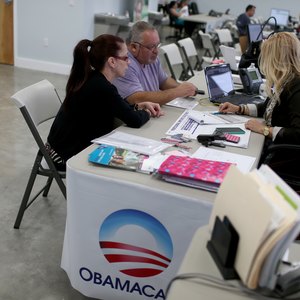


Public health insurance is insurance that is subsidized or paid for entirely by public (government) funds. Private health insurance is paid for in part or entirely by the individuals being covered. Several different public options are available in each state, but strict eligibility requirements exist. Private health insurance can be offered through an employer or can be purchased by individuals.
Many Types of Private Insurance
Many different private health insurance companies offer coverage in the United States. Cost and services covered vary greatly by region, company and plan. Plans may reimburse you for the cost of health care services after you receive them or may require you to go to participating providers, who bill them directly. Your plan may cover all of your costs or may require you to contribute a co-payment with each service.
Employer vs. Individual Plans
Private insurance is generally employer-sponsored or an individual plan. Employer plans provide healthcare to employees as a benefit of employment, and they typically are more generous than public plans like Medicare. Employees who receive employer-sponsored health insurance may sacrifice some of their wages as insurance premiums.
Individual health insurance plans, on the other hand, are plans purchased for an individual or a family. Coverage and costs vary greatly, depending on the plan, with many different health care coverage options for consumers on the market. An individual plan is not tied to your job, so you can change jobs without changing your health cover.
Read more: Do I Have to Accept My Employer's Insurance?
Medicare Public Health Insurance
Medicare is federal public health insurance for adults over the age of 65, people with certain disabilities and people with end-stage kidney disease. Medicare has four components: Parts A, B, C and D.
Part A covers hospital visits, home health care, hospice care and skilled nursing facilities. Part B covers doctors’ visits, including some preventive care. Part C is an option run by private insurance companies that includes Parts A and B and often other services such as prescription drugs. Part D covers prescription drugs and is also run by private insurance companies.
Read more: How Is the Medicare Tax Calculated?
Medicaid For Low-Income Families
Medicaid is public health insurance administered by states, combining state and federal funds for low-income individuals and families. Each state determines eligibility guidelines such as income, family size, disabilities, pregnancy status and immigration status. States also determine the coverage provided and the cost to participants (if any).
Children's Health Insurance Program
The Children’s Health Insurance Program (CHIP) is public health insurance for children and families who do not qualify for Medicaid because of income but are unable to afford private health insurance. The program is similar to Medicaid in that states determine eligibility, coverage and participant contributions, and state and federal funds are used jointly.
Special State Programs
For certain groups of people who are not eligible for Medicare, Medicaid or CHIP, other government funded insurance programs exist in some states. Medicaid buy-ins for working people with disabilities are for disabled people who would be eligible for Social Security if they did not work.
References
Writer Bio
Jacqueline Matuza has been writing for online publications since 2008. She is certified in public health and has worked in the field of sexual and reproductive health. She also has experience in grant writing and the personal finance field. Matuza holds a Master of Public Health in community health and prevention from Drexel University.