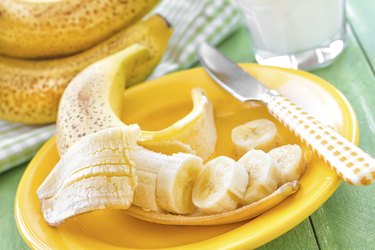
Your meal plan can be quite varied on the Banana Diet, because very few foods or beverages are prohibited on this plan. It could be considered a fad diet though, because it has rules to follow about when and what you eat. The rules aren't restrictive for lunch and dinner though, so depending on what you eat for those meals, you could lose weight -- or actually end up gaining. Check with your doctor before making drastic changes to your diet.
Banana Diet Breakfast Options
Video of the Day
This diet is called the Banana Diet for a reason; the plan's founders recommend you eat between one to four raw bananas for breakfast, along with room-temperature or lukewarm water, and nothing else. Like all meals on the Banana Diet, you're only supposed to eat until you're 80 percent full, indicated when you are no longer feel hungry and start to feel a slight pressure in your stomach.
Video of the Day
Other Meals on the Banana Diet
For the most part, you can eat whatever you'd like for lunch and dinner, except for dairy products, alcohol and desserts. You also need to eat dinner before 8 p.m, and the only drink you're allowed with meals is room-temperature water. Like with breakfast, eat only until you're 80 percent full.
You're likely to get the best weight loss results if you stick with nutritious, balanced meals for lunch and dinner. Fill one-fourth of your plate each of these healthy foods: fruits, vegetables, whole grains and lean proteins. Good protein sources allowed on the Banana Diet include seafood, skinless poultry and eggs. Limit highly processed foods, refined grains and foods that contain a lot of fat, sugar or sodium, since these tend to be higher in calories and lower in nutrients. This means skipping junk foods such as hot dogs, store-bought baked goods, frozen dinners and candy bars.
Steering clear of alcohol and desserts -- two indulgences that are high in calories with little nutrition -- is a positive aspect of the plan, and could help with limiting calorie intake. A glaring flaw of the diet, however, is the omission of dairy products, which would make it difficult for dieters to obtain an adequate calcium intake.
Banana Diet Snacks
Snacks aren't recommended on the Banana Diet between breakfast and lunch, but if you feel particularly hungry between these meals, you can have a piece of fresh fruit. Skip dried fruits and canned fruits; they are higher in calories per serving than fresh fruit. You can also have a small sweet snack between lunch and dinner, around 3 p.m. Since desserts aren't allowed after meals, this afternoon snack is a chance to have a little sweet something if you're craving it, such as a small piece of dark chocolate. Fruits or vegetables are the healthiest snack alternatives, however.
Other Rules on the Banana Diet
Exercise is optional on this plan, but you're more likely to lose a significant amount of weight if you include it. Aim for between 30 and 60 minutes per day of cardio, such as brisk walking, swimming or biking, as well as a couple of strength-training workouts each week for the best results.
The other main rule on the Banana Diet is to go to bed by midnight, which may be helpful for weight loss; not getting enough sleep may be associated with an increased body mass index, according to a study published in PLOS Medicine in 2004. People who lack sleep can develop hormone levels that are off-kilter: higher levels of ghrelin and lower levels of leptin. This combination causes increased appetite, which can lead to weight gain.
Potential for Weight Loss
Eating more fruits and vegetables, in general, is associated with weight loss, according to a study published in PLOS Medicine in 2015. However, to lose weight on the Banana Diet, you'd need to eat fewer calories than you use during the day. If you eat too much because you choose foods that aren't very filling, you may end up gaining weight instead of losing it. This might be easier to do than you'd think. For example, a banana can range in calories from about 72 to 135, so a breakfast of one to four bananas could include anywhere from 72 to 540 calories, which is a pretty big range.
- EveryDiet: Banana Diet
- Diets in Review: Banana Diet
- USDA National Nutrient Database: Bananas, Raw
- Fruits & Veggies More Matters: About the Buzz: Lose Weight on the New Morning Banana Diet!
- PLOS Medicine: Changes in Intake of Fruits and Vegetables and Weight Change in United States Men and Women Followed for Up to 24 Years: Analysis from Three Prospective Cohort Studies
- PLOS Medicine: Short Sleep Duration Is Associated With Reduced Leptin, Elevated Ghrelin, and Increased Body Mass Index