
Chinese Sports for Kids
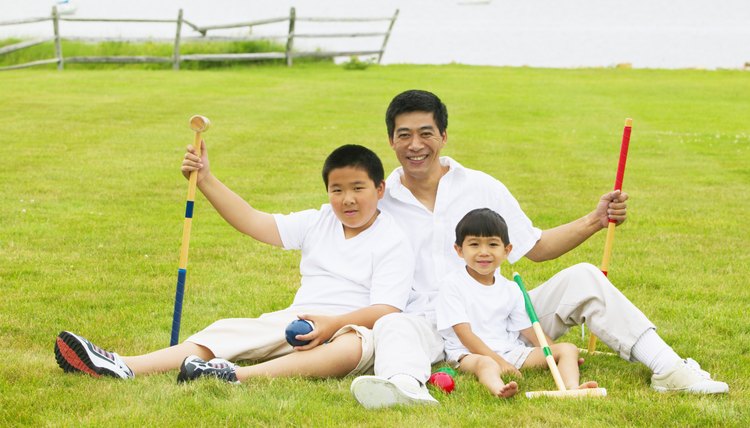
With the largest population in the history of the world, and a history that is arguably richer than any other country, China has a fantastic tradition of sports, dating back to the time of the emperors. Although they have participated in traditional modern sports such as basketball, baseball, and football for over a century, there are numerous other Chinese sports that are great for kids to play to both have fun and get the physical stimulation that they need.
Badminton
A simple and inexpensive game, due to the little equipment it needs, badminton is played with a net that is similar to volleyball, small rackets, and a "birdie" (or shuttlecock). The sport is so popular in China that there are amateur leagues across the country, and people of all ages play it regularly.
Tug of War (Bahe)
Bahe is a traditional Tug-of-War game in which participants stand opposite each other while holding a long, flexible object (often a rope or twine). Players pull on their end of the rope as hard as possible to drag the other team towards them. Not only is Bahe an ancient Chinese sport (created during the Tang Dynasty between the years 618 and 907), but millions of Chinese children regularly participate in it while growing up, and continue to do so as adults.
Martial Arts (Kung Fu)
Kung Fu is a traditional form of martial arts fighting that has been popular in China for centuries. Its tradition has grown immensely over the past few decades, and its teachings has spread to America and dozens of other countries throughout the world. Although it is a violent fighting style, the principles of Kung Fu advocate peace and respect, rather than violence. Nonetheless, Kung Fu remains a method of self-defense, along with a great way to stay in shape and have fun.
Table Tennis (Ping Pong)
One of the most popular games in China, Ping Pang Qiu (the official name) is played by nearly every Chinese child growing up. The country has produced some of the biggest legends of the sport, and regularly competes for the gold medal in the Olympics. Only needing a table, small paddles and a light ball, the game is inexpensive to play, and is fun to learn. Today, China has an estimated 300 million regular table tennis players.
References
Writer Bio
Alan Bass has been writing since 2008. His work focusing on sports topics has appeared in the "Hockey News" and online at Inside Hockey and HockeyBuzz. He received a presidential award from Muhlenberg College for academic and community achievements, in addition to a bachelor's degree in psychology and business. In 2011, he published a book titled "The Great Expansion: The Ultimate Risk That Changed the NHL Forever."