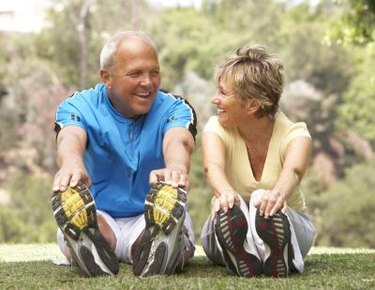
For a lot of men, becoming fit at the age of 50 is quite a feat. There is nothing more impressive than a physical fit elder. Although it may be difficult, it is possible with motivation and hard work. There are some lifestyle changes you will need to make in order to achieve your goals.
Step 1

A balanced diet is a must to become fit. Since age is associated with several health concerns, monitor the amount of fat you consume, as this will affect your heart.
Video of the Day
Step 2

Eat a balanced diet consisting of fruits and vegetables, whole grains, lean protein and diary. Healthy eating is essential to get into shape at any age, it can help reduce high blood pressure, lower high cholesterol and manage diabetes as you age. (See reference 4)
Step 3

Eat as much fiber-rich, unprocessed foods as you can as this is very healthy for your digestive system and overall health. They help rid your body of fats and carcinogens. (See reference 4)
Step 4

Although they are not necessary, health supplements can be very beneficial. Vitamins A, C and E are great for your prostate. Vitamin B is for boosting your energy, while also helping your body to process nutrients more effectively. Calcium can help maintain bone density and structure. A multivitamin is a great start for a supplement. (See reference 5)
Step 5
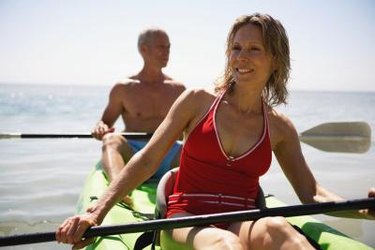
Whether it be tennis, basketball or another sport, find a physical activity you enjoy doing. This will make sticking with exercise much easier. Activities such as kayaking and swimming may be easier on your joints. Activities such as flag football and ultimate Frisbee may be more sociable.
Step 6
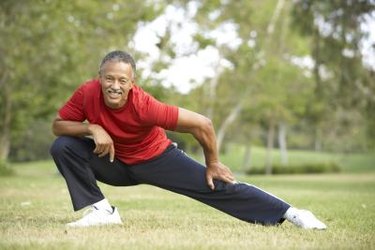
Engage in stretching before and after your workout. Stretching will increase mobility, help prevent injuries and help your muscles recover. Perform dynamic stretches before your workout to warm up. Dynamic stretches are generally done while moving, held for two seconds and repeated 10-15 times. Effective dynamic stretches include leg swings and arm circles. Perform static stretches after your workout as a cool down. Static stretches are generally done while remaining stationary and held for 20-30 seconds. An effective static stretch for your lower body are quad pulls. An effective static stretch for your upper body is the bowing stretch.
Step 7
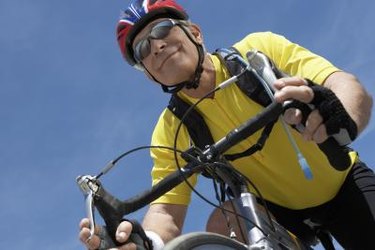
Perform cardiovascular exercise after warming up and before weight training. This will prepare your body for weight training by increasing your heart rate and body temperature. Cardio is very effective at burning calories and body fat. It will also help you maintain healthy lungs and a healthy heart. This may consist of running, cycling or using a stair machine. Perform 30 minutes of cardio per day at least four times per week.
Step 8
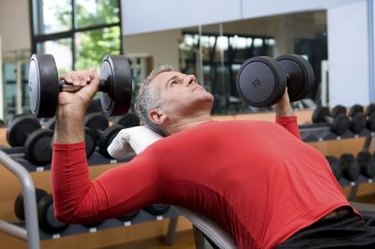
Perform weight training after cardio. Weight training is very effective at burning calories and body fat and increasing strength and muscle mass. Perform compound exercises, such as bench presses, squats and deadlifts. They are generally more effective because they incorporate multiple muscle groups at once. Weight train three to four times per week for optimal results. (See reference 3)
Things You'll Need
Water
Variety of food including fruits and vegetables, lean protein, whole grains and diary products
A multivitamin (optional)
Minimal fitness equipment including barbells and dumbbells
Tip
At you age, the health of your joints may be a significant concern. If this is the case, consider a low impact cardiovascular activity in order to avoid joint related difficulties. Low impact activities include swimming, use of a stationary bike or elliptical machine, or anything else that wont exert impact related pressure on the joints. Use a lifting partner as a spotter at the gym to reduce your risk of weight related injury.
Warning
Consult with your doctor before starting a new fitness program Drink plenty of water before, during and after your workout Do not over train your body. Rest is your best friend at age 50 Always warmup before working out
Video of the Day