
What Is the Huddle Position in Swimming?
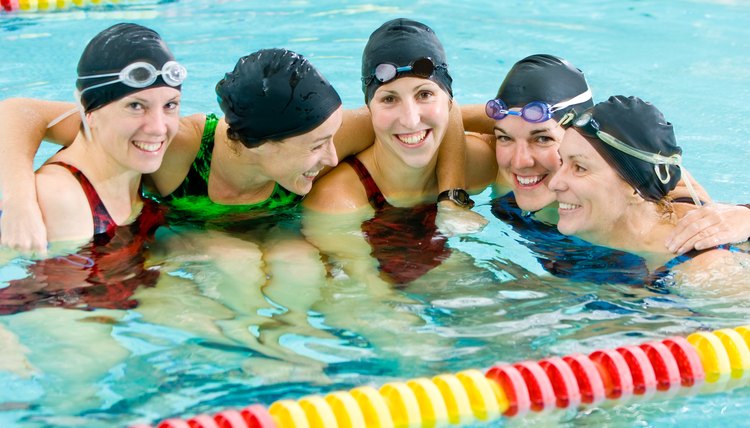
If you find yourself immersed in cold water when you are far away from the shore and rescue is no where in sight, an effective survival technique is the huddle position in which a group of stranded swimmers come together to conserve body heat. By doing the huddle, you can help keep yourself as warm as possible.
Danger of Heat Loss
You lose body heat much faster when immersed in cold water than you do while standing in cold air. Your body functions normally at 98.6 degrees F. As your core body temperature drops, heat loss will occur first in your extremities and then in your vital organs and brain. You’ll start to lose control of your body if not consciousness. If your body temperature reaches anywhere from 86 to 89.6 degrees F, death is almost a certainty. Sudden exposure to cold water can also cause shock, spasms, muscular dysfunction or a heart attack. You may not be able to climb back onto the boat or even breathe and stay afloat.
Survival Posture
If you’re unable to get out of the water, you should adopt HELP, which is the heat escape lessening posture. Hold your arms snugly across your upper body and tuck your elbows into your sides. Draw your thighs together, bending your knees and bringing them up to your chest. It’s almost as if you’re adopting a fetal position, however, your trunk should be upright with your head above water. This position protects those areas of your body that are most vulnerable to the cold. Keep in mind, however, that some personal flotation devices won’t allow you to draw your knees up.
Huddling Together
A group of two or more people can adopt the huddle position to conserve heat. This position also prevents individuals from drifting away, provides a larger target for recovery, reduces panic and fends off despair. Knit the sides of your bodies together and press your chests, bellies and groins against each other. Wrap your arms around each other’s backs or life jackets at shoulder or waist level. Intertwine your legs to maintain bodily contact. Meanwhile hold on to any buoyancy aids to stay afloat. Because children are more susceptible to the cold water, they should be cushioned in the middle of the group. While huddling, talk to each other and maintain an upbeat outlook.
Safety Tips
Avoid panic in cold water, which can impede your breathing cycle and put you at risk of drowning. If your breath becomes irregular, you may suffer from a spasm of your vocal chords, or larynogspasm, which can lead to a loss of consciousness. Wear a life jacket. Its buoyancy can keep your head above water as well as help you maintain the HELP position. Wear as many layers of clothing as possible. In particular, wool will keep your body cushioned with a warm shield of water.
References
Writer Bio
Kay Tang is a journalist who has been writing since 1990. She previously covered developments in theater for the "Dramatists Guild Quarterly." Tang graduated with a Bachelor of Arts in economics and political science from Yale University and completed a Master of Professional Studies in interactive telecommunications at New York University.