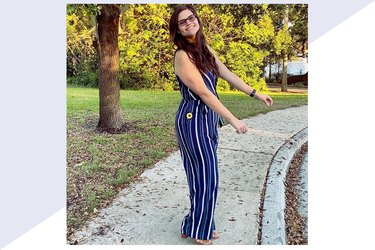
She was a mere 22 years old, but Shelby Villatoro's health — and her ability to enjoy life as a recent college grad and a newlywed — was deteriorating fast. Back pain and swollen ankles marred even simple, everyday activities.
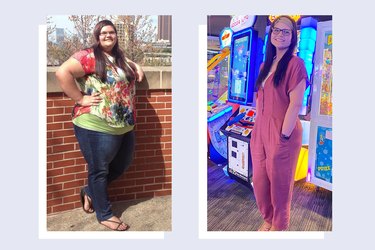
The Floridian had consistently played sports as a child and teen, but despite that inclination toward an active lifestyle and several weight-loss attempts, she weighed 411 pounds. Her weight and eating habits had been lifelong challenges. Both her parents and grandparents had lived with obesity, and Villatoro was worried about the future that loomed.
Video of the Day
Video of the Day
Her carefully considered decision to have weight-loss surgery, though, was the first step in transforming that future. Villatoro, now 25, has lost more than 220 pounds over the last two years. Here, she shares her astonishing journey in her own words.
Read more: 3 Key Numbers That Lead to an Obesity Diagnosis
A ‘Wake-Up Call to Get It Together’
I don't remember a time when I was not significantly larger than the rest of the people around me. But I still loved travel, biking, hiking and swimming. Somehow, I never noticed how much my size hampered those activities. I was dieting on and off, but nothing ever helped me lose more than a few pounds.
When I traveled to Seattle with my husband to celebrate our first anniversary, I struggled to do just about everything. I ended each day of sightseeing exhausted. I got sick of looking up the weight limits for attractions. The chairs at the al fresco restaurant we wanted to try were too small. I faced the embarrassment of purchasing two plane seats and asking for a seatbelt extender. I had confronted each of those things in the past, but that was the first time I had to deal with all of them at once.
That trip was truly my breaking point. I went to see my primary care physician as soon as I got home.
He suggested weight-loss surgery — I weighed 411 pounds and had an off-the charts BMI of 61, which is well into the obesity range — but I refused. You see, my mother had bariatric surgery when I was a kid, and it didn't end well. Even though I now realize the poor outcome was the result of her ignoring the doctor's instructions, it still left a negative impression.
The doctor ruled out the weight-loss medication phentermine because the length of time I would need to be on it would put a strain on my heart. So that left me with one option: a strict diet and exercise plan.
I worked very hard for two months and lost 20 pounds. But I could feel my drive flagging, and I had so much further to go. If I gave up, what would I be at my next doctor's appointment, 500 pounds? I was terrified.
‘I Realized Weight-Loss Surgery Could Save My Life’
Around that time, I launched @subtractingshelby on Instagram to chronicle my weight-loss efforts. It was the kindness of strangers on that platform that convinced me weight-loss surgery could save my life. I knew I needed all the help I could get.
I was a candidate for either gastric bypass or a vertical sleeve gastrectomy, aka "the sleeve." Both procedures involve surgically making the stomach smaller, but bypass also reroutes food to skip part of the digestive tract. Ultimately, I chose bypass. Bypass usually results in higher weight loss.
Another factor was "dumping syndrome," a hugely unpleasant reaction that often happens when bypass patients eat too much sugar. I knew the prospect of it would bolster my willpower.
For the six months leading up to surgery, I met with a dietitian monthly to talk about small ways to shift my eating habits. I loved that the goals were all attainable.
For example, if I was someone who ate a sandwich every day, they might ask me to cut down to two or three sandwiches a week at my first appointment. Then, at my next appointment, we would talk about better options, like lettuce wraps. It was never about restriction, but always about incorporating favorite foods in a healthier way. (All of this was to prepare me for my new lifestyle, but it was also part of my health insurance requirements.)
"Before, I would eat when I was bored, anxious or sad. Now, I continue to do my best to fill those voids with writing, reading, exercise or a hobby to take the focus off food."
I spent two nights in the hospital after my surgery. One of the hardest parts was having to go more than 24 hours without any liquids while post-op tests were done. Then I was on a full liquid diet for two weeks before slowly being allowed to eat more and more solid foods. The whole process took eight weeks.
After I got home from the hospital, I wasn't in as much pain as I thought I would be. Actually, the extreme fatigue from my reduced-calorie intake was much worse. Even just a quick trip to the store was a struggle. I had to take a lot of naps. It took a few months before I felt like a normal person again.
The Biggest Challenge I Overcame
The most difficult hurdle, but the one I knew I had to get over, was permanently giving up my old habits. Surgery does not cancel out your free will. Poor choices can still lead to weight gain.
Before, I would eat when I was bored, anxious or sad. Now, I continue to do my best to fill those voids with writing, reading, exercise or a hobby to take the focus off food.
"Gastric bypass is a tool, not magic. If you haven't done the mental preparation to overhaul your life and your eating habits, the surgery is not going to lead to the success you want."
The One Thing That Really Helped Me Succeed
Sticking with the healthy foods my dietitian had shared with me in those early days is really the key to my long-term success. I know this is what has set me apart from others who have had surgery and still struggle.
I have been consistent with my changes for so long that the healthy food is now my norm and the junky stuff is out of character for me. If I go to a burger restaurant, I always get a lettuce wrap. I always make dinner with cauliflower rice, not regular rice. I opt for grilled vs. fried out of habit.
I'm not perfect, though! I do indulge occasionally, either as part of a celebration or because I am craving something specific. But the difference is that I never have a problem jumping back into my routine because it's just a part of my lifestyle now.
My Best Piece of Advice for Others
My decision to have gastric bypass surgery is probably the best decision I ever made, but it is not one that should be taken lightly. Gastric bypass is a life-altering procedure and cannot be reversed, so it's important that you do your research and work with a good medical team to make sure it is the best choice for you and your family.
Gastric bypass is a tool, not magic. If you haven't done the mental preparation to overhaul your life and your eating habits, the surgery is not going to lead to the success you want.
Was this article helpful?
150 Characters Max
0/150
Thank you for sharing!
Thank you for your feedback!