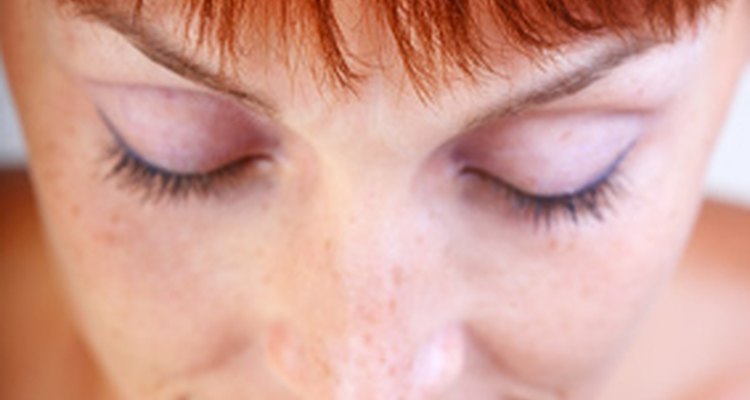
Darkening your red hair depends on how you originally colored it. Once you chemically alter hair, you must use chemicals in order to lighten or darken your hair. Similarly, you should only mix natural dyes with other natural dyes. Natural dyes will have little to no effect on chemically treated hair in most cases. Do not use natural dyes containing henna in combination with chemical dyes, as it will likely not produce the desired effect and will damage your hair.
Natural Dyes
Add tea or coffee to henna powder instead of water when mixing your own henna to darken the color before application.
Make a black coffee or tea dye to darken hair that has been naturally dyed red with henna, carrot juice, beet juice, paprika, cloves, rosehip, cherry bark, madder root, hibiscus, saffron, alder bark or some combination of these herbs. Brew tea or coffee, letting it cool, apply it to hair and then let it sit for 15 minutes. Repeat this process, and then rinse thoroughly.
Use walnut shell dye if you want to darken your hair and remove some or all of the red. Boil crushed walnut shells in only enough water to cover the shells for a half an hour, and then strain the shells and let the mixture cool. Apply this dye to your hair, and let hair dry before rinsing.
Chemical Dyes
Use professional hair dye of the same make to darken hair dye that you have not applied to your hair. Add one part red to each part brown or else the brown will overpower the red. Usually products that mix specific shades one color part at a time are only available to salon professionals. The regular consumer will have to buy premixed colors from a drug store or go to a salon to have their hair dyed. You will not have the option of mixing tints one color part at a time, but you can ask your stylist to do it.
Choose a temporary brown hair dye with golden or natural tones from your local pharmacy to darken red hair that has been attained chemically. Choosing a temporary dye will prevent the hair from being overprocessed and damaged. Do not go more than two shades darker than your current color or else the brown will overpower the red.
Visit a salon professional to darken your dyed red hair. Show him the color to which you would like to darken your hair, and he will be able to calculate and adjust the shade of your hair more precisely to achieve your desired color. Your stylist has the proper tools, training and supplies to assist you.
Related Articles
How to Change Black Hair Color

How Often Can You Color Hair Without ...

Difference Between Permanent Hair Color ...

How Do I Dye Black Hair Light Brown?

How Long Should I Wait to Dye My Hair ...
Can I Dye My Hair After Bleaching It?
How to Change Colored Hair From Red to ...

How to Put Red Highlights Into Dark Hair
How to Get Your Highlights Brighter

If I Dyed My Naturally Blonde Hair Too ...

Instructions for How to Use a Wella ...

How to Color Auburn Hair Dark Brown
How to Bleach Dyed Brown Hair

Can You Use Regular Hair Dye to Make ...

How to Keep Burgundy Hair Vibrant

How to Get Rid of Bronze Hair Color

How to Get the Brass Out of Your Hair ...
How to Dye Hair White
How to Cover White Hair with Light ...

How to Correct Gold Tones in Hair Color
References
- Henna for Hair: Warnings
- Lori Pacheco; Owner and Operator of Totally Clips Hair Salon; Kingston, Ontario
Photo Credits
Close-up portrait of red-haired woman, focus on hair image by Olga Ekaterincheva from Fotolia.com