
What does fact checked mean?
At SportsRec, we strive to deliver objective content that is accurate and up-to-date. Our team periodically reviews articles in order to ensure content quality. The sources cited below consist of evidence from peer-reviewed journals, prominent medical organizations, academic associations, and government data.
- National Institutes of Health: Sprains and Strains
- Journal of Pain: Ginger (Zingiber officinale) reduces muscle pain caused by eccentric exercise
- Journal of Pain: Ginger (Zingiber officinale) reduces muscle pain caused by eccentric exercise
- European Journal of Applied Physiology: Curcumin supplementation likely attenuates delayed onset muscle soreness (DOMS).
- European Journal of Applied Physiology: Curcumin supplementation likely attenuates delayed onset muscle soreness (DOMS).
The information contained on this site is for informational purposes only, and should not be used as a substitute for the advice of a professional health care provider. Please check with the appropriate physician regarding health questions and concerns. Although we strive to deliver accurate and up-to-date information, no guarantee to that effect is made.
Home Remedies for a Pulled Hamstring

Pulled hamstrings are one of the most common reasons athletes and exercise enthusiasts end up on the sidelines. A "pulled" muscle is a strained muscle. It results in pain, swelling, bruising and loss of range of motion. Depending on the extent of the strain, the injury is classified as mild or acute. Most hamstring strains can be treated at home with the usual routine of rest, ice, compression and elevation, as well as anti-inflammatory medications and other natural supplements and rehabilitative exercises.
R.I.C.E.
R.I.C.E stands for Rest, Ice, Compression, Elevation. It's the first line of treatment after a muscle injury.
Rest: Cease activity. As soon as you feel the pain of a strained muscle, stop exercising. Continuing the activity can aggravate your injury. Stay off the injured leg as much as possible for at least a day or two. After that don't engage in any vigorous activities, or any activities that cause pain.
Ice: Applying ice to the injured hamstring will help reduce swelling. Use an ice pack or a couple bags of frozen vegetables. Sit for 20 minutes with your hamstring resting on the ice. Do this four to eight times a day for the first two to three days, or until pain subsides.
Compression: Wrapping an ace bandage securely around the injured thigh will also help reduce swelling.
Elevation: When you're sitting or lying down, place a pillow under your hamstring to alleviate pressure and prevent fluid build up in the strained muscles.
Home Remedies for a Pulled Hamstring
Anti-Inflammatory Medications and Supplements
As long as your doctor says it's OK, you can take over-the-counter pain medications such as ibuprofen or aspirin to ease pain and reduce swelling. However, even if the pain is lessened by these medications, continue to limit activity and follow R.I.C.E protocol.
Certain natural supplements may also provide muscle pain and inflammation relief.
In a study, published in The Journal of Pain, 2 grams of ginger daily reduced exercise-related muscle pain.
Pineapple contains bromelain, an enzyme which may reduce pain and swelling and also speed recovery time after a muscle injury. You can't get enough by actually eating pineapple; in supplement form, a dosage of 80 to 320 milligrams two to three times per day is recommended.
Turmeric contains the anti-inflammatory component curcumin. One study published in European Journal of Applied Physiology found that an oral does of 2.5 milligrams of curcumin twice daily improved exercise-related muscle pain and aided muscle damage repair and recovery.
Stretching and Strengthening Exercises
Once the pain and inflammation have subsided, targeted stretching and strengthening exercises will help you regain range of motion and stability in the injured muscle group. If the strain was severe, it's a good idea to consult your doctor or a physical therapist to find out when it's safe to start a rehabilitative program and what specific exercises to include.
For more mild sprains, you can safely do the following exercises at home:
Straight-leg hamstring stretch: Put your foot on a table, step or or chair seat. Keeping your leg straight bend forward just enough to feel a slight stretch in the hamstring. Bend at the hips, rather than rounding the back. Hold the stretch for 10 seconds, then release. Repeat two more times.
Bent-leg hamstring stretch: Lie on your back and extend your leg with the injured hamstring up above you. Keep the knee slightly bent and hold behind the thigh with both hands. Gently pull the thigh toward you until you feel a gentle stretch. Hold for 10 seconds, release, then repeat two more times.
Isometric contractions: Lie on your stomach. Have a partner kneel by your feet. Bend the leg with the injured hamstring. Have your partner hold the heel of that foot and gently pull it down toward the ground as you use your hamstring strength to work against the resistance. Hold for a few seconds, then relax and repeat for a total of 10 reps.
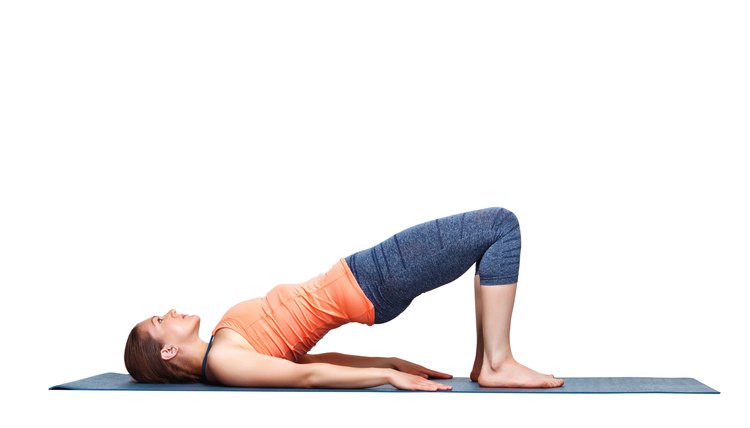
Bridges: Lie on your back with your knees bent and feet flat on the floor. Press into your heels and raise your hips up, using the strength of your hamstrings. Hold for a second at the top, then lower down. Do a total of three sets of eight reps. Increase your reps as you get stronger.
Explore In Depth
References
- National Institutes of Health: Sprains and Strains
- Sportsinjuryclinic.net: Hamstring Strain (Pulled Hamstring)
- Sportsinjuryclinic.net: Hamstring Strain Stretching Exercises
- Sportsinjuryclinic.net: Hamstring Strain Strengthening Exercises
- Journal of Pain: Ginger (Zingiber officinale) reduces muscle pain caused by eccentric exercise
- University of Maryland Medical Center: Bromelain
- European Journal of Applied Physiology: Curcumin supplementation likely attenuates delayed onset muscle soreness (DOMS).
- Schmitt B, Tim T, McHugh M. Hamstring injury rehabilitation and prevention of re-injury using lengthened state eccentric training: a new concept. International Journal of Sports Physical Therapy. 2012;7(3):333-41.
- Heiderscheit BC, Sherry MA, Silder A, Chumanov ES, Thelen DG. Hamstring strain injuries: recommendations for diagnosis, rehabilitation, and injury prevention. J Orthop Sports Phys Ther. 2010;40(2):67‐81. doi:10.2519/jospt.2010.3047
- Ernlund L, Vieira LdA. Hamstring injuries: update article. Revista Brasileira de Ortopedia (English Edition). 2017;52(4):373-382. doi:10.1016/j.rboe.2017.05.005
- Kim G, Kim H, Kim WK, Kim J. Effect of stretching-based rehabilitation on pain, flexibility and muscle strength in dancers with hamstring injury: a single-blind, prospective, randomized clinical trial. The Journal of Sports Medicine and Physical Fitness. 2018;58(9):1287-1295. doi:10.23736/S0022-4707.17.07554-5
- Ramos GA, Arliani GG, Astur DC, Pochini AdC, Ejnisman B, Cohen M. Rehabilitation of hamstring muscle injuries: a literature review. Revista Brasileira de Ortopedia (English Edition). 2017;52(1):11-16. doi:10.1016/j.rboe.2016.12.002
- Oakley ET, Pardeiro RB, Powell JW, Millar AL. The effects of multiple daily applications of ice to the hamstrings on biochemical measures, signs, and symptoms associated With exercise-induced muscle damage. Journal of Strength and Conditioning Research. 2013;27(10):2743-2751. doi:10.1519/JSC.0b013e31828830df
- Malanga GA, Yan N, Stark J. Mechanisms and efficacy of heat and cold therapies for musculoskeletal injury. Postgraduate Medicine. 2014;127(1):57-65. doi:10.1080/00325481.2015.992719
- Morelli KM, Brown LB, Warren GL. Effect of NSAIDs on recovery from acute skeletal muscle injury: a systematic review and meta-analysis. Am J Sports Med. 2017;46(1):224-233. doi:10.1177/0363546517697957
- Cleveland Clinic. Hamstring injuries.
Writer Bio
Jody Braverman is a professional writer and editor based in Atlanta, GA. She received a Bachelor of Arts in English from the University of Maryland, and she is a certified personal trainer, fitness nutrition specialist, and yoga teacher. She has written for various online and print publications, including Livestrong.com, SFGate, Healthfully, and Chron.com. Visit the writer at www.JodyBraverman.com.