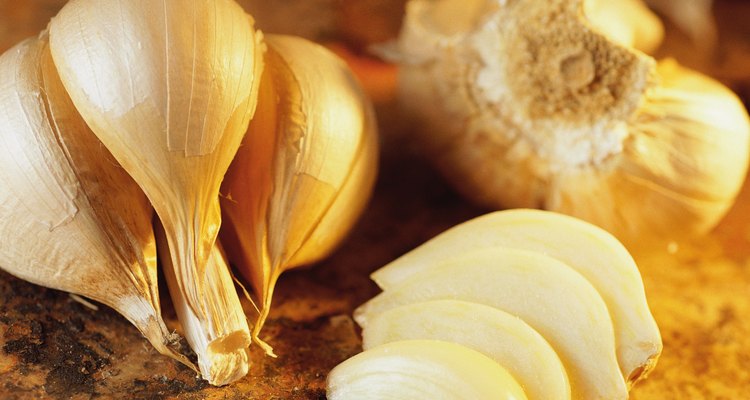
Stockbyte/Stockbyte/Getty Images
Psoriasis is a condition that most obviously affects a person's skin. In clinical research on treatment methods for psoriasis, garlic and garlic products, such as garlic oil, have been suggested as treatments, whether in eaten form or application to the skin. Garlic, a healthful herb, has properties that resolve certain psoriasis triggers, like inflammation, but its usefulness as a treatment option is not scientifically definitive.
Psoriasis Inflammation and Diet
In an article published in the "Journal of the European Academy of Dermatology and Venereology" in 2012, researchers explain that psoriasis is a chronic condition affecting the entire body, in which the immune system does not function properly. (See Reference 1) Psoriasis is driven by inflammation in the body and presents with manifestations on the skin and in the joints. (See Reference 1) Strict and early control over this inflammation is the best way to also control psoriasis. (See Reference 1) Diet can play a role in reducing the inflammation that spurs psoriasis when anti-inflammatory compounds are consumed. (See Reference 2)
The Therapeutic Potential of Garlic for Inflammation
Research published in the "Journal of Medicinal Foods" in 2012 suggests compounds found in garlic have anti-inflammatory, therapeutic potential. (See Reference 2) An enzyme in the body known as COX-2 is responsible for driving pro-inflammatory mediators to the inflammation site, however anti-inflammatory compounds in garlic weaken the force of COX-2, thereby reducing inflammation at the site. (See Reference 2) According to the "Alternative Medicine Review," garlic can block the protein complex nuclear factor-kappaB from activating inflammatory cytokines, or small proteins involved in cell signaling. (See Reference 3)
Garlic and Further Damage to the Skin
In a 2010 doctor's letter to the editor of "The Journal of Dermatology," the doctor describes a case of a patient presenting with clinically similar symptoms to nail psoriasis after peeling bulbs of garlic. According to the doctor, around 55 percent of patients with psoriasis present with nail psoriasis at some point. Handling garlic with bare hands also presents a number of symptoms that mimic psoriasis, including contact dermatitis. Therefore, in attempting to treat psoriasis with garlic, caution is of the utmost importance to avoid adding new or worsening current symptoms. It is advised that garlic not be overly-handled with bare hands. (See Reference 4) Contact a medical professional before applying any garlic product directly to the skin for treatment, or consuming excessive amounts, as you do not know what effect it will have on you.
The Legitimacy of Herbal Treatments
Using garlic for the treatment of psoriasis has been suggested as an option in various clinical studies, however, using herbs as remedies is typically relegated to the field of naturopathy. (See Reference 3) While garlic has been offered up as a possibility, there is no definitive evidence that using garlic in any form—applying or consuming—is a treatment for psoriasis. If you have or develop psoriasis, you should consult a medical expert immediately rather than starting with naturopathic remedies. Not only can a doctor provide more sound medical advice upon examination, he or she can also check for other serious conditions that often underlie psoriasis. (See Reference 1)
Related Articles
How to Get Rid of Garlic Body Odor

How to Freeze Garlic Scapes
Nutritional Value of Garlic Powder Vs. ...

The Use of Neem Juice in Skin Care as ...
How to Blanch and Peel Garlic
Molluscum Contagiosum Natural Treatments

How to Naturally Treat a Fungal ...
How to Kill a Nail Bed

What Is the Cooking Substitution for ...

Foods That Are Natural Antibiotics
How to Cook With Garlic Salt
Coconut Oil & Nail Fungus
How to Keep Garlic From Turning Bitter

How Many Calories Are in Garlic Chicken ...

What Is Aloe Good For?
Neem Bark Benefits
Tea Tree Oil Cure for Halitosis
Do You Need to Refrigerate Infused ...

How to Treat Hematoma & Swelling After ...

Health Benefits of Potatoes, Onions and ...
References
- Journal of the European Academy of Dermatology and Venereology: The Concept of Psoriasis as a Systemic Inflammation: Implications for Disease Management
- The Journal of Medicinal Foods: Anti-Inflammatory Activity of Sulfur-Containing Compounds from Garlic
- Alternative Medicine Review: Psoriasis – Pathophysiology, Conventional, and Alternative Approaches to Treatment
- The Journal of Dermatology: Garlic-Induced Irritant Contact Dermatitis Mimicking Nail Psoriasis
Resources
Writer Bio
Kimberly Riggins has been writing in the health and wellness industry for over 15 years. Certified as a personal trainer at age 17, she also holds a Bachelor of Science in psychology, a Master of Science in holistic nutrition and certification as a holistic health counselor. Her background includes weight training, yoga, nutrition, weight management, body image issues and eating disorders.
Photo Credits
Stockbyte/Stockbyte/Getty Images