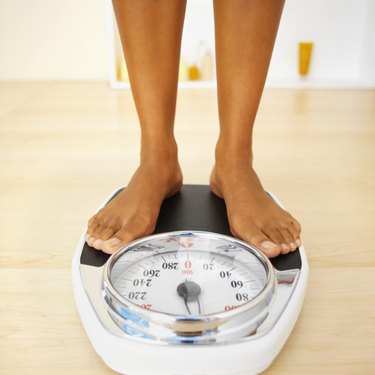
Abilify is an antipsychotic drug usually prescribed to treat psychotic conditions. Among the side effects of Abilify, weight gain is not uncommon. When taking Abilify, it is important to lose the gained weight in a safe, healthy manner by making some basic lifestyle changes. The lifestyle changes are the same for basic weight loss, including changing your diet and adding exercise to your daily routine.
Step 1
Eat a healthy and well-balanced diet. Include a variety of vegetables and fruits, whole grains and low-fat or fat-free dairy products. Choose healthy sources of protein, including beans, eggs, nuts and lean, white meats. Cut back on the amounts of sugar, salt and unhealthy fats that you eat.
Video of the Day
Step 2
Avoid continual snacking throughout the day, which can cause overeating and unnecessary caloric intake. Eat five or six small meals throughout the day, which can help you feel fuller. Eat only when you're hungry and pay attention to the signals that your body is sending to you.
Step 3
Limit your consumption of alcohol, since alcoholic beverages are often very high in calories (and may serve to worsen the symptoms that Abilify is trying to treat). Instead, drink more water throughout the day, which is a great way to help your body feel fuller and prevent overeating. Drink at least six to eight glasses of water each day.
Step 4
Exercise at least 30 minutes a day for most of the days during the week. Include cardiovascular and strength-training exercises in your routine. Exercising may be difficult, especially if you are taking Abilify for a health condition that makes exercise difficult. Any physical activity is better than none, so find something you enjoy.
Step 5
Talk with your doctor if weight gain continues despite your efforts. Discuss some alternative suggestions for treating your weight gain. Look into altering your Abilify dosage or changing the medication to something that may have less side-effects for you.
Tip
Talk to your doctor before beginning any diet or exercise regimen to determine what is safe for your personal health.
Video of the Day