What does fact checked mean?
At Healthfully, we strive to deliver objective content that is accurate and up-to-date. Our team periodically reviews articles in order to ensure content quality. The sources cited below consist of evidence from peer-reviewed journals, prominent medical organizations, academic associations, and government data.
The information contained on this site is for informational purposes only, and should not be used as a substitute for the advice of a professional health care provider. Please check with the appropriate physician regarding health questions and concerns. Although we strive to deliver accurate and up-to-date information, no guarantee to that effect is made.
Yeast & Sugar Free Diet
People who suffer from candidiasis or frequent yeast infections sometimes try a yeast- and sugar-free diet in an attempt to limit their symptoms. This diet is sometimes called the candida diet, after the type of yeast it's meant to control. Don't rely on this diet in place of the treatment recommended by your doctor, as there isn't enough evidence to support this.
Foods to Eat
Nuts and seeds are OK, with the exception of peanuts and perhaps pistachios, depending on the version of the diet you choose.
Some versions of the candida diet allow for gluten-free grains, such as oats, rice and millet, while others don't allow any grains. Likewise, some say it is fine to eat fresh and frozen fruits, with the exception of melons and dried fruits, while others don't allow any fruit.
Foods to Avoid
Candida Diet & Soy
Learn More
You'll also need to avoid foods that contain any type of sugar, including honey and maple syrup as well as any ingredients that end in "ose." Don't drink alcohol, and limit processed foods. More strict versions of the diet have you avoid starchy vegetables, such as:
- potatoes
- corn
- as well as most
- if not all
- dairy products
Potential Benefits
Columbia University Health Services notes that the candida diet hasn't been tested for effectiveness in keeping your body's yeast levels in check 4. The University of Maryland Medical Center admits the potential for this diet to help people feel better but states that it isn't clear whether this is because it gets rid of yeast or because it causes people to eat healthier 3.
Limiting your sugar consumption may help you cut calories and reduce your weight and may also help lower your risk for heart disease, according to the American Heart Association 2.
Other Considerations
List of Yeast-Free Diet Foods
Learn More
Speak with your doctor or registered dietitian to make sure that the yeast-free and sugar-free diet you choose provides the nutrients you need.
Related Articles
Candida Diet & Soy
Learn More

List of Yeast-Free Diet Foods
Learn More
Candida Diet for Vegans
Learn More

Recurrent Yeast Infections and Eating Too Much Sugar
Learn More
Stevia & the Candida Diet
Learn More
Yeast, Gluten and Dairy Free Diets
Learn More
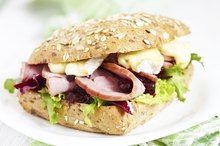
Does the Candida Diet Allow Whole Grain Bread?
Learn More
3 Ways to Understand the Difference Between Gluten and Yeast
Learn More

Gluten & Yeast Free Foods
Learn More
Candida Diet and Potatoes
Learn More
References
- Allergy UK: Yeast Intolerance
- American Heart Association: Sugar 101
- University of Maryland Medical Center: Candidiasis
- Columbia University Health Services: A Fungus Among Us: Candida (Yeast)
- Yapar Nur. Epidemiology and risk factors for invasive candidiasis. Ther Clin Risk Mgmt. 2014;10(2014):95-105. doi:10.2147/tcrm.s40160
- Buggio L, Somigliana E, Borghi A, Vercellini P. Probiotics and vaginal microecology: fact or fancy? BMC Womens Health. 2019 Jan;19:25. doi:10.1186/s12905-019-0723-4
- Gunther LSA, Martins HPR, Pimenta de Abreu AL, et al. Prevalence of Candida albicans and non-albicans isolates from vaginal secretions: comparative evaluation of colonization, vaginal candidiasis and recurrent vaginal candidiasis in diabetic and non-diabetic women. Sao Paulo Med. J. 2014;132(2):116-20. doi:10.1590/1516-3180.2014.1322640
- Xie HY, Feng D, Wei DM, Mei L, Chen H, Wang X, Fang F. Probiotics for vulvovaginal candidiasis in non-pregnant women. Cochrane Database Syst Rev. 2017;23;11(11):CD010496. doi:10.1002/14651858.CD010496.pub2
- Niewenhuizen WF, Pieters RHH, Knippels LMJ. Is Candida albicans a trigger in the onset of coeliac disease? Lancet. 2003;361(9375):2152-4. doi:10.1016/S0140-6736(03)13695-1
- Pérez-Torrado R, Querol A. Opportunistic strains of Saccharomyces cerevisiae: A potential risk sold in food products. Frontiers Microbiol. 2016;6:8. doi:10.3389/fmicb.2015.01522
- Wilson D. A tale of two yeasts: Saccharomyces cerevisiae as a therapeutic against candidiasis. Virulence. 2017;8(1):15-7. doi:10.1080/21505594.2016.1230580
- Office of Disease Prevention and Health Promotion. (2015) Appendix 7. Nutritional Goals for Age-Sex Groups Based on Dietary Reference Intakes and Dietary Guidelines Recommendations. 2015-2020 Dietary Guidelines for Americans. Washington, D.C.: U.S. Department of Health and Human Services.
- Kim J, Sudbery P. Candida albicans, a major human fungal pathogen. J Microbiol. 2011;49(2):171-7. doi:10.1007/s12275-011-1064-7
- Martinez RCR, Franceschini SA, Patta MC, et al. Improved treatment of vulvovaginal candidiasis with fluconazole plus probiotic Lactobacillus rhamnosus GR-1 and Lactobacillus reuteri RC-14. Letters Applied Microbiol. 2009;48(3):269-74. doi:10.1111/j.1472-765x.2008.02477.x
Writer Bio
Based in Massachusetts, Jessica Bruso has been writing since 2008. She holds a master of science degree in food policy and applied nutrition and a bachelor of arts degree in international relations, both from Tufts University.