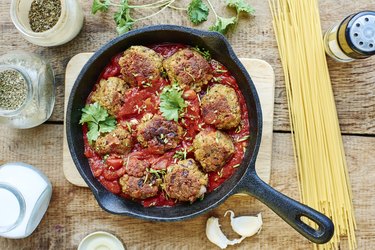
Textured vegetable protein, or TVP, is often used as a meat replacement in vegetarian dishes. TVP is made of soybeans, but it is processed and usually sold as a dehydrated mix. It is also available to purchase in ready-to-eat blocks.
This meat alternative, as its name suggests, is high in protein and provides dietary fiber. That being said,TVP may not be ideal for some people.
Video of the Day
Video of the Day
Warning
TVP offers protein and fiber as well as other important vitamins and minerals, but you may need to avoid it if you have an allergy to soy.
What Is TVP?
In reference to soy protein, "texturized" means that the protein has been altered so that it has a similar texture to meat, according to the Food and Agriculture Association of the United Nations. TVP is made from defatted soy flour, which is a byproduct of soybean oil production.
How TVP tastes depends on how you prepare it. TVP must first be rehydrated with hot water or another cooking liquid like broth. You can add spices and sauces to TVP to your liking. It takes little time to cook, and it's a great addition to recipes such as spaghetti sauce and chili.
TVP Nutrition
According to the USDA, a 1/4-cup serving of TVP will give you:
- Calories: 90
- Total fat: 0 g
- Saturated fat: 0 g
- Trans fat: 0 g
- Cholesterol: 0 mg
- Sodium: 0 mg
- Total carbs: 9 g
- Dietary fiber: 5 g
- Sugar: 2 g
- Protein: 13 g
TVP Macros
- Total fat: A quarter cup of TVP has 0 grams of total fat
- Carbohydrates: A quarter of TVP has 9 grams of carbs, which includes 5 grams of fiber and 2 grams of naturally occurring sugars.
- Protein: A quarter of TVP has 13 grams of protein.
Vitamins, Minerals and Other Micronutrients
A 1/4-cup serving of fine-grain TVP has:
- Copper: 135% of the Daily Value (DV)
- Folate: 23% of the DV
- Thiamine: 18% of the DV
- Magnesium: 17% of the DV
- Iron: 15% of the DV
- Potassium: 14% of the DV
TVP Benefits
1. It Has Important Vitamins and Minerals
TVP is especially high in copper, folate, thiamin and magnesium. You'll get 135 percent of your DV for copper, which your body needs for energy production and iron metabolism, per the National Institutes of Health (NIH.)
You'll get 23 percent of your DV for folate, which is needed for brain and nervous system health, per the NIH. A serving of TVP will give you 18 percent of your DV for thiamin, which is used by the body for cellular energy, according to the NIH.
Magnesium, a trace mineral, is used by the body for muscle and nerve function, and it helps regulate blood sugar levels and blood pressure, per the NIH. You'll get 17 percent of your DV for magnesium from TVP.
Including TVP in your diet will give you more potassium, as a 1/4-cup serving has 643 milligrams, which is 14 percent of your DV. The body needs potassium for kidney and heart function, muscle contraction and nerve transmission, according to the NIH.
You'll also get some iron, with the same serving 15 percent of your DV. Iron is used to make hemoglobin, a protein found in blood cells that transports oxygen from the lungs to all other parts of the body, per the NIH.
2. It's High in Fiber
TVP serves as a rich source of carbohydrates: One serving has 9 grams of total carbs.
Carbs break down to provide energy for the body, and the nutrient plays a role in your brain, muscle and kidney health, according to the U.S. National Library of Medicine. According to the USDA 2020-2025 Dietary Guidelines for Americans, 45 to 65 percent of your daily calories should come from carbs.
TVP has 5 grams of fiber, which helps regulate blood sugar levels and aids digestion, according to the Harvard T.H. Chan School of Public Health.
3. It's High in Protein
TVP is a good source of protein, providing 13 grams, or 26 percent of your DV. Nearly every tissue and organ in the body uses protein to function, including your muscles and skin, according to the Harvard T.H. Chan School of Public Health.
Adults over age 30 should aim to eat 46 to 56 grams of protein per day, per USDA guidelines.
4. It's Associated With a Lower Disease Risk
Many people wonder if eating TVP can help prevent cancer or lower the risk of other conditions. TVP is made from soy protein, which has been linked to a lower risk of breast cancer, according to the Mayo Clinic.
Still, more research is needed to determine whether TVP can affect breast cancer risk.
Eating soy has also been associated with a lower risk of heart disease, per May 2017 research in the European Journal of Preventative Cardiology, and with lower cholesterol and triglyceride levels, according to a December 2016 review in the journal Nutrients.
Can TVP Be Bad for You?
Though TVP is plant-based, it's not necessarily good for everyone. For example, TVP poses health risks for people who are allergic to soy, as soy is the main ingredient.
According to the Mayo Clinic, soy allergies are common, and may cause:
- Tingling in the mouth
- Hives, itching or scaly skin (eczema)
- Swelling of the lips, face, tongue and throat, or other body parts
- Wheezing, a runny nose or difficulty breathing
- Abdominal pain, diarrhea, nausea or vomiting
- Skin redness (flushing)
- In severe cases, anaphylaxis
Many people also wonder if TVP is bad for you because it has MSG in it. Some people have anecdotally reported symptoms like gas, diarrhea and bloating from eating MSG. But, no definitive evidence has shown a correlation between MSG and these or any other symptoms or health conditions, according to the Mayo Clinic.
How to Use TVP
Plain TVP does not have added flavors or colorings and can be stored in an air-tight container for up to a year. Dry TVP must be reconstituted in water before use, according to Bob's Red Mill, a manufacturer of TVP.
Things You'll Need
1 cup boiling water or broth
1 cup dry TVP
Large pot
To prepare it, simply:
- Boil 1 cup of water or broth.
- Combine your boiled liquid with 1 cup of dry TVP.
A cup of dry TVP should yield 2 cups of meat substitute. You can add TVP to recipes like:
- Tacos
- Pasta sauces
- Burger patties
- Chilli
- Egg scrambles
- Meatballs
- Mayo Clinic: Soy Allergy
- National Institutes of Health: Potassium
- Food and Agriculture Association of the Unites Nations: TEXTURED SOY PROTEIN PRODUCTS
- FDA Food Data Central: Fine Grain Textured Vegetable Protein
- National Institutes of Health: Iron
- National Institutes of Health: Folate
- National Institutes of Health: Thiamin